JavaScript is disabled in your browser. Please enable JavaScript to view this website.
AB153069

重组人 TLR6 蛋白 (GST tag N-Terminus)

Recombinant Human TLR6 protein (GST tag N-Terminus)

Be the first to review this product! Submit a review

|

(0 Publication)

Recombinant Human TLR6 protein (GST tag N-Terminus) is a Human Fragment protein, in the 201 to 300 aa range, expressed in Wheat germ, suitable for ELISA, WB.

查看别名

CD286, Toll-like receptor 6, TLR6
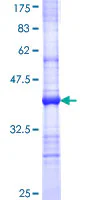
1 Images
SDS-PAGE - Recombinant Human TLR6 protein (GST tag N-Terminus) (AB153069)
  • SDS-PAGE

Unknown

SDS-PAGE - Recombinant Human TLR6 protein (GST tag N-Terminus) (AB153069)

ab153069 on a 12.5% SDS-PAGE stained with Coomassie Blue.

关键信息

表达系统

Wheat germ

标签

GST tag N-Terminus

应用

WB, ELISA

applications

生物活性

No

访问

Q9Y2C9

不含动物源

No

不含载体蛋白

No

种属

Human

存储溶液

pH: 8 Constituents: 0.79% Tris HCl, 0.31% Glutathione

storage-buffer

反应性数据

{ "title": "Reactivity Data", "filters": { "stats": ["", "Reactivity", "Dilution Info", "Notes"] }, "values": { "ELISA": { "reactivity":"TESTED_AND_REACTS", "dilution-info":"", "notes":"<p></p>" }, "WB": { "reactivity":"TESTED_AND_REACTS", "dilution-info":"", "notes":"<p></p>" } } }

序列信息

[{"linker":null,"sequence":"LVFHPTSLFAIQVNISVNTLGCLQLTNIKLNDDNCQVFIKFLSELTRGSTLLNFTLNHIETTWKCLVRVFQFLWPKPVEYLNIYNLTIIESIREEDFTYS","proteinLength":"Fragment","predictedMolecularWeight":null,"actualMolecularWeight":null,"aminoAcidEnd":300,"aminoAcidStart":201,"nature":"Recombinant","expressionSystem":"Wheat germ","accessionNumber":"Q9Y2C9","tags":[{"tag":"GST","terminus":"N-Terminus"}]}]

性能和储存信息

形式
Liquid
纯化工艺
Proprietary technique
运输条件
Dry Ice
推荐的短期储存条件
-80°C
推荐的长期储存条件
-80°C
分装信息
Upon delivery aliquot
储存信息
Avoid freeze / thaw cycle
False

补充信息

This supplementary information is collated from multiple sources and compiled automatically.

Toll-like receptor 6 (TLR6) acts as an important component of the innate immune system. TLR6 is alternatively known as CD286 and has an approximate molecular mass of 91 kDa. This protein is predominantly expressed in immune cells such as monocytes dendritic cells and macrophages. It localizes mainly on the cell surface and is involved in recognizing pathogen-associated molecular patterns specifically diacyl lipopeptides and peptidoglycans.
Biological function summary

TLR6 plays a role in pathogen recognition and activation of inflammatory responses. It often forms a functional heterodimer with TLR2 a necessity for its function. Through this complex TLR6 mediates the recognition of bacterial lipoproteins and triggers downstream signaling involved in immune cell activation and cytokine production. This signaling increases the host's immune response to bacterial infections by promoting the release of pro-inflammatory cytokines.

Pathways

TLR6 initiates signaling cascades that are significant in the immune system such as the NF-kB and MAPK pathways. TLR6 partners with TLR2 to activate the MyD88-dependent signaling pathway an important pathway in innate immunity that affects transcription of pro-inflammatory genes. Interaction with these pathways involves proteins like MyD88 and TRAF6 which are central components in signal transduction leading to inflammation and antimicrobial responses.

TLR6 contributes to the pathogenesis of inflammatory and autoimmune diseases. Research indicates its association with conditions like rheumatoid arthritis and asthma where it influences inflammation levels and immune system dysregulation. TLR6 through its interaction with TLR2 affects the differentiation and activation of immune cells leading to overactive immune responses observed in these disorders. Its role in inflammation makes it a potential target for therapeutic intervention in diseases related to immune system dysfunction.

常规信息

功能

Participates in the innate immune response to Gram-positive bacteria and fungi. Specifically recognizes diacylated and, to a lesser extent, triacylated lipopeptides (PubMed : 20037584). In response to diacylated lipopeptides, forms the activation cluster TLR2 : TLR6 : CD14 : CD36, this cluster triggers signaling from the cell surface and subsequently is targeted to the Golgi in a lipid-raft dependent pathway (PubMed : 16880211). Acts via MYD88 and TRAF6, leading to NF-kappa-B activation, cytokine secretion and the inflammatory response. Recognizes mycoplasmal macrophage-activating lipopeptide-2kD (MALP-2), soluble tuberculosis factor (STF), phenol-soluble modulin (PSM) and B.burgdorferi outer surface protein A lipoprotein (OspA-L) cooperatively with TLR2 (PubMed : 11441107). In complex with TLR4, promotes sterile inflammation in monocytes/macrophages in response to oxidized low-density lipoprotein (oxLDL) or amyloid-beta 42. In this context, the initial signal is provided by oxLDL- or amyloid-beta 42-binding to CD36. This event induces the formation of a heterodimer of TLR4 and TLR6, which is rapidly internalized and triggers inflammatory response, leading to the NF-kappa-B-dependent production of CXCL1, CXCL2 and CCL9 cytokines, via MYD88 signaling pathway, and CCL5 cytokine, via TICAM1 signaling pathway, as well as IL1B secretion (PubMed : 11441107, PubMed : 20037584).

序列相似性

Belongs to the Toll-like receptor family.

产品实验方案

靶点信息

Participates in the innate immune response to Gram-positive bacteria and fungi. Specifically recognizes diacylated and, to a lesser extent, triacylated lipopeptides (PubMed : 20037584). In response to diacylated lipopeptides, forms the activation cluster TLR2 : TLR6 : CD14 : CD36, this cluster triggers signaling from the cell surface and subsequently is targeted to the Golgi in a lipid-raft dependent pathway (PubMed : 16880211). Acts via MYD88 and TRAF6, leading to NF-kappa-B activation, cytokine secretion and the inflammatory response. Recognizes mycoplasmal macrophage-activating lipopeptide-2kD (MALP-2), soluble tuberculosis factor (STF), phenol-soluble modulin (PSM) and B.burgdorferi outer surface protein A lipoprotein (OspA-L) cooperatively with TLR2 (PubMed : 11441107). In complex with TLR4, promotes sterile inflammation in monocytes/macrophages in response to oxidized low-density lipoprotein (oxLDL) or amyloid-beta 42. In this context, the initial signal is provided by oxLDL- or amyloid-beta 42-binding to CD36. This event induces the formation of a heterodimer of TLR4 and TLR6, which is rapidly internalized and triggers inflammatory response, leading to the NF-kappa-B-dependent production of CXCL1, CXCL2 and CCL9 cytokines, via MYD88 signaling pathway, and CCL5 cytokine, via TICAM1 signaling pathway, as well as IL1B secretion (PubMed : 11441107, PubMed : 20037584).
See full target information TLR6

Abcam Product Promise

我们致力于为您的研究提供高质量的试剂,为您科研的每一步提供支持。若我们的产品未能达到预期性能,我们向您提供 Abcam Product Promise 保障。
详情请参阅我们的条款与条件。

Please note: All products are 'FOR RESEARCH USE ONLY. NOT FOR USE IN DIAGNOSTIC OR THERAPEUTIC PROCEDURES'.

For licensing inquiries, please contact partnerships@abcam.com