重组人 Superoxide Dismutase 1 蛋白 (Tag Free)
Recombinant human Superoxide Dismutase 1 protein (Tag Free)
Be the first to review this product! Submit a review
|
(0 Publication)
Recombinant human Superoxide Dismutase 1 protein (Tag Free) is a Human Full Length protein, expressed in Escherichia coli, with >95%, suitable for SDS-PAGE, FuncS.
查看别名
Superoxide dismutase [Cu-Zn], Hydrogen sulfide oxidase, Superoxide dismutase 1, hSod1, SOD1
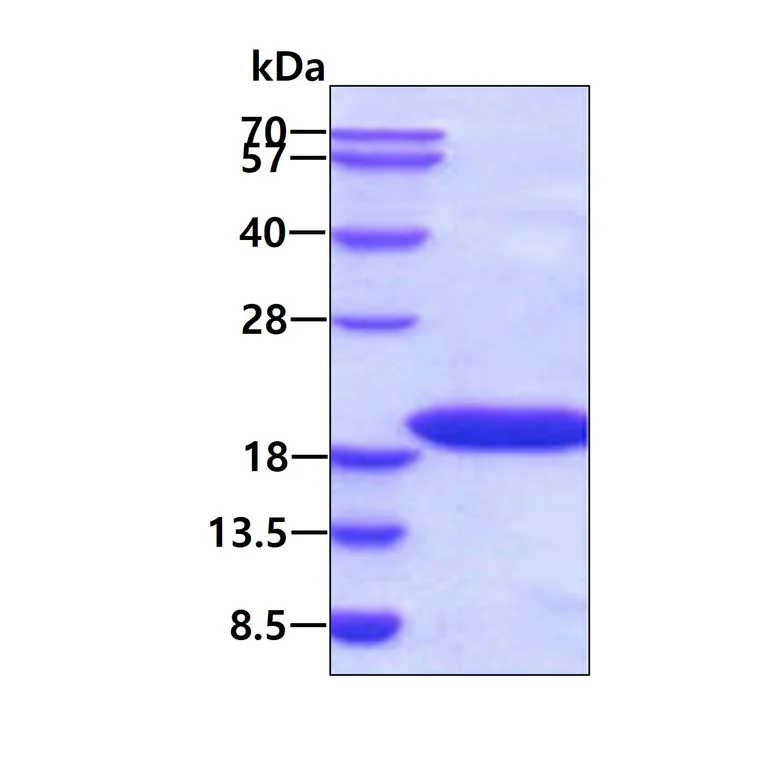
- SDS-PAGE
Unknown
SDS-PAGE - Recombinant human Superoxide Dismutase 1 protein (Tag Free) (AB74916)
15% SDS-PAGE of ab74916 (3μg).
搭配使用产品
Reagents, Controls & Accessories
AB325994
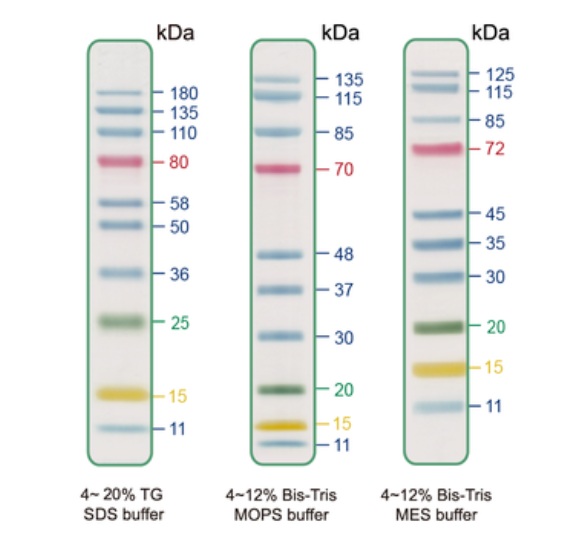
Prestained Protein Ladder - Mid-range molecular weight (11-180 kDa, 4-color)
- 0
- 0

Proteins & Peptides
AB89359
Recombinant Human Carbonic Anhydrase 1/CA1 protein (His tag N-Terminus)
- 0
- 0
反应性数据
序列信息
性能和储存信息
形式
运输条件
推荐的短期储存条件
推荐的长期储存条件
分装信息
储存信息
补充信息
This supplementary information is collated from multiple sources and compiled automatically.
Biological function summary
The enzyme functions as a homodimer with each subunit containing a copper and zinc ion. These metal ions are essential for the catalytic activity of SOD1 as the copper ion participates in electron transfer while the zinc ion provides structural stability. The enzyme protects cells from oxidative stress by neutralizing excess reactive oxygen species ensuring cellular health and functioning.
Pathways
SOD1 plays an important role in the cellular antioxidant defense system and is a part of the reactive oxygen species (ROS) metabolic pathway. It works in conjunction with catalase and glutathione peroxidase to limit oxidative damage within cells. The close interaction between these enzymes highlights the interdependence within the antioxidant defense network emphasizing their role in maintaining cellular homeostasis.
常规信息
功能
Destroys radicals which are normally produced within the cells and which are toxic to biological systems (PubMed : 24140062). Catalyzes the oxidation of hydrogen sulfide (H2S) to sulfate, playing an important role in detoxifying H2S and limiting the accumulation of reactive sulfur species (RSS) such as persulfides and polysulfides (PubMed : 36630448).
序列相似性
Belongs to the Cu-Zn superoxide dismutase family.
翻译后修饰
Unlike wild-type protein, the pathogenic variants ALS1 Arg-38, Arg-47, Arg-86 and Ala-94 are polyubiquitinated by RNF19A leading to their proteasomal degradation. The pathogenic variants ALS1 Arg-86 and Ala-94 are ubiquitinated by MARCH5 leading to their proteasomal degradation.. The ditryptophan cross-link at Trp-33 is responsible for the non-disulfide-linked homodimerization. Such modification might only occur in extreme conditions and additional experimental evidence is required.. Palmitoylation helps nuclear targeting and decreases catalytic activity.. Succinylation, adjacent to copper catalytic site, probably inhibits activity. Desuccinylation by SIRT5 enhances activity.
亚细胞定位
Nucleus
靶点信息
Abcam Product Promise
Please note: All products are 'FOR RESEARCH USE ONLY. NOT FOR USE IN DIAGNOSTIC OR THERAPEUTIC PROCEDURES'.
For licensing inquiries, please contact partnerships@abcam.com