JavaScript is disabled in your browser. Please enable JavaScript to view this website.
AB132352

重组人 Siah2 蛋白 (GST tag N-Terminus)

Recombinant Human Siah2 protein (GST tag N-Terminus)

Be the first to review this product! Submit a review

|

(0 Publication)

Recombinant Human Siah2 protein (GST tag N-Terminus) is a Human Full Length protein, in the 1 to 324 aa range, expressed in Wheat germ, suitable for SDS-PAGE, ELISA, WB.

查看别名

E3 ubiquitin-protein ligase SIAH2, RING-type E3 ubiquitin transferase SIAH2, Seven in absentia homolog 2, Siah-2, hSiah2, SIAH2

1 Images
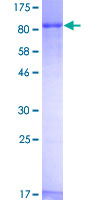
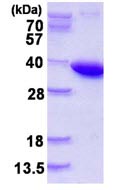
SDS-PAGE - Recombinant Human Siah2 protein (GST tag N-Terminus) (AB132352)
  • SDS-PAGE

Unknown

SDS-PAGE - Recombinant Human Siah2 protein (GST tag N-Terminus) (AB132352)

12.5% SDS-PAGE analysis of ab132352 stained with Coomassie Blue.

关键信息

表达系统

Wheat germ

标签

GST tag N-Terminus

应用

SDS-PAGE, WB, ELISA

applications

生物活性

No

访问

O43255

不含动物源

No

不含载体蛋白

No

种属

Human

存储溶液

pH: 8 Constituents: 0.79% Tris HCl, 0.31% Glutathione

storage-buffer

反应性数据

{ "title": "Reactivity Data", "filters": { "stats": ["", "Reactivity", "Dilution Info", "Notes"] }, "values": { "SDS-PAGE": { "reactivity":"TESTED_AND_REACTS", "dilution-info":"", "notes":"<p></p>" }, "ELISA": { "reactivity":"TESTED_AND_REACTS", "dilution-info":"", "notes":"<p></p>" }, "WB": { "reactivity":"TESTED_AND_REACTS", "dilution-info":"", "notes":"<p></p>" } } }

序列信息

[{"linker":null,"sequence":"MSRPSSTGPSANKPCSKQPPPQPQHTPSPAAPPAAATISAAGPGSSAVPAAAAVISGPGGGGGAGPVSPQHHELTSLFECPVCFDYVLPPILQCQAGHLVCNQCRQKLSCCPTCRGALTPSIRNLAMEKVASAVLFPCKYATTGCSLTLHHTEKPEHEDICEYRPYSCPCPGASCKWQGSLEAVMSHLMHAHKSITTLQGEDIVFLATDINLPGAVDWVMMQSCFGHHFMLVLEKQEKYEGHQQFFAIVLLIGTRKQAENFAYRLELNGNRRRLTWEATPRSIHDGVAAAIMNSDCLVFDTAIAHLFADNGNLGINVTISTCCP","proteinLength":"Full Length","predictedMolecularWeight":"61 kDa","actualMolecularWeight":null,"aminoAcidEnd":324,"aminoAcidStart":1,"nature":"Recombinant","expressionSystem":"Wheat germ","accessionNumber":"O43255","tags":[{"tag":"GST","terminus":"N-Terminus"}]}]

性能和储存信息

形式
Liquid
纯化工艺
Proprietary technique
运输条件
Dry Ice
推荐的短期储存条件
-80°C
推荐的长期储存条件
-80°C
分装信息
Upon delivery aliquot
储存信息
Avoid freeze / thaw cycle
False

常规信息

功能

E3 ubiquitin-protein ligase that mediates ubiquitination and subsequent proteasomal degradation of target proteins (PubMed : 11483518, PubMed : 19224863, PubMed : 9334332). E3 ubiquitin ligases accept ubiquitin from an E2 ubiquitin-conjugating enzyme in the form of a thioester and then directly transfers the ubiquitin to targeted substrates (PubMed : 11483518, PubMed : 19224863, PubMed : 9334332). Mediates E3 ubiquitin ligase activity either through direct binding to substrates or by functioning as the essential RING domain subunit of larger E3 complexes (PubMed : 11483518, PubMed : 19224863, PubMed : 9334332). Triggers the ubiquitin-mediated degradation of many substrates, including proteins involved in transcription regulation (GPS2, POU2AF1, PML, NCOR1), a cell surface receptor (DCC), an antiapoptotic protein (BAG1), and a protein involved in synaptic vesicle function in neurons (SYP) (PubMed : 11483518, PubMed : 19224863, PubMed : 9334332). Mediates ubiquitination and proteasomal degradation of DYRK2 in response to hypoxia (PubMed : 22878263). It is thereby involved in apoptosis, tumor suppression, cell cycle, transcription and signaling processes (PubMed : 11483518, PubMed : 19224863, PubMed : 22878263, PubMed : 9334332). Has some overlapping function with SIAH1 (PubMed : 11483518, PubMed : 19224863, PubMed : 9334332). Triggers the ubiquitin-mediated degradation of TRAF2, whereas SIAH1 does not (PubMed : 12411493). Promotes monoubiquitination of SNCA (PubMed : 19224863). Regulates cellular clock function via ubiquitination of the circadian transcriptional repressors NR1D1 and NR1D2 leading to their proteasomal degradation (PubMed : 26392558). Plays an important role in mediating the rhythmic degradation/clearance of NR1D1 and NR1D2 contributing to their circadian profile of protein abundance (PubMed : 26392558). Mediates ubiquitination and degradation of EGLN2 and EGLN3 in response to the unfolded protein response (UPR), leading to their degradation and subsequent stabilization of ATF4 (By similarity). Also part of the Wnt signaling pathway in which it mediates the Wnt-induced ubiquitin-mediated proteasomal degradation of AXIN1.

序列相似性

Belongs to the SINA (Seven in absentia) family.

翻译后修饰

Phosphorylated at Ser-28 by MAPK14, which mediates the degradation by the proteasome of EGLN3 (By similarity). Phosphorylated at Ser-28 by DYRK2; this increases the ubiquitin ligase activity and promotes degradation of EGLN3.

亚细胞定位

Nucleus

产品实验方案

靶点信息

E3 ubiquitin-protein ligase that mediates ubiquitination and subsequent proteasomal degradation of target proteins (PubMed : 11483518, PubMed : 19224863, PubMed : 9334332). E3 ubiquitin ligases accept ubiquitin from an E2 ubiquitin-conjugating enzyme in the form of a thioester and then directly transfers the ubiquitin to targeted substrates (PubMed : 11483518, PubMed : 19224863, PubMed : 9334332). Mediates E3 ubiquitin ligase activity either through direct binding to substrates or by functioning as the essential RING domain subunit of larger E3 complexes (PubMed : 11483518, PubMed : 19224863, PubMed : 9334332). Triggers the ubiquitin-mediated degradation of many substrates, including proteins involved in transcription regulation (GPS2, POU2AF1, PML, NCOR1), a cell surface receptor (DCC), an antiapoptotic protein (BAG1), and a protein involved in synaptic vesicle function in neurons (SYP) (PubMed : 11483518, PubMed : 19224863, PubMed : 9334332). Mediates ubiquitination and proteasomal degradation of DYRK2 in response to hypoxia (PubMed : 22878263). It is thereby involved in apoptosis, tumor suppression, cell cycle, transcription and signaling processes (PubMed : 11483518, PubMed : 19224863, PubMed : 22878263, PubMed : 9334332). Has some overlapping function with SIAH1 (PubMed : 11483518, PubMed : 19224863, PubMed : 9334332). Triggers the ubiquitin-mediated degradation of TRAF2, whereas SIAH1 does not (PubMed : 12411493). Promotes monoubiquitination of SNCA (PubMed : 19224863). Regulates cellular clock function via ubiquitination of the circadian transcriptional repressors NR1D1 and NR1D2 leading to their proteasomal degradation (PubMed : 26392558). Plays an important role in mediating the rhythmic degradation/clearance of NR1D1 and NR1D2 contributing to their circadian profile of protein abundance (PubMed : 26392558). Mediates ubiquitination and degradation of EGLN2 and EGLN3 in response to the unfolded protein response (UPR), leading to their degradation and subsequent stabilization of ATF4 (By similarity). Also part of the Wnt signaling pathway in which it mediates the Wnt-induced ubiquitin-mediated proteasomal degradation of AXIN1.
See full target information SIAH2

Abcam Product Promise

我们致力于为您的研究提供高质量的试剂,为您科研的每一步提供支持。若我们的产品未能达到预期性能,我们向您提供 Abcam Product Promise 保障。
详情请参阅我们的条款与条件。

Please note: All products are 'FOR RESEARCH USE ONLY. NOT FOR USE IN DIAGNOSTIC OR THERAPEUTIC PROCEDURES'.

For licensing inquiries, please contact partnerships@abcam.com