JavaScript is disabled in your browser. Please enable JavaScript to view this website.
AB132315

重组人 PRAME 蛋白 (GST tag N-Terminus)

Recombinant Human PRAME protein (GST tag N-Terminus)

Be the first to review this product! Submit a review

|

(0 Publication)

Recombinant Human PRAME protein (GST tag N-Terminus) is a Human Full Length protein, in the 1 to 509 aa range, expressed in Wheat germ, suitable for SDS-PAGE, ELISA, WB.

查看别名

MAPE, OIP4, PRAME, Melanoma antigen preferentially expressed in tumors, Opa-interacting protein 4, Preferentially expressed antigen of melanoma, OIP-4
1 Images
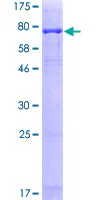
SDS-PAGE - Recombinant Human PRAME protein (GST tag N-Terminus) (AB132315)
  • SDS-PAGE

Unknown

SDS-PAGE - Recombinant Human PRAME protein (GST tag N-Terminus) (AB132315)

12.5% SDS-PAGE analysis of ab132315 stained with Coomassie Blue.

关键信息

表达系统

Wheat germ

标签

GST tag N-Terminus

应用

SDS-PAGE, ELISA, WB

applications

生物活性

No

访问

P78395

不含动物源

No

不含载体蛋白

No

种属

Human

存储溶液

pH: 8 Constituents: 0.79% Tris HCl, 0.31% Glutathione

storage-buffer

反应性数据

{ "title": "Reactivity Data", "filters": { "stats": ["", "Reactivity", "Dilution Info", "Notes"] }, "values": { "SDS-PAGE": { "reactivity":"TESTED_AND_REACTS", "dilution-info":"", "notes":"<p></p>" }, "ELISA": { "reactivity":"TESTED_AND_REACTS", "dilution-info":"", "notes":"<p></p>" }, "WB": { "reactivity":"TESTED_AND_REACTS", "dilution-info":"", "notes":"<p></p>" } } }

序列信息

[{"linker":null,"sequence":"MERRRLRGSIQSRYISMSVWTSPRRLVELAGQSLLKDEALAIAALELLPRELFPPLFMAAFDGRHSQTLKAMVQAWPFTCLPLGVLMKGQHLHLETFKAVLDGLDVLLAQEVRPRRWKLQVLDLRKNSHQDFWTVWSGNRASLYSFPEPEAAQPMTKKRKVDGLSTEAEQPFIPVEVLVDLFLKEGACDELFSYLIEKVKRKKNVLRLCCKKLKIFAMPMQDIKMILKMVQLDSIEDLEVTCTWKLPTLAKFSPYLGQMINLRRLLLSHIHASSYISPEKEEQYIAQFTSQFLSLQCLQALYVDSLFFLRGRLDQLLRHVMNPLETLSITNCRLSEGDVMHLSQSPSVSQLSVLSLSGVMLTDVSPEPLQALLERASATLQDLVFDECGITDDQLLALLPSLSHCSQLTTLSFYGNSISISALQSLLQHLIGLSNLTHVLYPVPLESYEDIHGTLHLERLAYLHARLRELLCELGRPSMVWLSANPCPHCGDRTFYDPEPILCPCFMPN","proteinLength":"Full Length","predictedMolecularWeight":"81.73 kDa","actualMolecularWeight":null,"aminoAcidEnd":509,"aminoAcidStart":1,"nature":"Recombinant","expressionSystem":"Wheat germ","accessionNumber":"P78395","tags":[{"tag":"GST","terminus":"N-Terminus"}]}]

性能和储存信息

形式
Liquid
纯化工艺
Proprietary technique
运输条件
Dry Ice
推荐的短期储存条件
-80°C
推荐的长期储存条件
-80°C
分装信息
Upon delivery aliquot
储存信息
Avoid freeze / thaw cycle
False

补充信息

This supplementary information is collated from multiple sources and compiled automatically.

PRAME also known as Preferentially Expressed Antigen in Melanoma is a protein typically weighing around 50 kDa. It is found mostly in testis tissue but also appears in several types of tumors including melanoma and some leukemias. PRAME does not show significant expression in most normal tissues making it a potential target for cancer therapies. Immunohistochemistry (IHC) techniques such as PRAME IHC and PRAME staining often use monoclonal antibodies like mAb EPR20330 to detect PRAME protein presence in various samples.
Biological function summary

PRAME acts as a repressor of retinoic acid signaling a process important for cell differentiation and growth. It does not directly form part of a complex but interacts with components involved in retinoic acid pathways. By binding to retinoic acid receptor complexes PRAME prevents activation of genes involved in cell cycle arrest and apoptosis contributing to unchecked cellular proliferation seen in certain cancers.

Pathways

PRAME participates in the retinoic acid and various oncogenic signaling processes. It influences the retinoic acid pathway by interfering with the retinoic acid receptor (RAR) signaling. This interference with key proteins like RAR disrupts the normal regulatory processes that typically inhibit cancer progression. PRAME's modulation of these pathways highlights its role in promoting tumor growth and survival.

PRAME has significant relevance to cancer particularly melanoma. It is often used as a biomarker for melanoma identification due to its overexpression in such tumors. Additionally PRAME's connection to acute myeloid leukemia (AML) emerges from its ability to act similarly in diverse malignant cells. In these diseases the overexpression of PRAME interferes with normal differentiation processes and allows for sustained proliferation of malignant cells suggesting its potential role as a therapeutic target or diagnostic marker in oncology.

常规信息

功能

Substrate-recognition component of a Cul2-RING (CRL2) E3 ubiquitin-protein ligase complex, which mediates ubiquitination of target proteins, leading to their degradation (PubMed : 21822215, PubMed : 26138980). The CRL2(PRAME) complex mediates ubiquitination and degradation of truncated MSRB1/SEPX1 selenoproteins produced by failed UGA/Sec decoding (PubMed : 26138980). In the nucleus, the CRL2(PRAME) complex is recruited to epigenetically and transcriptionally active promoter regions bound by nuclear transcription factor Y (NFY) and probably plays a role in chromstin regulation (PubMed : 21822215). Functions as a transcriptional repressor, inhibiting the signaling of retinoic acid through the retinoic acid receptors RARA, RARB and RARG : prevents retinoic acid-induced cell proliferation arrest, differentiation and apoptosis (PubMed : 16179254).

序列相似性

Belongs to the PRAME family.

亚细胞定位

Nucleus

产品实验方案

靶点信息

Substrate-recognition component of a Cul2-RING (CRL2) E3 ubiquitin-protein ligase complex, which mediates ubiquitination of target proteins, leading to their degradation (PubMed : 21822215, PubMed : 26138980). The CRL2(PRAME) complex mediates ubiquitination and degradation of truncated MSRB1/SEPX1 selenoproteins produced by failed UGA/Sec decoding (PubMed : 26138980). In the nucleus, the CRL2(PRAME) complex is recruited to epigenetically and transcriptionally active promoter regions bound by nuclear transcription factor Y (NFY) and probably plays a role in chromstin regulation (PubMed : 21822215). Functions as a transcriptional repressor, inhibiting the signaling of retinoic acid through the retinoic acid receptors RARA, RARB and RARG : prevents retinoic acid-induced cell proliferation arrest, differentiation and apoptosis (PubMed : 16179254).
See full target information PRAME

Abcam Product Promise

我们致力于为您的研究提供高质量的试剂,为您科研的每一步提供支持。若我们的产品未能达到预期性能,我们向您提供 Abcam Product Promise 保障。
详情请参阅我们的条款与条件。

Please note: All products are 'FOR RESEARCH USE ONLY. NOT FOR USE IN DIAGNOSTIC OR THERAPEUTIC PROCEDURES'.

For licensing inquiries, please contact partnerships@abcam.com