重组人Midkine蛋白(His tag)
Recombinant Human Midkine Protein (His tag)
Be the first to review this product! Submit a review
|
(0 Publication)
Recombinant Human Midkine Protein (His tag) is a Human Full Length protein, expressed in Escherichia coli, 0.005 EU/µg endotoxin level, suitable for Mass Spec, SDS-PAGE.
查看别名
MK1, NEGF2, MDK, Midkine, MK, Amphiregulin-associated protein, Midgestation and kidney protein, Neurite outgrowth-promoting factor 2, Neurite outgrowth-promoting protein, ARAP
- Mass Spec
Supplier Data
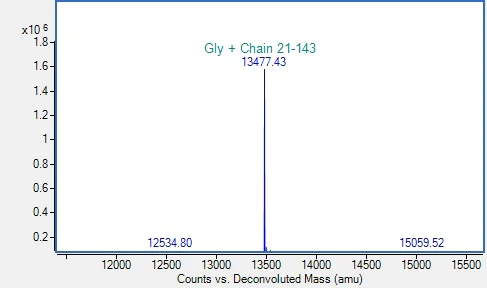
Mass Spectrometry - Recombinant Human Midkine Protein (His tag) (AB318940)
Mass determination by ESI-TOF. Predicted MW is 13480 Da (+/- 10 Da by ESI-TOF). Observed MW is 13477.43 Da.
- SDS-PAGE
Supplier Data
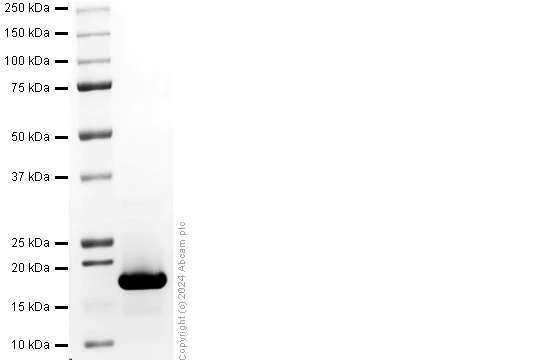
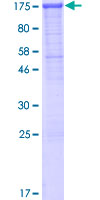
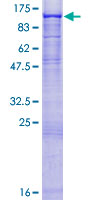
SDS-PAGE - Recombinant Human Midkine Protein (His tag) (AB318940)
SDS-PAGE analysis of ab318940 under reducing conditions for 2ug protein.
搭配使用产品
Reagents, Controls & Accessories
AB234617
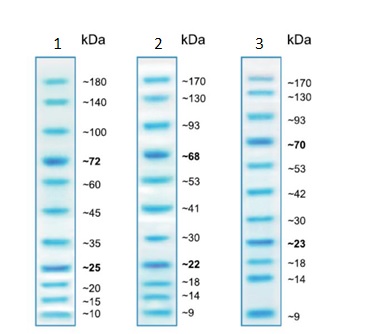
Prestained Protein Ladder - Mid-range molecular weight (10 - 180 kDa)
- 0
- 0
Primary Antibodies
AB259450
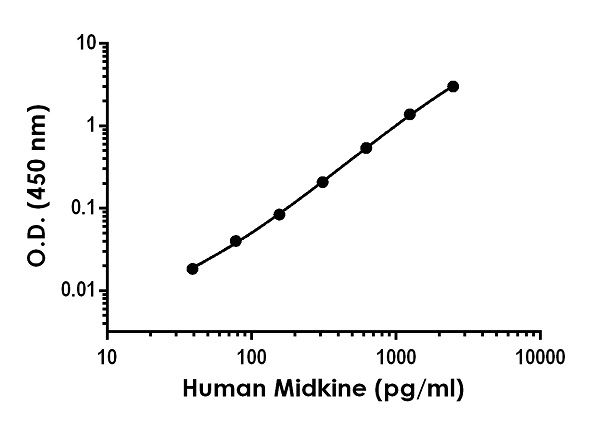
Anti-Midkine antibody [EPR1143-68R] - BSA and Azide free (Detector)
RabMAb|Recombinant
- 0
- 0
反应性数据
序列信息
性能和储存信息
形式
运输条件
推荐的短期储存条件
推荐的长期储存条件
常规信息
功能
Secreted protein that functions as a cytokine and growth factor and mediates its signal through cell-surface proteoglycan and non-proteoglycan receptors (PubMed : 10212223, PubMed : 10772929, PubMed : 12084985, PubMed : 12122009, PubMed : 12573468, PubMed : 15466886, PubMed : 18469519, PubMed : 24458438). Binds cell-surface proteoglycan receptors via their chondroitin sulfate (CS) groups (PubMed : 10212223, PubMed : 12084985). Thereby regulates many processes like inflammatory response, cell proliferation, cell adhesion, cell growth, cell survival, tissue regeneration, cell differentiation and cell migration (PubMed : 10212223, PubMed : 10683378, PubMed : 10772929, PubMed : 12084985, PubMed : 12122009, PubMed : 12573468, PubMed : 15466886, PubMed : 22323540, PubMed : 24458438). Participates in inflammatory processes by exerting two different activities. Firstly, mediates neutrophils and macrophages recruitment to the sites of inflammation both by direct action by cooperating namely with ITGB2 via LRP1 and by inducing chemokine expression (PubMed : 10683378, PubMed : 24458438). This inflammation can be accompanied by epithelial cell survival and smooth muscle cell migration after renal and vessel damage, respectively (PubMed : 10683378). Secondly, suppresses the development of tolerogenic dendric cells thereby inhibiting the differentiation of regulatory T cells and also promote T cell expansion through NFAT signaling and Th1 cell differentiation (PubMed : 22323540). Promotes tissue regeneration after injury or trauma. After heart damage negatively regulates the recruitment of inflammatory cells and mediates cell survival through activation of anti-apoptotic signaling pathways via MAPKs and AKT pathways through the activation of angiogenesis (By similarity). Also facilitates liver regeneration as well as bone repair by recruiting macrophage at trauma site and by promoting cartilage development by facilitating chondrocyte differentiation (By similarity). Plays a role in brain by promoting neural precursor cells survival and growth through interaction with heparan sulfate proteoglycans (By similarity). Binds PTPRZ1 and promotes neuronal migration and embryonic neurons survival (PubMed : 10212223). Binds SDC3 or GPC2 and mediates neurite outgrowth and cell adhesion (PubMed : 12084985, PubMed : 1768439). Binds chondroitin sulfate E and heparin leading to inhibition of neuronal cell adhesion induced by binding with GPC2 (PubMed : 12084985). Binds CSPG5 and promotes elongation of oligodendroglial precursor-like cells (By similarity). Also binds ITGA6 : ITGB1 complex; this interaction mediates MDK-induced neurite outgrowth (PubMed : 15466886, PubMed : 1768439). Binds LRP1; promotes neuronal survival (PubMed : 10772929). Binds ITGA4 : ITGB1 complex; this interaction mediates MDK-induced osteoblast cells migration through PXN phosphorylation (PubMed : 15466886). Binds anaplastic lymphoma kinase (ALK) which induces ALK activation and subsequent phosphorylation of the insulin receptor substrate (IRS1), followed by the activation of mitogen-activated protein kinase (MAPK) and PI3-kinase, and the induction of cell proliferation (PubMed : 12122009). Promotes epithelial to mesenchymal transition through interaction with NOTCH2 (PubMed : 18469519). During arteriogenesis, plays a role in vascular endothelial cell proliferation by inducing VEGFA expression and release which in turn induces nitric oxide synthase expression. Moreover activates vasodilation through nitric oxide synthase activation (By similarity). Negatively regulates bone formation in response to mechanical load by inhibiting Wnt/beta-catenin signaling in osteoblasts (By similarity). In addition plays a role in hippocampal development, working memory, auditory response, early fetal adrenal gland development and the female reproductive system (By similarity).
序列相似性
Belongs to the pleiotrophin family.
靶点信息
Abcam Product Promise
Please note: All products are 'FOR RESEARCH USE ONLY. NOT FOR USE IN DIAGNOSTIC OR THERAPEUTIC PROCEDURES'.
For licensing inquiries, please contact partnerships@abcam.com