JavaScript is disabled in your browser. Please enable JavaScript to view this website.
AB101661

重组 human HDAC1 protein (GST tag C-Terminus)

Recombinant human HDAC1 protein (GST tag C-Terminus)

Be the first to review this product! Submit a review

|

(6 Publications)

Recombinant human HDAC1 protein (GST tag C-Terminus) is a Human Full Length protein, in the 1 to 482 aa range, expressed in Baculovirus infected insect cells, with >70%, suitable for WB, FuncS.

查看别名

RPD3L1, HDAC1, Histone deacetylase 1, HD1, Protein deacetylase HDAC1, Protein deacylase HDAC1
4 Images
Functional Studies - Recombinant human HDAC1 protein (GST tag C-Terminus) (AB101661)
  • FuncS

Unknown

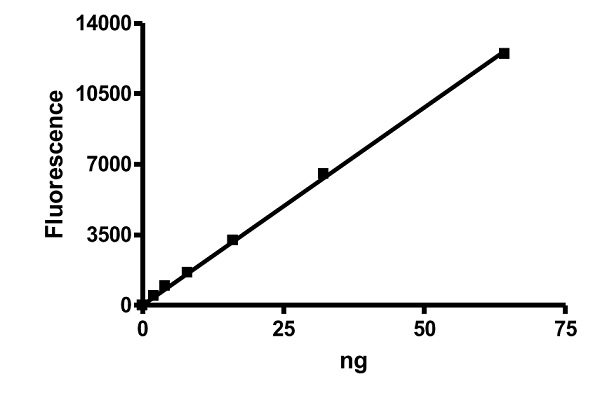
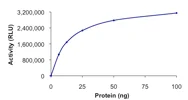
Functional Studies - Recombinant human HDAC1 protein (GST tag C-Terminus) (AB101661)

The Specific activity of ab101661 was determined to be 8900 RLU/min/ng.
Functional Studies - Recombinant human HDAC1 protein (GST tag C-Terminus) (AB101661)
  • FuncS

Unknown

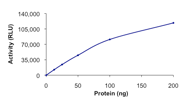
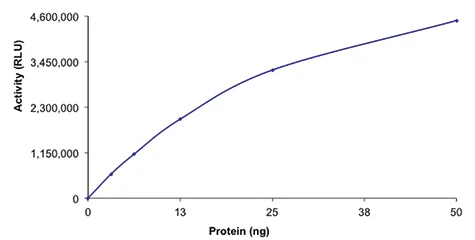
Functional Studies - Recombinant human HDAC1 protein (GST tag C-Terminus) (AB101661)

The specific activity of HDAC1 (ab101661) was determined to be 10230 RLU/min/mg as per activity assay protocol
SDS-PAGE - Recombinant human HDAC1 protein (GST tag C-Terminus) (AB101661)
  • SDS-PAGE

Unknown

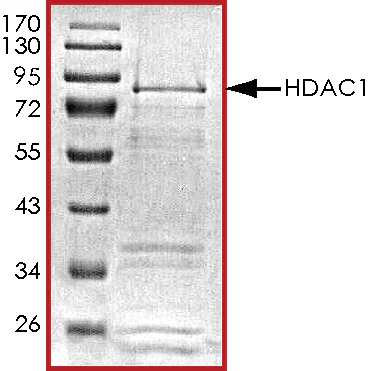
SDS-PAGE - Recombinant human HDAC1 protein (GST tag C-Terminus) (AB101661)

SDS PAGE analysis of ab101661
SDS-PAGE - Recombinant human HDAC1 protein (GST tag C-Terminus) (AB101661)
  • SDS-PAGE

Unknown

SDS-PAGE - Recombinant human HDAC1 protein (GST tag C-Terminus) (AB101661)

SDS-PAGE showing ab101661 at approximately 88kDa.

关键信息

纯度

>70% SDS-PAGE

>70% by densitometry. Affinity purified.

表达系统

Baculovirus infected insect cells

标签

GST tag C-Terminus

应用

FuncS, WB

applications

生物活性

Yes

生物学活性

The Specific activity of ab101661 was determined to be 8900 RLU/min/ng.

访问

Q13547

不含动物源

No

不含载体蛋白

No

种属

Human

存储溶液

pH: 7.5 Constituents: 25% Glycerol (glycerin, glycerine), 0.87% Sodium chloride, 0.79% Tris HCl, 0.307% Glutathione, 0.00385% (R*,R*)-1,4-Dimercaptobutan-2,3-diol, 0.00292% EDTA, 0.00174% PMSF

storage-buffer

反应性数据

{ "title": "Reactivity Data", "filters": { "stats": ["", "Reactivity", "Dilution Info", "Notes"] }, "values": { "WB": { "reactivity":"TESTED_AND_REACTS", "dilution-info":"", "notes":"<p></p>" }, "FuncS": { "reactivity":"TESTED_AND_REACTS", "dilution-info":"", "notes":"<p></p>" } } }

序列信息

[{"linker":null,"sequence":"","proteinLength":"Full Length","predictedMolecularWeight":"88 kDa","actualMolecularWeight":null,"aminoAcidEnd":482,"aminoAcidStart":1,"nature":"Recombinant","expressionSystem":null,"accessionNumber":"Q13547","tags":[{"tag":"GST","terminus":"C-Terminus"}]}]

性能和储存信息

形式
Liquid
纯化工艺
Affinity purification
运输条件
Dry Ice
推荐的短期储存条件
-80°C
推荐的长期储存条件
-80°C
分装信息
Upon delivery aliquot
储存信息
Avoid freeze / thaw cycle
True

补充信息

This supplementary information is collated from multiple sources and compiled automatically.

HDAC1 also known as Histone Deacetylase 1 is a member of the histone deacetylase family with a molecular weight of approximately 55 kDa. Mechanically HDAC1 removes acetyl groups from lysine residues on histone proteins an action known as histone deacetylation. This process causes chromatin structure to become more compact which leads to transcriptional repression. HDAC1 is broadly expressed in various tissues particularly in the brain heart and kidneys and is vital for cellular development and differentiation.
Biological function summary

The enzymatic activity of histone deacetylase effectively controls gene expression. HDAC1 participates as a part of the multiprotein complexes including SIN3 and NuRD which play vital roles in the regulation of transcription. By altering the acetylation state of histones HDAC1 influences chromatin remodeling thereby affecting the accessibility of transcription factors to DNA and controlling genes necessary for cell cycle progression and proliferation.

Pathways

The function of HDAC1 fits into the regulation of the cell cycle and apoptosis pathways. In the cell cycle pathway HDAC1 interacts with other histone deacetylases (HDACs) and plays a role in controlling the progression of the cell division. The interplay between HDAC1 and proteins such as p53 further showcases its regulatory activity in apoptosis ensuring cell survival or programmed cell death when necessary.

HDAC1 shows significant relevance to cancer and neurodegenerative diseases. In cancer the overexpression or abnormal regulation of HDAC1 can lead to uncontrolled cell proliferation often linked to the silencing of tumor suppressor genes. Within neurodegenerative conditions HDAC1-related disturbances in gene expression may result in impaired neuronal function and survival. The involvement of HDAC1 with proteins such as p53 and other HDACs illustrates its impact on complex disease mechanisms making it a critical target for therapeutic interventions.

常规信息

功能

Histone deacetylase that catalyzes the deacetylation of lysine residues on the N-terminal part of the core histones (H2A, H2B, H3 and H4) (PubMed : 16762839, PubMed : 17704056, PubMed : 28497810). Histone deacetylation gives a tag for epigenetic repression and plays an important role in transcriptional regulation, cell cycle progression and developmental events (PubMed : 16762839, PubMed : 17704056). Histone deacetylases act via the formation of large multiprotein complexes (PubMed : 16762839, PubMed : 17704056). Acts as a component of the histone deacetylase NuRD complex which participates in the remodeling of chromatin (PubMed : 16428440, PubMed : 28977666). As part of the SIN3B complex is recruited downstream of the constitutively active genes transcriptional start sites through interaction with histones and mitigates histone acetylation and RNA polymerase II progression within transcribed regions contributing to the regulation of transcription (PubMed : 21041482). Also functions as a deacetylase for non-histone targets, such as NR1D2, RELA, SP1, SP3, STAT3, ZNF76 and TSHZ3 (PubMed : 12837748, PubMed : 16285960, PubMed : 16337145, PubMed : 16478997, PubMed : 17996965, PubMed : 19343227). Deacetylates SP proteins, SP1 and SP3, and regulates their function (PubMed : 12837748, PubMed : 16478997). Component of the BRG1-RB1-HDAC1 complex, which negatively regulates the CREST-mediated transcription in resting neurons (PubMed : 19081374). Upon calcium stimulation, HDAC1 is released from the complex and CREBBP is recruited, which facilitates transcriptional activation (PubMed : 19081374). Deacetylates TSHZ3 and regulates its transcriptional repressor activity (PubMed : 19343227). Deacetylates 'Lys-310' in RELA and thereby inhibits the transcriptional activity of NF-kappa-B (PubMed : 17000776). Deacetylates NR1D2 and abrogates the effect of KAT5-mediated relieving of NR1D2 transcription repression activity (PubMed : 17996965). Component of a RCOR/GFI/KDM1A/HDAC complex that suppresses, via histone deacetylase (HDAC) recruitment, a number of genes implicated in multilineage blood cell development (By similarity). Involved in CIART-mediated transcriptional repression of the circadian transcriptional activator : CLOCK-BMAL1 heterodimer (By similarity). Required for the transcriptional repression of circadian target genes, such as PER1, mediated by the large PER complex or CRY1 through histone deacetylation (By similarity). In addition to protein deacetylase activity, also has protein-lysine deacylase activity : acts as a protein decrotonylase and delactylase by mediating decrotonylation ((2E)-butenoyl) and delactylation (lactoyl) of histones, respectively (PubMed : 28497810, PubMed : 35044827).

序列相似性

Belongs to the histone deacetylase family. HD type 1 subfamily.

翻译后修饰

Sumoylated on Lys-444 and Lys-476; which promotes enzymatic activity. Desumoylated by SENP1.. Phosphorylation on Ser-421 and Ser-423 promotes enzymatic activity and interactions with NuRD and SIN3 complexes. Phosphorylated by CDK5.. Ubiquitinated by CHFR, leading to its degradation by the proteasome. Ubiquitinated by KCTD11, leading to proteasomal degradation.

亚细胞定位

Nucleus

产品实验方案

靶点信息

Histone deacetylase that catalyzes the deacetylation of lysine residues on the N-terminal part of the core histones (H2A, H2B, H3 and H4) (PubMed : 16762839, PubMed : 17704056, PubMed : 28497810). Histone deacetylation gives a tag for epigenetic repression and plays an important role in transcriptional regulation, cell cycle progression and developmental events (PubMed : 16762839, PubMed : 17704056). Histone deacetylases act via the formation of large multiprotein complexes (PubMed : 16762839, PubMed : 17704056). Acts as a component of the histone deacetylase NuRD complex which participates in the remodeling of chromatin (PubMed : 16428440, PubMed : 28977666). As part of the SIN3B complex is recruited downstream of the constitutively active genes transcriptional start sites through interaction with histones and mitigates histone acetylation and RNA polymerase II progression within transcribed regions contributing to the regulation of transcription (PubMed : 21041482). Also functions as a deacetylase for non-histone targets, such as NR1D2, RELA, SP1, SP3, STAT3, ZNF76 and TSHZ3 (PubMed : 12837748, PubMed : 16285960, PubMed : 16337145, PubMed : 16478997, PubMed : 17996965, PubMed : 19343227). Deacetylates SP proteins, SP1 and SP3, and regulates their function (PubMed : 12837748, PubMed : 16478997). Component of the BRG1-RB1-HDAC1 complex, which negatively regulates the CREST-mediated transcription in resting neurons (PubMed : 19081374). Upon calcium stimulation, HDAC1 is released from the complex and CREBBP is recruited, which facilitates transcriptional activation (PubMed : 19081374). Deacetylates TSHZ3 and regulates its transcriptional repressor activity (PubMed : 19343227). Deacetylates 'Lys-310' in RELA and thereby inhibits the transcriptional activity of NF-kappa-B (PubMed : 17000776). Deacetylates NR1D2 and abrogates the effect of KAT5-mediated relieving of NR1D2 transcription repression activity (PubMed : 17996965). Component of a RCOR/GFI/KDM1A/HDAC complex that suppresses, via histone deacetylase (HDAC) recruitment, a number of genes implicated in multilineage blood cell development (By similarity). Involved in CIART-mediated transcriptional repression of the circadian transcriptional activator : CLOCK-BMAL1 heterodimer (By similarity). Required for the transcriptional repression of circadian target genes, such as PER1, mediated by the large PER complex or CRY1 through histone deacetylation (By similarity). In addition to protein deacetylase activity, also has protein-lysine deacylase activity : acts as a protein decrotonylase and delactylase by mediating decrotonylation ((2E)-butenoyl) and delactylation (lactoyl) of histones, respectively (PubMed : 28497810, PubMed : 35044827).
See full target information HDAC1

文献 (6)

Recent publications for all applications. Explore the full list and refine your search

Cell death & disease 14:801 PubMed38062013

2023

Targeting the E2F1/Rb/HDAC1 axis with the small molecule HR488B effectively inhibits colorectal cancer growth.

Applications

Unspecified application

Species

Unspecified reactive species

Namin Duan,Xiaohui Hu,Huiran Qiu,Rui Zhou,Yuru Li,Wenxia Lu,Yamin Zhu,Shuang Shen,Wenhui Wu,Feifei Yang,Ning Liu

Journal of enzyme inhibition and medicinal chemistry 38:2201408 PubMed37096557

2023

Discovery of novel benzohydroxamate-based histone deacetylase 6 (HDAC6) inhibitors with the ability to potentiate anti-PD-L1 immunotherapy in melanoma.

Applications

Unspecified application

Species

Unspecified reactive species

Xiaopeng Peng,Ziwen Yu,Goverdhan Surineni,Bulian Deng,Meizhu Zhang,Chuan Li,Zhiqiang Sun,Wanyi Pan,Yao Liu,Shenglan Liu,Bin Yu,Jianjun Chen

EMBO reports 20: PubMed30886000

2019

Loss of genomic integrity induced by lysosphingolipid imbalance drives ageing in the heart.

Applications

Unspecified application

Species

Unspecified reactive species

Gaurav Ahuja,Deniz Bartsch,Wenjie Yao,Simon Geissen,Stefan Frank,Aitor Aguirre,Nicole Russ,Jan-Erik Messling,Joanna Dodzian,Kim A Lagerborg,Natalia Emilse Vargas,Joscha Sergej Muck,Susanne Brodesser,Stephan Baldus,Agapios Sachinidis,Juergen Hescheler,Christoph Dieterich,Aleksandra Trifunovic,Argyris Papantonis,Michael Petrascheck,Anna Klinke,Mohit Jain,Dario Riccardo Valenzano,Leo Kurian

Journal of medicinal chemistry 61:6056-6074 PubMed29940115

2018

Discovery of Janus Kinase 2 (JAK2) and Histone Deacetylase (HDAC) Dual Inhibitors as a Novel Strategy for the Combinational Treatment of Leukemia and Invasive Fungal Infections.

Applications

Unspecified application

Species

Unspecified reactive species

Yahui Huang,Guoqiang Dong,Huanqiu Li,Na Liu,Wannian Zhang,Chunquan Sheng

European journal of medicinal chemistry 141:596-602 PubMed29102179

2017

Discovery of a fluorescent probe with HDAC6 selective inhibition.

Applications

Unspecified application

Species

Unspecified reactive species

Yingjie Zhang,Jin Yan,Tso-Pang Yao

Journal of medicinal chemistry 58:4325-38 PubMed25906087

2015

Design, synthesis, and antitumor evaluation of novel histone deacetylase inhibitors equipped with a phenylsulfonylfuroxan module as a nitric oxide donor.

Applications

Unspecified application

Species

Unspecified reactive species

Wenwen Duan,Jin Li,Elizabeth S Inks,C James Chou,Yuping Jia,Xiaojing Chu,Xiaoyang Li,Wenfang Xu,Yingjie Zhang
View all publications

Abcam Product Promise

我们致力于为您的研究提供高质量的试剂,为您科研的每一步提供支持。若我们的产品未能达到预期性能,我们向您提供 Abcam Product Promise 保障。
详情请参阅我们的条款与条件。

Please note: All products are 'FOR RESEARCH USE ONLY. NOT FOR USE IN DIAGNOSTIC OR THERAPEUTIC PROCEDURES'.

For licensing inquiries, please contact partnerships@abcam.com