重组人GAPDH蛋白(Active)
Recombinant human GAPDH protein (Active)
Be the first to review this product! Submit a review
|
(0 Publication)
Recombinant human GAPDH protein (Active) is a Human Full Length protein, in the 1 to 335 aa range, expressed in Escherichia coli, with >95%, suitable for SDS-PAGE, FuncS.
查看别名
GAPD, CDABP0047, OK/SW-cl.12, GAPDH, Glyceraldehyde-3-phosphate dehydrogenase, Peptidyl-cysteine S-nitrosylase GAPDH
- FuncS
Supplier Data
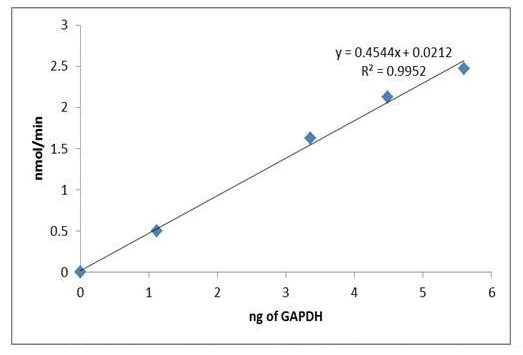
Functional Studies - Recombinant human GAPDH protein (Active) (AB291253)
Functional analysis of ab291253.
Specific activity is ≥ 100 U/mg when assayed in 100 mM Hepes pH 8.0, 10 mM NaH2PO4, 0.1% NP-40 at 37°C for 30 minutes
- SDS-PAGE
Supplier Data
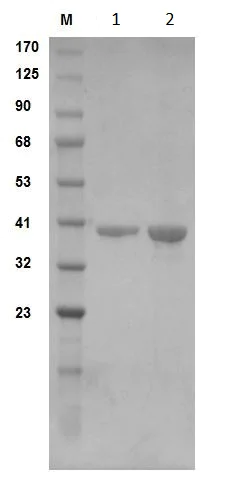
SDS-PAGE - Recombinant human GAPDH protein (Active) (AB291253)
SDS-PAGE (4-20% gel) analysis of ab291253 under reducing conditions.
Lane 1 : 2.5 μg
Lane 2 : 5 μg
搭配使用产品
Reagents, Controls & Accessories
AB325995
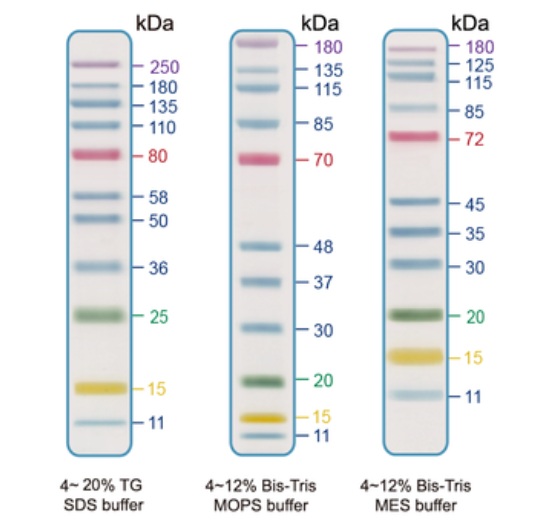
Prestained Protein Ladder - Broad molecular weight (11-250 kDa, 5-color, 11 bands)
- 0
- 0
Primary Antibodies
AB181602
Anti-GAPDH antibody [EPR16891] - Loading Control
RabMAb|Recombinant|Lab Essentials|20ul selling size

- 5
- 23

Primary Antibodies
AB115777
Anti-beta Actin antibody [SP124] - Cytoskeleton Marker
20ul selling size|RabMAb|Lab Essentials|Recombinant
- 4
- 1

反应性数据
序列信息
性能和储存信息
形式
运输条件
推荐的短期储存条件
推荐的长期储存条件
补充信息
This supplementary information is collated from multiple sources and compiled automatically.
Biological function summary
GAPDH serves important metabolic functions beyond its enzymatic role in glycolysis. It functions as part of a multi-enzyme complex within the cytoplasm which facilitates efficient substrate channeling during glycolysis. Additionally GAPDH has non-glycolytic roles including involvement in nuclear processes like RNA export and DNA repair. Its ubiquitous presence across different cellular compartments indicates its multiple functions beyond metabolic pathways.
Pathways
GAPDH integrates into significant cellular functions like the glycolytic pathway and apoptotic pathways. In glycolysis GAPDH collaborates with enzymes like phosphoglycerate kinase forming a cohesive link in the energy conversion chain. Its participation in apoptotic pathways highlights GAPDH's involvement in cellular death processes interacting with proteins like Bcl-2 to influence apoptosis progression. These roles reinforce its presence in central metabolic and regulatory pathways.
常规信息
功能
Catalyzes the conversion of D-glyceraldehyde 3-phosphate (G3P) into 3-phospho-D-glyceroyl phosphate in glycolysis and the reverse reaction in gluconeogenesis (PubMed : 11724794, PubMed : 3170585). Also shows nitrosylase activity, thereby playing a role in nuclear functions (PubMed : 11724794, PubMed : 3170585). Modulates the organization and assembly of the cytoskeleton (By similarity). Facilitates the CHP1-dependent microtubule and membrane associations through its ability to stimulate the binding of CHP1 to microtubules (By similarity). Component of the GAIT (gamma interferon-activated inhibitor of translation) complex which mediates interferon-gamma-induced transcript-selective translation inhibition in inflammation processes (PubMed : 23071094). Upon interferon-gamma treatment assembles into the GAIT complex which binds to stem loop-containing GAIT elements in the 3'-UTR of diverse inflammatory mRNAs (such as ceruplasmin) and suppresses their translation (PubMed : 23071094). Also plays a role in innate immunity by promoting TNF-induced NF-kappa-B activation and type I interferon production, via interaction with TRAF2 and TRAF3, respectively (PubMed : 23332158, PubMed : 27387501). Participates in nuclear events including transcription, RNA transport, DNA replication and apoptosis (By similarity). Nuclear functions are probably due to the nitrosylase activity that mediates cysteine S-nitrosylation of nuclear target proteins such as SIRT1, HDAC2 and PRKDC (By similarity).
序列相似性
Belongs to the glyceraldehyde-3-phosphate dehydrogenase family.
翻译后修饰
S-nitrosylation of Cys-152 leads to interaction with SIAH1, followed by translocation to the nucleus (By similarity). S-nitrosylation of Cys-247 is induced by interferon-gamma and LDL(ox) implicating the iNOS-S100A8/9 transnitrosylase complex and seems to prevent interaction with phosphorylated RPL13A and to interfere with GAIT complex activity (PubMed:22771119, PubMed:25417112).. ISGylated.. Sulfhydration at Cys-152 increases catalytic activity.. Oxidative stress can promote the formation of high molecular weight disulfide-linked GAPDH aggregates, through a process called nucleocytoplasmic coagulation. Such aggregates can be observed in vivo in the affected tissues of patients with Alzheimer disease or alcoholic liver cirrhosis, or in cell cultures during necrosis. Oxidation at Met-46 may play a pivotal role in the formation of these insoluble structures. This modification has been detected in vitro following treatment with free radical donor (+/-)-(E)-4-ethyl-2-[(E)-hydroxyimino]-5-nitro-3-hexenamide. It has been proposed to destabilize nearby residues, increasing the likelihood of secondary oxidative damages, including oxidation of Tyr-45 and Met-105. This cascade of oxidations may augment GAPDH misfolding, leading to intermolecular disulfide cross-linking and aggregation.. Succination of Cys-152 and Cys-247 by the Krebs cycle intermediate fumarate, which leads to S-(2-succinyl)cysteine residues, inhibits glyceraldehyde-3-phosphate dehydrogenase activity. Fumarate concentration as well as succination of cysteine residues in GAPDH is significantly increased in muscle of diabetic mammals. It was proposed that the S-(2-succinyl)cysteine chemical modification may be a useful biomarker of mitochondrial and oxidative stress in diabetes and that succination of GAPDH and other thiol proteins by fumarate may contribute to the metabolic changes underlying the development of diabetes complications.. (Microbial infection) Glycosylated by C.rodentium protein NleB, enteropathogenic E.coli protein NleB1 and S.typhimurium protein Ssek1: arginine GlcNAcylation prevents the interaction with TRAF2 and TRAF3 (PubMed:23332158, PubMed:27387501, PubMed:28522607). This leads to reduced ubiquitination of TRAF2 and TRAF3, and subsequent inhibition of NF-kappa-B signaling and type I interferon production, respectively (PubMed:23332158, PubMed:27387501).
亚细胞定位
Nucleus
靶点信息
Abcam Product Promise
Please note: All products are 'FOR RESEARCH USE ONLY. NOT FOR USE IN DIAGNOSTIC OR THERAPEUTIC PROCEDURES'.
For licensing inquiries, please contact partnerships@abcam.com