重组人 Flt3 / CD135 蛋白 (His tag N-Terminus)
Recombinant human Flt3 / CD135 protein (His tag N-Terminus)
Be the first to review this product! Submit a review
|
(0 Publication)
Recombinant human Flt3 / CD135 protein (His tag N-Terminus) is a Human Fragment protein, expressed in Baculovirus infected Sf9 cells, with >80%, suitable for FuncS (Neut/Block), FuncS.
查看别名
CD135, FLK2, STK1, FLT3, Receptor-type tyrosine-protein kinase FLT3, FL cytokine receptor, Fetal liver kinase-2, Fms-like tyrosine kinase 3, Stem cell tyrosine kinase 1, FLK-2, FLT-3, STK-1
搭配使用产品
Reagents, Controls & Accessories
AB313996
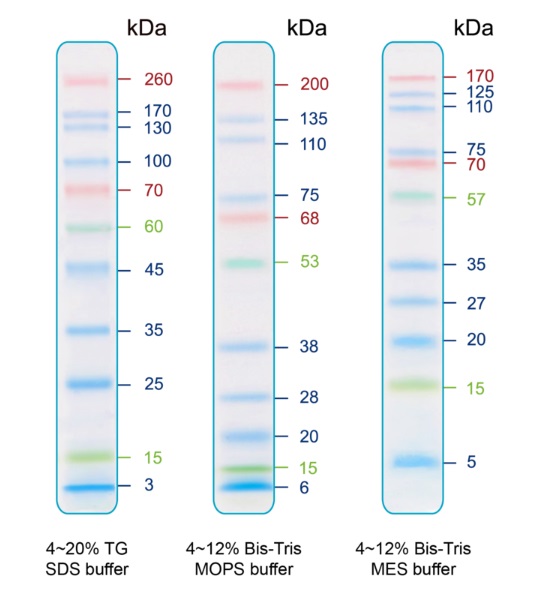
Prestained Protein Ladder - Extra broad molecular weight (3 - 260 kDa)
- 0
- 0
Proteins & Peptides
AB270071
Recombinant mouse Flt3 ligand/Flt3L protein (Active)
Premium Bioactive

- 0
- 0
Proteins & Peptides
AB271470
Recombinant human c-Kit (mutated V654A) protein (Active) (His tag N-Terminus)
- 0
- 0

Primary Antibodies
AB52648
Anti-Flt3 ligand/Flt3L antibody [EP1140Y]
20ul selling size|RabMAb|Recombinant

- 4
- 3
反应性数据
产品详情
序列信息
性能和储存信息
形式
纯化工艺
运输条件
推荐的短期储存条件
推荐的长期储存条件
分装信息
储存信息
补充信息
This supplementary information is collated from multiple sources and compiled automatically.
Biological function summary
Flt3 functions as a receptor that is activated by binding to its ligand FLT3 ligand (FLT3L). This interaction stimulates the associated tyrosine kinase activity leading to auto-phosphorylation of Flt3 and subsequent downstream signaling. Flt3 does not form a heterocomplex rather it dimerizes upon ligand binding to initiate signaling cascades. These cascades promote cell proliferation differentiation and survival particularly impacting hematopoiesis and immune responses.
Pathways
Flt3 signaling impacts the internal signaling networks involving the MAPK/ERK and PI3K/AKT pathways both central to cell cycle regulation and apoptosis. Flt3 interacts functionally with proteins such as SHP2 and GRB2 in these pathways aiding signal transduction. The Flt3 receptor also shares functional motifs with KIT and PDGF receptors indicating shared regulatory mechanisms involved in cellular proliferation.
常规信息
功能
Tyrosine-protein kinase that acts as a cell-surface receptor for the cytokine FLT3LG and regulates differentiation, proliferation and survival of hematopoietic progenitor cells and of dendritic cells. Promotes phosphorylation of SHC1 and AKT1, and activation of the downstream effector MTOR. Promotes activation of RAS signaling and phosphorylation of downstream kinases, including MAPK1/ERK2 and/or MAPK3/ERK1. Promotes phosphorylation of FES, FER, PTPN6/SHP, PTPN11/SHP-2, PLCG1, and STAT5A and/or STAT5B. Activation of wild-type FLT3 causes only marginal activation of STAT5A or STAT5B. Mutations that cause constitutive kinase activity promote cell proliferation and resistance to apoptosis via the activation of multiple signaling pathways.
序列相似性
Belongs to the protein kinase superfamily. Tyr protein kinase family. CSF-1/PDGF receptor subfamily.
翻译后修饰
N-glycosylated, contains complex N-glycans with sialic acid.. Autophosphorylated on several tyrosine residues in response to FLT3LG binding. FLT3LG binding also increases phosphorylation of mutant kinases that are constitutively activated. Dephosphorylated by PTPRJ/DEP-1, PTPN1, PTPN6/SHP-1, and to a lesser degree by PTPN12. Dephosphorylation is important for export from the endoplasmic reticulum and location at the cell membrane.. Rapidly ubiquitinated by UBE2L6 and the E3 ubiquitin-protein ligase SIAH1 after autophosphorylation, leading to its proteasomal degradation.
靶点信息
Abcam Product Promise
Please note: All products are 'FOR RESEARCH USE ONLY. NOT FOR USE IN DIAGNOSTIC OR THERAPEUTIC PROCEDURES'.
For licensing inquiries, please contact partnerships@abcam.com