重组 Human beta Catenin protein (GST tag N-Terminus)
Recombinant Human beta Catenin protein (GST tag N-Terminus)
Be the first to review this product! Submit a review
|
(7 Publications)
Recombinant Human beta Catenin protein (GST tag N-Terminus) is a Human Full Length protein, in the 1 to 781 aa range, expressed in Baculovirus infected Sf9 cells, with >70%, suitable for SDS-PAGE, ELISA, WB.
查看别名
CTNNB, OK/SW-cl.35, PRO2286, CTNNB1, Catenin beta-1, Beta-catenin
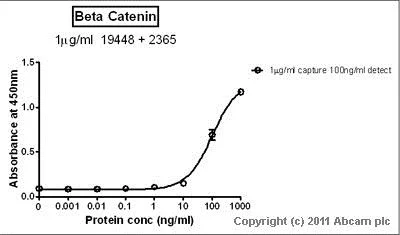
- sELISA
Unknown
Sandwich ELISA - Recombinant Human beta Catenin protein (GST tag N-Terminus) (AB63175)
Standard Curve for ab63175; dilution range 1 pg/ml to 1 μg/ml using Capture Antibody Mouse monoclonal [BDI080] to beta Catenin (ab19448) at 1 μg/ml and Detector Antibody Rabbit polyclonal to beta Catenin (ab16051) at 0.1 μg/ml.
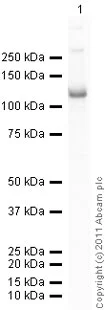
- WB
Unknown
Western blot - Recombinant Human beta Catenin protein (GST tag N-Terminus) (AB63175)
All lanes:
Western blot - Anti-beta Catenin antibody (<a href='/products/primary-antibodies/beta-catenin-antibody-ab16051'>ab16051</a>) at 0.25 µg/mL
All lanes:
Western blot - Recombinant Human beta Catenin protein (GST tag N-Terminus) (ab63175) at 0.01 µg
Secondary
All lanes:
Western blot - Goat Anti-Rabbit IgG H&L (HRP) preadsorbed (<a href='/products/secondary-antibodies/goat-rabbit-igg-h-l-hrp-preadsorbed-ab97080'>ab97080</a>) at 1/5000 dilution
Predicted band size: 85 kDa
true
Exposure time: 10s
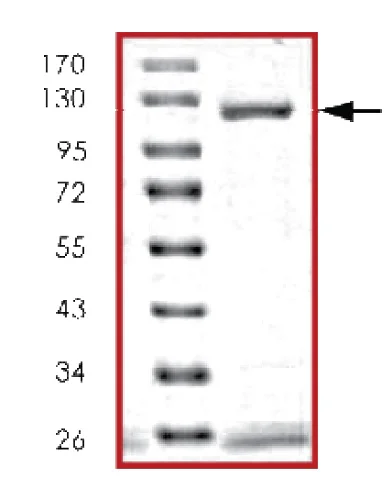
- SDS-PAGE
Supplier Data
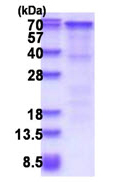
SDS-PAGE - Recombinant Human beta Catenin protein (GST tag N-Terminus) (AB63175)
SDS-PAGE analysis of Recombinant Human beta Catenin protein (Tagged) (ab63175).
MW ~115 kDa
搭配使用产品
Reagents, Controls & Accessories
AB325996
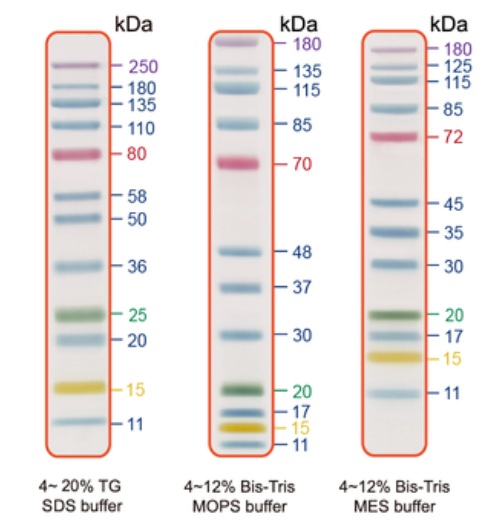
Prestained Protein Ladder - Broad molecular weight (11-250 kDa, 5-color, 12 bands)
- 0
- 0
Primary Antibodies
AB32572
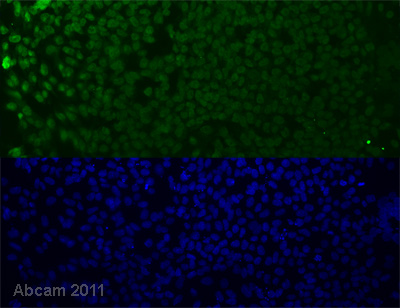
Anti-beta Catenin antibody [E247] - ChIP Grade
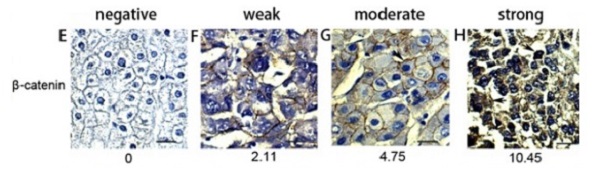
BOND RX™ Validated|Advanced Validation|RabMAb|Recombinant|KO Validated|Lab Essentials|20ul selling size
- 5
- 75

反应性数据
序列信息
性能和储存信息
形式
纯化工艺
运输条件
推荐的短期储存条件
推荐的长期储存条件
分装信息
储存信息
补充信息
This supplementary information is collated from multiple sources and compiled automatically.
Biological function summary
This protein plays roles in both cell adhesion and the regulation of gene expression. Beta Catenin is a critical component of the Wnt signaling pathway where it can form complexes with other proteins to influence gene transcription. In the absence of Wnt signaling beta Catenin levels are low due to its degradation. However when the pathway is active it accumulates in the cytoplasm and eventually translocates to the nucleus where it interacts with TCF/LEF transcription factors to regulate the expression of target genes.
Pathways
Beta Catenin plays a central role in the Wnt signaling pathway and influences cell fate decisions and cellular proliferation. It acts in concert with proteins such as Dishevelled (DVL) and Axin to coordinate these important biological processes. In the absence of Wnt signaling proteins such as APC and GSK-3β are responsible for beta Catenin degradation keeping its cellular levels in check. Beta Catenin’s interaction with transcription factors in the nucleus makes it pivotal in the regulation of cell and tissue homeostasis.
常规信息
功能
Key downstream component of the canonical Wnt signaling pathway (PubMed : 17524503, PubMed : 18077326, PubMed : 18086858, PubMed : 18957423, PubMed : 21262353, PubMed : 22155184, PubMed : 22647378, PubMed : 22699938). In the absence of Wnt, forms a complex with AXIN1, AXIN2, APC, CSNK1A1 and GSK3B that promotes phosphorylation on N-terminal Ser and Thr residues and ubiquitination of CTNNB1 via BTRC and its subsequent degradation by the proteasome (PubMed : 17524503, PubMed : 18077326, PubMed : 18086858, PubMed : 18957423, PubMed : 21262353, PubMed : 22155184, PubMed : 22647378, PubMed : 22699938). In the presence of Wnt ligand, CTNNB1 is not ubiquitinated and accumulates in the nucleus, where it acts as a coactivator for transcription factors of the TCF/LEF family, leading to activate Wnt responsive genes (PubMed : 17524503, PubMed : 18077326, PubMed : 18086858, PubMed : 18957423, PubMed : 21262353, PubMed : 22155184, PubMed : 22647378, PubMed : 22699938). Also acts as a coactivator for other transcription factors, such as NR5A2 (PubMed : 22187462). Promotes epithelial to mesenchymal transition/mesenchymal to epithelial transition (EMT/MET) via driving transcription of CTNNB1/TCF-target genes (PubMed : 29910125). Involved in the regulation of cell adhesion, as component of an E-cadherin : catenin adhesion complex (By similarity). Acts as a negative regulator of centrosome cohesion (PubMed : 18086858). Involved in the CDK2/PTPN6/CTNNB1/CEACAM1 pathway of insulin internalization (PubMed : 21262353). Blocks anoikis of malignant kidney and intestinal epithelial cells and promotes their anchorage-independent growth by down-regulating DAPK2 (PubMed : 18957423). Disrupts PML function and PML-NB formation by inhibiting RANBP2-mediated sumoylation of PML (PubMed : 22155184). Promotes neurogenesis by maintaining sympathetic neuroblasts within the cell cycle (By similarity). Involved in chondrocyte differentiation via interaction with SOX9 : SOX9-binding competes with the binding sites of TCF/LEF within CTNNB1, thereby inhibiting the Wnt signaling (By similarity). Acts as a positive regulator of odontoblast differentiation during mesenchymal tooth germ formation, via promoting the transcription of differentiation factors such as LEF1, BMP2 and BMP4 (By similarity). Activity is repressed in a MSX1-mediated manner at the bell stage of mesenchymal tooth germ formation which prevents premature differentiation of odontoblasts (By similarity).
序列相似性
Belongs to the beta-catenin family.
翻译后修饰
Phosphorylation at Ser-552 by AMPK promotes stabilization of the protein, enhancing TCF/LEF-mediated transcription (By similarity). Phosphorylation by GSK3B requires prior phosphorylation of Ser-45 by another kinase (PubMed:10966653, PubMed:12027456, PubMed:12051714). Phosphorylation proceeds then from Thr-41 to Ser-37 and Ser-33 (PubMed:12077367, PubMed:25169422). Phosphorylated by NEK2 (PubMed:18086858). EGF stimulates tyrosine phosphorylation (PubMed:10187801). Phosphorylated on Ser-33 and Ser-37 by HIPK2 and GSK3B, this phosphorylation triggers proteasomal degradation (PubMed:20307497). Phosphorylation on Ser-191 and Ser-246 by CDK5 (PubMed:17009320). Phosphorylation by CDK2 regulates insulin internalization (PubMed:21262353). Phosphorylation by PTK6 at Tyr-64, Tyr-142, Tyr-331 and/or Tyr-333 with the predominant site at Tyr-64 is not essential for inhibition of transcriptional activity (PubMed:20026641). Phosphorylation by SRC at Tyr-333 promotes interaction with isoform M2 of PKM (PKM2); promoting transcription activation (PubMed:22056988).. Ubiquitinated by the SCF(BTRC) E3 ligase complex when phosphorylated by GSK3B, leading to its degradation (PubMed:12077367). Ubiquitinated by a E3 ubiquitin ligase complex containing UBE2D1, SIAH1, CACYBP/SIP, SKP1, APC and TBL1X, leading to its subsequent proteasomal degradation (PubMed:11389839, PubMed:11389840, PubMed:20307497). Ubiquitinated and degraded following interaction with SOX9 (By similarity). Ubiquitinated via 'Lys-11'- and 'Lys-29'-linked ubiquitin chains by UBR5, leading to its stabilization (PubMed:21118991). Ubiquitinated by the SCF-FBXO16 E3 ubiquitin ligase, leading to proteasomal degradation (PubMed:30714168).. S-nitrosylation at Cys-619 within adherens junctions promotes VEGF-induced, NO-dependent endothelial cell permeability by disrupting interaction with E-cadherin, thus mediating disassembly adherens junctions.. O-glycosylation at Ser-23 decreases nuclear localization and transcriptional activity, and increases localization to the plasma membrane and interaction with E-cadherin CDH1.. Deacetylated at Lys-49 by SIRT1.. Phosphorylated at Thr-556 by herpes virus 1/HHV-1 leading to CTNNB1 inhibition.
亚细胞定位
Nucleus
靶点信息
文献 (7)
Recent publications for all applications. Explore the full list and refine your search
Nature communications 14:6682 PubMed37865665
2023
Applications
Unspecified application
Species
Unspecified reactive species
eLife 11: PubMed35170427
2022
Applications
Unspecified application
Species
Unspecified reactive species
Nature communications 13:350 PubMed35039490
2022
Applications
Unspecified application
Species
Unspecified reactive species
Nature 584:98-101 PubMed32581357
2020
Applications
Unspecified application
Species
Unspecified reactive species
Scientific reports 8:671 PubMed29330435
2018
Applications
Unspecified application
Species
Unspecified reactive species
Cancer research 76:5615-5627 PubMed27520449
2016
Applications
Unspecified application
Species
Unspecified reactive species
ACS central science 1:374-382 PubMed26539563
2015
Applications
Unspecified application
Species
Unspecified reactive species
Abcam Product Promise
Please note: All products are 'FOR RESEARCH USE ONLY. NOT FOR USE IN DIAGNOSTIC OR THERAPEUTIC PROCEDURES'.
For licensing inquiries, please contact partnerships@abcam.com