重组 E. coli hchA 蛋白 (His tag N-Terminus)
Recombinant E. coli hchA protein (His tag N-Terminus)
Be the first to review this product! Submit a review
|
(0 Publication)
Recombinant E. coli hchA protein (His tag N-Terminus) is a Escherichia coli K-12 Full Length protein, in the 1 to 283 aa range, expressed in Escherichia coli, with >95%, suitable for SDS-PAGE, Mass Spec.
查看别名
yedU, yzzC, b1967, JW1950, hchA, Protein/nucleic acid deglycase 1, Glyoxalase III, Holding molecular chaperone, Hsp31, Maillard deglycase
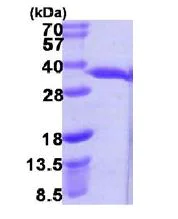
- SDS-PAGE
Unknown
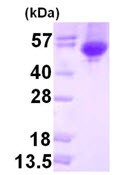
SDS-PAGE - Recombinant E. coli hchA protein (His tag N-Terminus) (AB106879)
15% SDS-PAGE analysis of 3 μg ab106879.
搭配使用产品
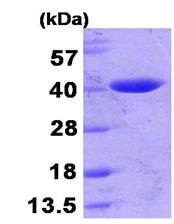
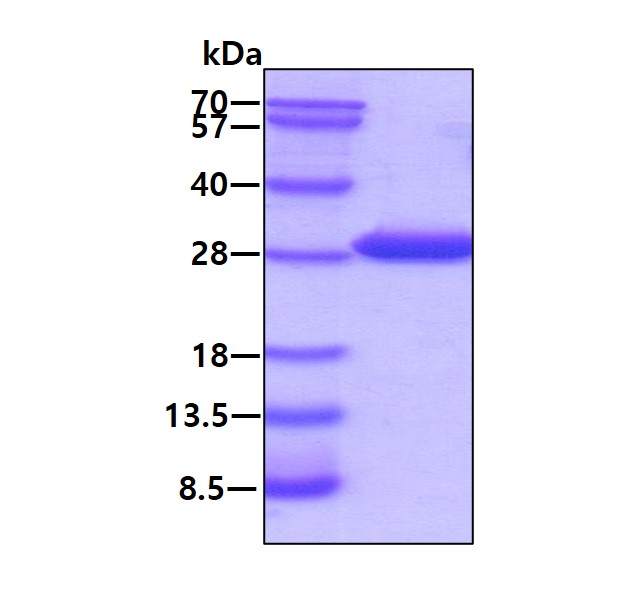
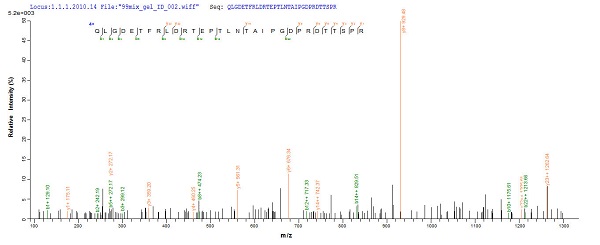
Proteins & Peptides
AB126658
Recombinant E. coli Galactosidase alpha protein (His tag N-Terminus)
- 0
- 0
反应性数据
序列信息
性能和储存信息
形式
运输条件
推荐的短期储存时间
推荐的短期储存条件
推荐的长期储存条件
分装信息
储存信息
补充信息
This supplementary information is collated from multiple sources and compiled automatically.
Biological function summary
This enzyme facilitates key reactions by dephosphorylating substrates impacting metabolism regulation. It may associate with other proteins to form complexes that contribute to cellular processes. hchA directly affects cellular maintenance by regulating levels of phosphorylated molecules important for proper cellular function and homeostasis.
Pathways
This target engages in metabolic pathways essential for cellular energy and repair processes. hchA interacts with pathways involving glucose metabolism where it collaborates with enzymes such as fructose-16-bisphosphatase. Furthermore it contributes to nucleotide biosynthesis pathways requiring cooperation with other hydrolases to ensure the proper balance of nucleotides within the cell.
常规信息
功能
Protein and nucleotide deglycase that catalyzes the deglycation of the Maillard adducts formed between amino groups of proteins or nucleotides and reactive carbonyl groups of glyoxals (PubMed : 26102038, PubMed : 26774339, PubMed : 28596309). Thus, functions as a protein deglycase that repairs methylglyoxal- and glyoxal-glycated proteins, and releases repaired proteins and lactate or glycolate, respectively. Deglycates cysteine, arginine and lysine residues in proteins, and thus reactivates these proteins by reversing glycation by glyoxals. Is able to repair glycated serum albumin, aspartate aminotransferase, glyceraldehyde-3-phosphate dehydrogenase, and fructose biphosphate aldolase. Acts on early glycation intermediates (hemithioacetals and aminocarbinols), preventing the formation of Schiff bases and advanced glycation endproducts (AGE) that cause irreversible damage (PubMed : 26102038, PubMed : 26774339). Also functions as a nucleotide deglycase able to repair glycated guanine in the free nucleotide pool (GTP, GDP, GMP, dGTP) and in DNA and RNA. Is thus involved in a major nucleotide repair system named guanine glycation repair (GG repair), dedicated to reversing methylglyoxal and glyoxal damage via nucleotide sanitization and direct nucleic acid repair (PubMed : 28596309). Has been reported to display chaperone, peptidase and glutathione-independent glyoxalase activities (PubMed : 12235139, PubMed : 12565879, PubMed : 14731284, PubMed : 15550391, PubMed : 21696459, PubMed : 7848303). However, these apparently disparate activities are all recruited to execute its protein deglycase primary function (PubMed : 26102038, PubMed : 26774339). Plays an important role in protecting cells from carbonyl stress, severe heat shock and starvation, as well as in acid resistance of stationary-phase cells (PubMed : 12235139, PubMed : 16796689, PubMed : 17158627).
序列相似性
Belongs to the peptidase C56 family. HchA subfamily.
靶点信息
Abcam Product Promise
Please note: All products are 'FOR RESEARCH USE ONLY. NOT FOR USE IN DIAGNOSTIC OR THERAPEUTIC PROCEDURES'.
For licensing inquiries, please contact partnerships@abcam.com