Anti-Ubiquitin 抗体 [EPR8590]
Anti-Ubiquitin antibody [EPR8590]
- 20ul selling size
- RabMAb
- Recombinant
- 了解详情
Be the first to review this product! Submit a review
|
(9 Publications)
Rabbit Recombinant Monoclonal UBC antibody. Suitable for IHC-P, WB and reacts with Human, Mouse samples. Cited in 9 publications.
查看别名
Polyubiquitin-C, UBC
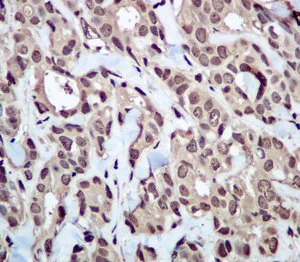
- IHC-P
Unknown
Immunohistochemistry (Formalin/PFA-fixed paraffin-embedded sections) - Anti-Ubiquitin antibody [EPR8590] (AB137025)
Immunohistochemical analysis of paraffin-embedded Human breast carcinoma tissue labelling Ubiquitin with ab137025 at 1/100 dilution.
Perform heat mediated antigen retrieval with citrate buffer pH 6 before commencing with IHC staining protocol.
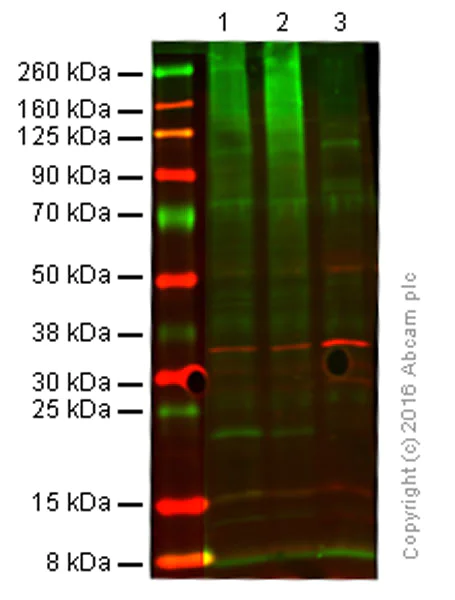
- WB
Lab
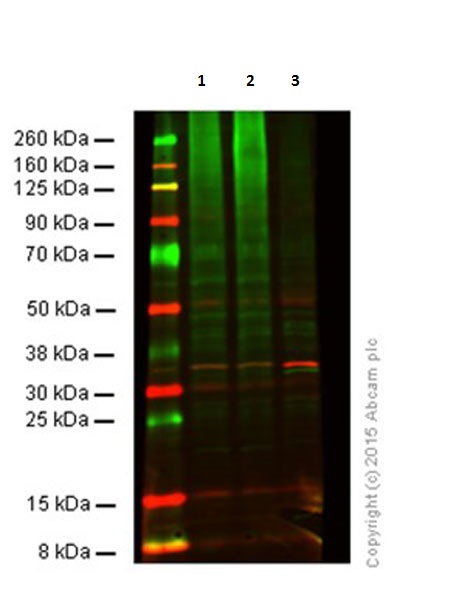
Western blot - Anti-Ubiquitin antibody [EPR8590] (AB137025)
This blot was produced using a 4-12% Bis-tris gel under the MES buffer system. The gel was run at 200V for 35 minutes before being transferred onto a nitrocellulose membrane at 30V for 70 minutes. ab137025 and ab8245 (loading control to GAPDH) were diluted 1/200 and 1/10 000 respectively and incubated overnight at 4°C. Blots were developed with goat anti-rabbit IgG (H + L) and goat anti-mouse IgG (H + L) secondary antibodies at 1/10 000 dilution for 1 h at room temperature before imaging using the Licor Odyssey CLx.
All lanes:
Western blot - Anti-Ubiquitin antibody [EPR8590] (ab137025) at 1/200 dilution
Lane 1:
MCF-7 cell lysate at 20 µg
Lane 2:
MCF-7 Whole cell lysate + M132 (50 uM 90 min) at 20 µg
Lane 3:
Mouse brain tissue lysate at 20 µg
Predicted band size: 26 kDa
false
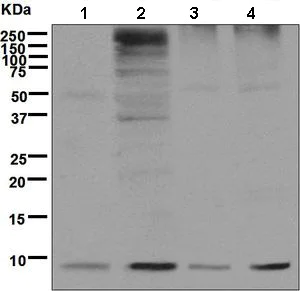
- WB
Unknown
Western blot - Anti-Ubiquitin antibody [EPR8590] (AB137025)
All lanes:
Western blot - Anti-Ubiquitin antibody [EPR8590] (ab137025) at 1/1000 dilution
Lane 1:
Fetal brain cell lysate at 10 µg
Lane 2:
HepG2 cell lysate at 10 µg
Lane 3:
Jurkat cell lysate at 10 µg
Lane 4:
293T cell lysate at 10 µg
Secondary
All lanes:
HRP labelled goat anti-rabbit at 1/2000 dilution
Predicted band size: 26 kDa
false
不同偶联物与剂型 (1)
-
Anti-Ubiquitin antibody [EPR8590] - BSA and Azide free
替代产品
Primary Antibodies
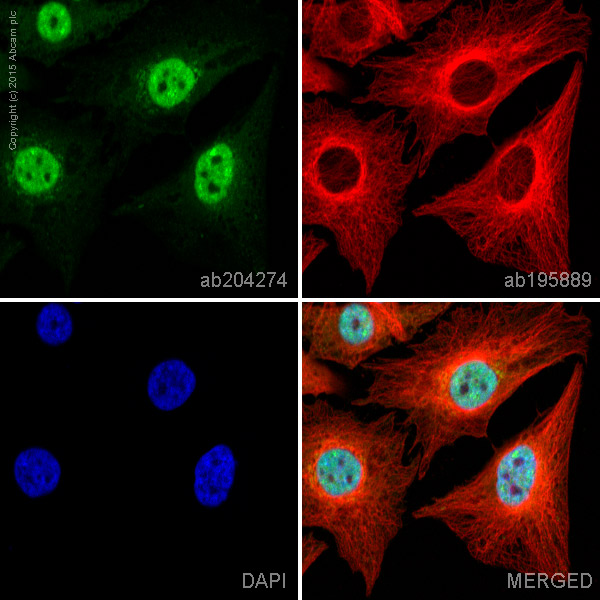
AB204274
Alexa Fluor® 488 Anti-Ubiquitin (linkage-specific K48) antibody [EP8589]
RabMAb|Recombinant
- 0
- 0
Primary Antibodies
AB237254
Alexa Fluor® 488 Anti-Ubiquitin (linkage-specific K27) antibody [EPR17034]
RabMAb|Recombinant

- 0
- 0
Primary Antibodies
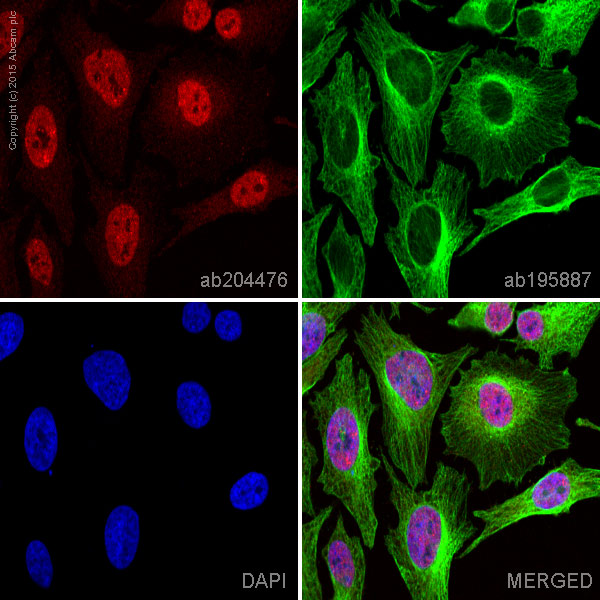
AB204476
Alexa Fluor® 647 Anti-Ubiquitin (linkage-specific K48) antibody [EP8589]
RabMAb|Recombinant
- 0
- 0
Primary Antibodies
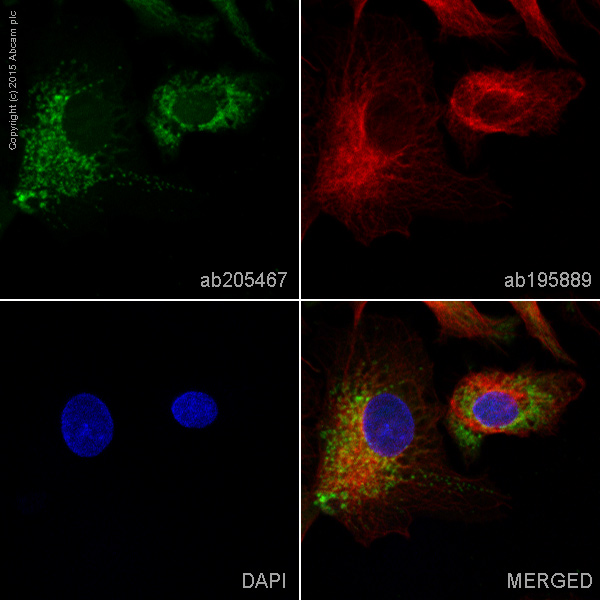
AB205467
Alexa Fluor® 488 Anti-Ubiquitin antibody [EPR8830]
RabMAb|Recombinant
- 0
- 0
Primary Antibodies
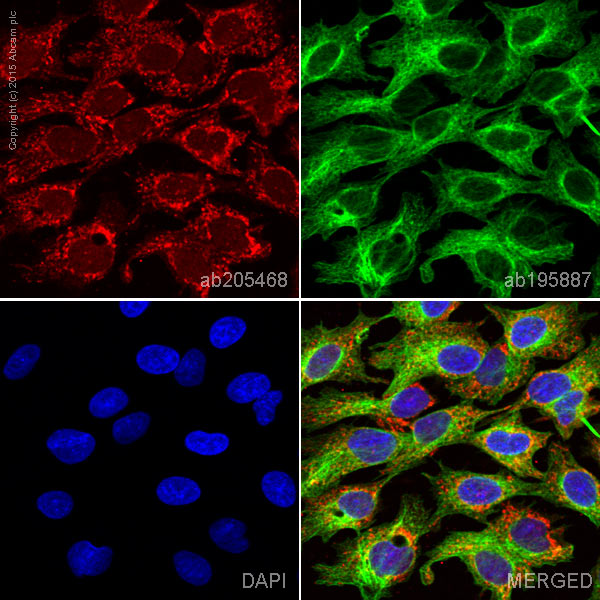
AB205468
Alexa Fluor® 647 Anti-Ubiquitin antibody [EPR8830]
RabMAb|Recombinant
- 0
- 0
Primary Antibodies
AB192489
Alexa Fluor® 647 Anti-Ubiquitin (linkage-specific K63) antibody [EPR8590-448]
RabMAb|Recombinant

- 0
- 0
Primary Antibodies
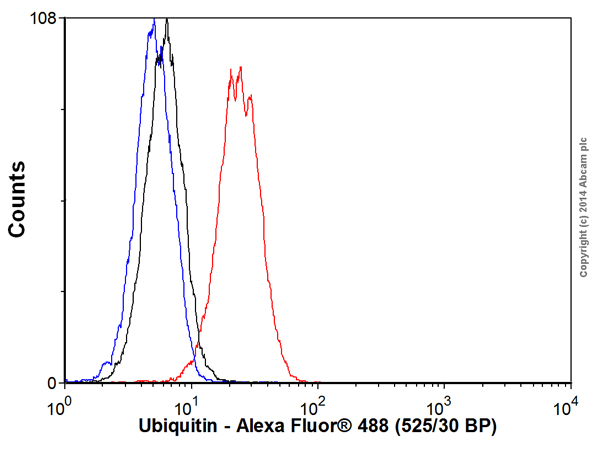
AB192539
Alexa Fluor® 488 Anti-Ubiquitin (linkage-specific K63) antibody [EPR8590-448]
RabMAb|Recombinant
- 0
- 0
Primary Antibodies
AB237255
Alexa Fluor® 647 Anti-Ubiquitin (linkage-specific K27) antibody [EPR17034]
RabMAb|Recombinant

- 0
- 0

Primary Antibodies
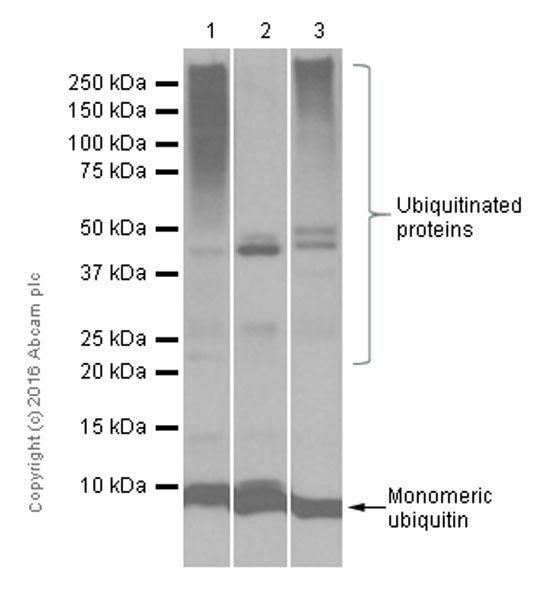
AB134953
Anti-Ubiquitin antibody [EPR8830]
20ul selling size|RabMAb|Recombinant
- 4
- 3
Primary Antibodies
AB140601
Anti-Ubiquitin (linkage-specific K48) antibody [EP8589]
20ul selling size|RabMAb|Recombinant

- 5
- 10
Primary Antibodies
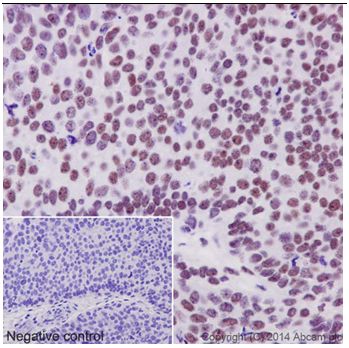
AB181537
Anti-Ubiquitin (linkage-specific K27) antibody [EPR17034]
20ul selling size|RabMAb|Recombinant
- 4
- 1
Primary Antibodies
AB271911
Anti-Ubiquitin (linkage-specific K48) antibody [EP8589] - BSA and Azide free
RabMAb|Recombinant
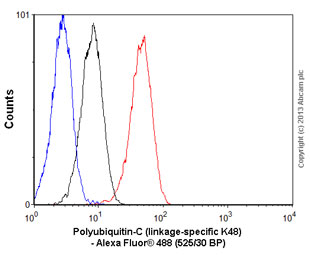
- 0
- 0
搭配使用产品
Primary Antibodies
AB134953
Anti-Ubiquitin antibody [EPR8830]
20ul selling size|RabMAb|Recombinant
- 4
- 3

Primary Antibodies
AB140601
Anti-Ubiquitin (linkage-specific K48) antibody [EP8589]
20ul selling size|RabMAb|Recombinant
- 5
- 10
反应性数据
产品详情
Patented technology
Our RabMAb® technology is a patented hybridoma-based technology for making rabbit monoclonal antibodies. For details on our patents, please refer to RabMAb® patents.
What are the advantages of a recombinant monoclonal antibody?
This product is a recombinant monoclonal antibody, which offers several advantages including:
- - High batch-to-batch consistency and reproducibility
- - Improved sensitivity and specificity
- - Long-term security of supply
- - Animal-free batch production
For more information, read more on recombinant antibodies.
性能和储存信息
形式
纯化工艺
存储溶液
运输条件
推荐的短期储存条件
推荐的长期储存条件
补充信息
This supplementary information is collated from multiple sources and compiled automatically.
Biological function summary
The ubiquitin system plays a critical role in regulating protein turnover and quality control within cells. It is part of a larger complex known as the ubiquitin-proteasome system (UPS) which is responsible for degrading proteins that need to be turned over. This process is essential for cell cycle control response to oxidative stress and DNA repair. Ubiquitin's role in tagging proteins for degradation or signaling allows cells to respond quickly to changes in their environment and maintain balance.
Pathways
Ubiquitin functions in several important biological pathways including the Wnt and NF-kB pathways. In the Wnt signaling pathway ubiquitination modulates the stability of key components thereby affecting the pathway's overall activity. In the NF-kB signaling pathway ubiquitin labels inhibitor proteins for degradation which releases and activates NF-kB. These pathways highlight ubiquitin's interaction with proteins such as beta-catenin in Wnt and IkB in NF-kB illustrating how it regulates diverse cellular processes.
产品实验方案
- Visit the General protocols
- Visit the Troubleshooting
靶点信息
文献 (9)
Recent publications for all applications. Explore the full list and refine your search
Clinical and experimental pharmacology & physiology 51:e13855 PubMed38636942
2024
Applications
Unspecified application
Species
Unspecified reactive species
Cell reports 39:110656 PubMed35417709
2022
Applications
Unspecified application
Species
Unspecified reactive species
Cancer science 113:1652-1668 PubMed35293097
2022
Applications
Unspecified application
Species
Unspecified reactive species
Cell death & disease 11:297 PubMed32341332
2020
Applications
Unspecified application
Species
Unspecified reactive species
Development (Cambridge, England) 147: PubMed31862842
2020
Applications
Unspecified application
Species
Unspecified reactive species
EBioMedicine 49:26-39 PubMed31636012
2019
Applications
Unspecified application
Species
Unspecified reactive species
Journal of molecular and cellular cardiology 129:303-313 PubMed30885746
2019
Applications
Unspecified application
Species
Unspecified reactive species
Journal of cell science 131: PubMed29748379
2018
Applications
Unspecified application
Species
Unspecified reactive species
PloS one 8:e74051 PubMed24040163
2013
Applications
WB
Species
Unspecified reactive species
Abcam Product Promise
Please note: All products are 'FOR RESEARCH USE ONLY. NOT FOR USE IN DIAGNOSTIC OR THERAPEUTIC PROCEDURES'.
For licensing inquiries, please contact partnerships@abcam.com