重组Anti-UBA5抗体[EPR11729] - BSA and Azide free
Anti-UBA5 antibody [EPR11729] - BSA and Azide free
- RabMAb
- Recombinant
- 了解详情
Be the first to review this product! Submit a review
|
(0 Publication)
Rabbit Recombinant Monoclonal UBA5 antibody. Carrier free. Suitable for IHC-P, ICC/IF, WB, Flow Cyt (Intra) and reacts with Human samples.
查看别名
UBE1DC1, UBA5, Ubiquitin-like modifier-activating enzyme 5, Ubiquitin-activating enzyme 5, ThiFP1, UFM1-activating enzyme, Ubiquitin-activating enzyme E1 domain-containing protein 1
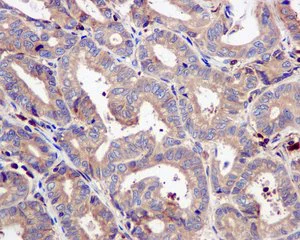
- IHC-P
Supplier Data
Immunohistochemistry (Formalin/PFA-fixed paraffin-embedded sections) - Anti-UBA5 antibody [EPR11729] - BSA and Azide free (AB249983)
This data was developed using ab177478, the same antibody clone in a different buffer formulation.
Immunohistochemical analysis of paraffin embedded Human prostate gastric carcinoma tissue labeling UBA5 with ab177478 at 1/50.
Perform heat mediated antigen retrieval before commencing with IHC staining protocol.
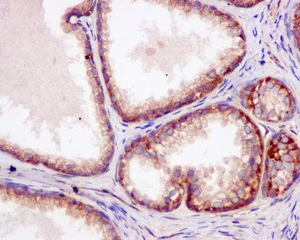
- IHC-P
Supplier Data
Immunohistochemistry (Formalin/PFA-fixed paraffin-embedded sections) - Anti-UBA5 antibody [EPR11729] - BSA and Azide free (AB249983)
This data was developed using ab177478, the same antibody clone in a different buffer formulation.
Immunohistochemical analysis of paraffin embedded Human prostate tissue labeling UBA5 with ab177478 at 1/50.
Perform heat mediated antigen retrieval before commencing with IHC staining protocol.

- ICC/IF
Supplier Data
Immunocytochemistry/ Immunofluorescence - Anti-UBA5 antibody [EPR11729] - BSA and Azide free (AB249983)
This data was developed using ab177478, the same antibody clone in a different buffer formulation.
Immunofluorescent analysis of Caco-2 cells labeling UBA5 with ab177478 at 1/50 (green) and DAPI staining (blue).
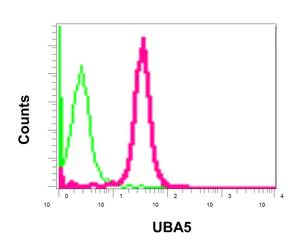
- Flow Cyt (Intra)
Supplier Data
Flow Cytometry (Intracellular) - Anti-UBA5 antibody [EPR11729] - BSA and Azide free (AB249983)
This data was developed using ab177478, the same antibody clone in a different buffer formulation.
Intracellular flow cytometrical analysis of permeabilized Jurkat cells labeling UBA5 with ab177478 at 1/10 (red) or a rabbit IgG (negative) (green).
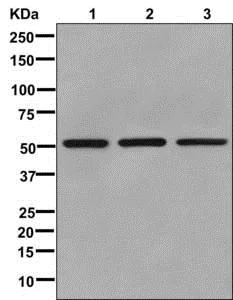
- WB
Supplier Data
Western blot - Anti-UBA5 antibody [EPR11729] - BSA and Azide free (AB249983)
This data was developed using ab177478, the same antibody clone in a different buffer formulation.
All lanes:
Western blot - Anti-UBA5 antibody [EPR11729] (<a href='/products/primary-antibodies/uba5-antibody-epr11729-ab177478'>ab177478</a>) at 1/1000 dilution
Lane 1:
Caco-2 cell lysate at 10 µg
Lane 2:
Jurkat cell lysate at 10 µg
Lane 3:
293T cell lysate at 10 µg
Secondary
All lanes:
HRP labelled goat anti-rabbit at 1/2000 dilution
Predicted band size: 45 kDa
false
不同偶联物与剂型 (10)
-
Anti-UBA5 antibody [EPR11729]
-
660 APC
APC Anti-UBA5 antibody [EPR11729]
-
519 Alexa Fluor® 488
Alexa Fluor® 488 Anti-UBA5 antibody [EPR11729]
-
565 Alexa Fluor® 555
Alexa Fluor® 555 Anti-UBA5 antibody [EPR11729]
-
603 Alexa Fluor® 568
Alexa Fluor® 568 Anti-UBA5 antibody [EPR11729]
-
617 Alexa Fluor® 594
Alexa Fluor® 594 Anti-UBA5 antibody [EPR11729]
-
665 Alexa Fluor® 647
Alexa Fluor® 647 Anti-UBA5 antibody [EPR11729]
-
775 Alexa Fluor® 750
Alexa Fluor® 750 Anti-UBA5 antibody [EPR11729]
-
HRP Anti-UBA5 antibody [EPR11729]
-
578 PE
PE Anti-UBA5 antibody [EPR11729]
搭配使用产品
Primary Antibodies
AB109305
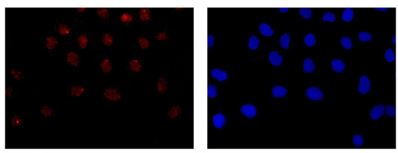
Anti-UFM1 antibody [EPR4264(2)]
20ul selling size|KO Validated|RabMAb|Recombinant

- 5
- 4
Primary Antibodies
AB189252
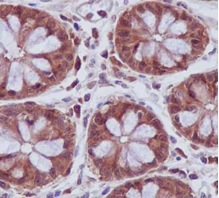
Anti-UFC1 antibody [EPR15014-102]
RabMAb|Recombinant|KO Validated|Trial Size
- 5
- 1
Primary Antibodies
AB52866
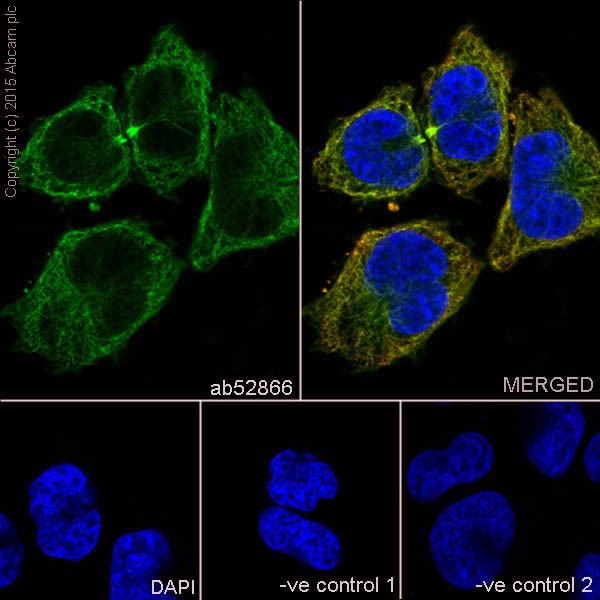
Anti-alpha Tubulin antibody [EP1332Y] - Loading Control
BOND RX™ Validated|RabMAb|Recombinant|Lab Essentials|20ul selling size|Trial Size
- 5
- 31
反应性数据
产品详情
ab249983 is the carrier-free version of ab177478.
Patented technology
Our RabMAb® technology is a patented hybridoma-based technology for making rabbit monoclonal antibodies. For details on our patents, please refer to RabMAb® patents.
What are the advantages of a recombinant monoclonal antibody?
This product is a recombinant monoclonal antibody, which offers several advantages including:
- - High batch-to-batch consistency and reproducibility
- - Improved sensitivity and specificity
- - Long-term security of supply
- - Animal-free batch production
For more information, read more on recombinant antibodies.
Conjugation ready
Our carrier-free antibodies are typically supplied in a PBS-only formulation, purified and free of BSA, sodium azide and glycerol. This conjugation-ready format is designed for use with fluorochromes, metal isotopes, oligonucleotides, and enzymes, which makes them ideal for antibody labelling, functional and cell-based assays, flow-based assays (e.g. mass cytometry) and Multiplex Imaging applications.
Use our conjugation kits for antibody conjugates that are ready-to-use in as little as 20 minutes with 1 minute hands-on-time and 100% antibody recovery: available for fluorescent dyes, HRP, biotin and gold.
Compatibility
This product is compatible with the Maxpar® Antibody Labeling Kit from Fluidigm, without the need for antibody preparation. Maxpar® is a trademark of Fluidigm Canada Inc.
性能和储存信息
形式
纯化工艺
存储溶液
运输条件
推荐的短期储存条件
推荐的长期储存条件
储存信息
补充信息
This supplementary information is collated from multiple sources and compiled automatically.
Biological function summary
UBA5 is implicated in the UFM1 conjugation system. This process modifies specific proteins and affects protein stability interaction and degradation. UBA5 operates in complex with UFC1 an E2 enzyme enabling the transfer of UFM1 to target proteins. Its activity is essential for maintaining cellular homeostasis particularly in the endoplasmic reticulum stress response through protein modification and regulation tasks.
Pathways
The UBA5-UFM1 axis integrates into the cellular stress response pathway and the endoplasmic reticulum-associated degradation (ERAD) pathway. Through these pathways UBA5 collaborates with proteins like UFL1 further connecting these pathways by tagging proteins with UFM1 to mark them for degradation or functional modification. The coordination between UBA5 and UFL1 supports efficient protein quality control and maintains cellular equilibrium under stress conditions.
产品实验方案
- Visit the General protocols
- Visit the Troubleshooting
靶点信息
Abcam Product Promise
Please note: All products are 'FOR RESEARCH USE ONLY. NOT FOR USE IN DIAGNOSTIC OR THERAPEUTIC PROCEDURES'.
For licensing inquiries, please contact partnerships@abcam.com