JavaScript is disabled in your browser. Please enable JavaScript to view this website.
AB133240

Anti-Substance P 抗体 [EPR3959]

Anti-Substance P antibody [EPR3959]

Be the first to review this product! Submit a review

|

(3 Publications)

Rabbit Recombinant Monoclonal Protachykinin-1 antibody. Suitable for IHC-P and reacts with Human samples. Cited in 3 publications.

查看别名

NKA, NKNA, TAC2, TAC1, Protachykinin-1, PPT
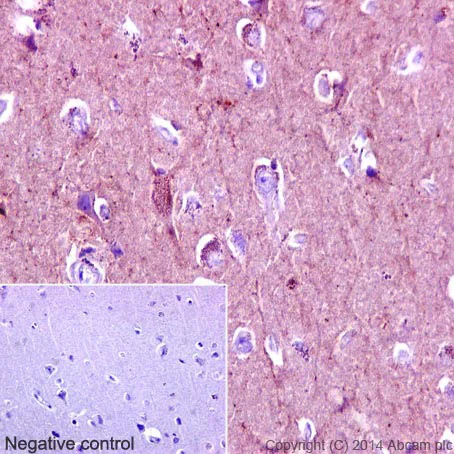
2 Images
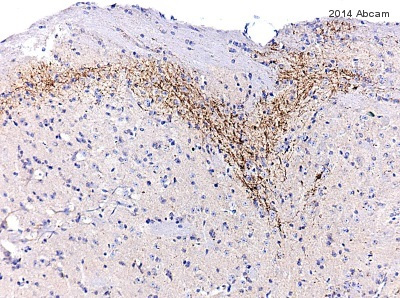
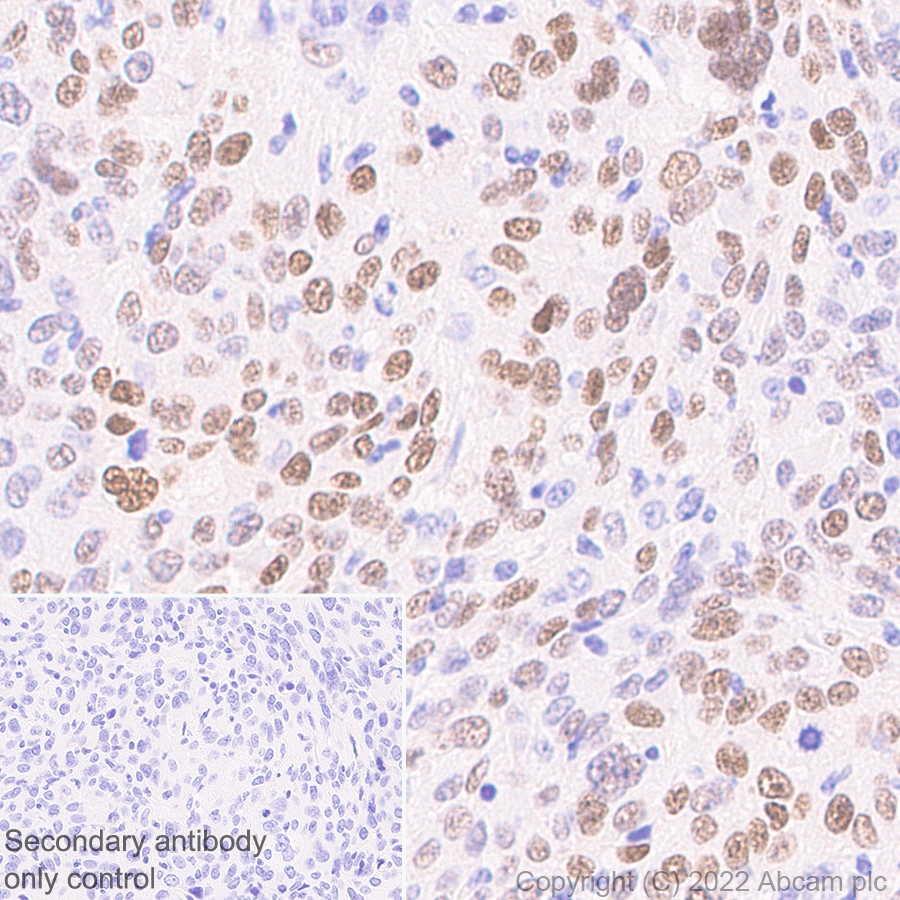
Immunohistochemistry (Formalin/PFA-fixed paraffin-embedded sections) - Anti-Substance P antibody [EPR3959] (AB133240)
  • IHC-P

Lab

Immunohistochemistry (Formalin/PFA-fixed paraffin-embedded sections) - Anti-Substance P antibody [EPR3959] (AB133240)

Immunohistochemical staining of paraffin embedded human cerebral cortex with purified ab133240 at a working dilution of 1 in 250. The secondary antibody used is a HRP goat anti-rabbit (ab97051). The sample is counter-stained with hematoxylin. Antigen retrieval was perfomed using Tris-EDTA buffer pH 9.0. PBS was used instead of the primary antibody as the negative control and is shown in the inset.
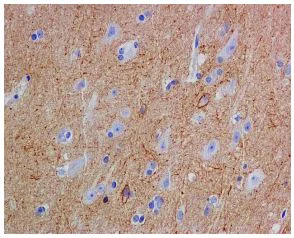
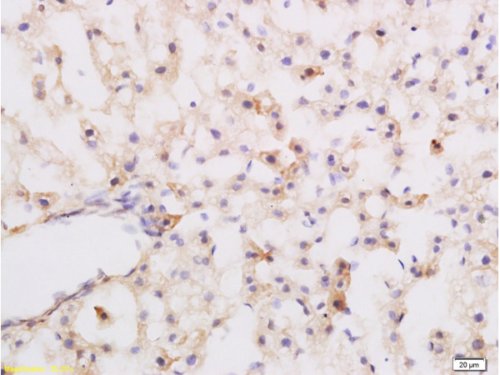
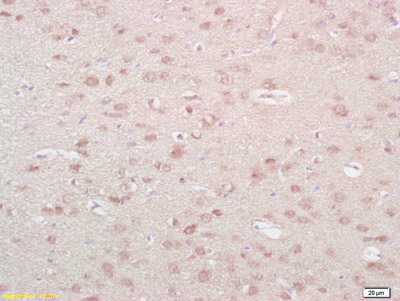
Immunohistochemistry (Formalin/PFA-fixed paraffin-embedded sections) - Anti-Substance P antibody [EPR3959] (AB133240)
  • IHC-P

Unknown

Immunohistochemistry (Formalin/PFA-fixed paraffin-embedded sections) - Anti-Substance P antibody [EPR3959] (AB133240)

Immunohistochemical analysis of Substance P in paraffin embedded human brain tissue using unpurified ab133240 at a 1/50 dilution.

Perform heat mediated antigen retrieval with citrate buffer pH 6 before commencing with IHC staining protocol.

不同偶联物与剂型 (1)

  • Carrier free

    Anti-Substance P antibody [EPR3959] - BSA and Azide free

关键信息

宿主种属

Rabbit

克隆

Monoclonal

克隆号

EPR3959

亚型

IgG

不含载体蛋白

No

反应种属

Human

应用

IHC-P

applications

免疫原

The exact immunogen used to generate this antibody is proprietary information.

反应性数据

{ "title": "Reactivity Data", "filters": { "stats": ["", "Species", "Dilution Info", "Notes"], "tabs": { "all-applications": {"fullname" : "All Applications", "shortname": "All Applications"}, "IHCP" : {"fullname" : "Immunohistochemistry (Formalin/PFA-fixed paraffin-embedded sections)", "shortname":"IHC-P"}, "ICCIF" : {"fullname" : "Immunocytochemistry/ Immunofluorescence", "shortname":"ICC/IF"} }, "product-promise": { "all": "all", "testedAndGuaranteed": "tested", "guaranteed": "expected", "predicted": "predicted", "notRecommended": "not-recommended" } }, "values": { "Human": { "IHCP-species-checked": "testedAndGuaranteed", "IHCP-species-dilution-info": "1/250 - 1/500", "IHCP-species-notes": "<p><strong>For unpurified, use 1/50 - 1/100.</strong></p> Perform heat-mediated antigen retrieval with citrate buffer pH 6 before commencing with IHC staining protocol.", "ICCIF-species-checked": "notRecommended", "ICCIF-species-dilution-info": "", "ICCIF-species-notes": "<p></p>" } } }

产品详情

Patented technology
Our RabMAb® technology is a patented hybridoma-based technology for making rabbit monoclonal antibodies. For details on our patents, please refer to RabMAb® patents.

What are the advantages of a recombinant monoclonal antibody?
This product is a recombinant monoclonal antibody, which offers several advantages including:

  • - High batch-to-batch consistency and reproducibility
  • - Improved sensitivity and specificity
  • - Long-term security of supply
  • - Animal-free batch production

For more information, read more on recombinant antibodies.

性能和储存信息

形式
Liquid
纯化工艺
Affinity purification Protein A
存储溶液
pH: 7.2 - 7.4 Preservative: 0.01% Sodium azide Constituents: PBS, 40% Glycerol (glycerin, glycerine), 0.05% BSA
运输条件
Conditional Ambient
推荐的短期储存条件
+4°C
推荐的长期储存条件
-20°C
储存信息
Stable for 12 months at -20°C

补充信息

This supplementary information is collated from multiple sources and compiled automatically.

Substance P also known as neurokinin 1 (NK1) receptor agonist is a neuropeptide with molecular mass approximately 1.3 kDa. Substance P exists mainly in the central nervous system and peripheral nervous system. This peptide performs mechanical roles by interacting with its receptor the NK1 receptor which is widespread in neurons and various tissues. It is important for processing pain signals and mood regulation. Substance P belongs to the family of tachykinins which are characterized by the common C-terminal sequence.
Biological function summary

This peptide acts as a neurotransmitter and neuromodulator in the body. Its functions are significant in the transmission of pain information into the central nervous system where it acts independently rather than being part of a larger protein complex. Additionally Substance P contributes to the regulation of inflammatory processes which impacts immune response. This peptide is not only important for pain perception but also participates in regulating emotional responses and stress.

Pathways

Substance P has a major role in the neurokinin signaling pathway. Within this pathway it interacts with other proteins such as calcitonin gene-related peptide (CGRP) enhancing its function in pain transmission and modulation. Additionally Substance P is part of the MAPK/ERK pathway where it influences cell proliferation and survival although its primary actions focus on signaling through the NK1 receptor.

Substance P is connected to conditions such as chronic pain and depression. By interacting with proteins like the NK1 receptor it is implicated in the sensation and perception of pain leading to an increased understanding of chronic pain mechanisms. Substance P also relates to inflammatory diseases with its involvement in pathways that influence inflammation and could serve as targets for therapeutic intervention in disorders like arthritis. Anti-substance therapeutics aim to modulate its effects to treat these conditions.

产品实验方案

For this product, it's our understanding that no specific protocols are required. You can visit:

靶点信息

Tachykinins are active peptides which excite neurons, evoke behavioral responses, are potent vasodilators and secretagogues, and contract (directly or indirectly) many smooth muscles.. Substance P. Is a ligand for TACR1, and triggers G protein-coupled receptor signaling via activation of phosphatidylinositol hydrolysis by phospholipase C. Substance P binding to TACR1 also triggers signaling via activation of adenylate cyclase activity which results in increased intracellular levels of cyclic AMP (cAMP) (By similarity). Is also a TACR3 agonist with low receptor affinity (PubMed : 37391393). Basic secretagogue neuropeptide released from the terminals of specific sensory nerves (PubMed : 30686732). Acts as a ligand for MRGPRX2 receptor in mast cells, initiating a signaling that mediates neurogenic inflammation and pain (PubMed : 30686732, PubMed : 34789875). Neurogenic inflammation includes mast cell activation, recruitment of immune cells and release of inflammatory mediators, such as cytokines and chemokines (By similarity). The inflammatory response can then activate or sensitize nociceptors, promoting pain (By similarity).. Neurokinin A. Is a ligand for TACR2, and triggers G protein-coupled receptor signaling via activation of G(q) and phosphatidylinositol hydrolysis by phospholipase C (PubMed : 35882833). Binding to TACR2 also triggers signaling via activation of adenylate cyclase activity which results in increased intracellular levels of cyclic AMP (cAMP).
See full target information TAC1

文献 (3)

Recent publications for all applications. Explore the full list and refine your search

Frontiers in medicine 9:820817 PubMed35308522

2022

Dramatic Effect of Botulinum Toxin Type A on Hypertrophic Scar: A Promising Therapeutic Drug and Its Mechanism Through the SP-NK1R Pathway in Cutaneous Neurogenic Inflammation.

Applications

Unspecified application

Species

Unspecified reactive species

Shunuo Zhang,Ke Li,Zhixi Yu,Jun Chai,Zheng Zhang,Yixin Zhang,Peiru Min

International forum of allergy & rhinology 7:670-678 PubMed28544688

2017

Prolonged denervation induces remodeling of nasal mucosa in rat model of posterior nasal neurectomy.

Applications

Unspecified application

Species

Unspecified reactive species

Hironobu Nishijima,Kenji Kondo,Makiko Toma-Hirano,Shu Kikuta,Mizuo Ando,Rumi Ueha,Tatsuya Yamasoba

Laboratory investigation; a journal of technical methods and pathology 96:981-93 PubMed27322954

2016

Denervation of nasal mucosa induced by posterior nasal neurectomy suppresses nasal secretion, not hypersensitivity, in an allergic rhinitis rat model.

Applications

Unspecified application

Species

Unspecified reactive species

Hironobu Nishijima,Kenji Kondo,Makiko Toma-Hirano,Shinichi Iwasaki,Shu Kikuta,Chisato Fujimoto,Rumi Ueha,Ryoji Kagoya,Tatsuya Yamasoba
View all publications

Abcam Product Promise

我们致力于为您的研究提供高质量的试剂,为您科研的每一步提供支持。若我们的产品未能达到预期性能,我们向您提供 Abcam Product Promise 保障。
详情请参阅我们的条款与条件。

Please note: All products are 'FOR RESEARCH USE ONLY. NOT FOR USE IN DIAGNOSTIC OR THERAPEUTIC PROCEDURES'.

For licensing inquiries, please contact partnerships@abcam.com