JavaScript is disabled in your browser. Please enable JavaScript to view this website.
AB216414

Anti-Substance P抗体

Anti-Substance P antibody

Be the first to review this product! Submit a review

|

(2 Publications)

Rabbit Polyclonal Protachykinin-1 antibody. Suitable for IHC-P and reacts with Rat samples. Cited in 2 publications. Immunogen corresponding to Synthetic Peptide within Human TAC1 aa 50-100 conjugated to Keyhole Limpet Haemocyanin.

查看别名

NKA, NKNA, TAC2, TAC1, Protachykinin-1, PPT
3 Images
Immunohistochemistry (Formalin/PFA-fixed paraffin-embedded sections) - Anti-Substance P antibody (AB216414)
  • IHC-P

Supplier Data

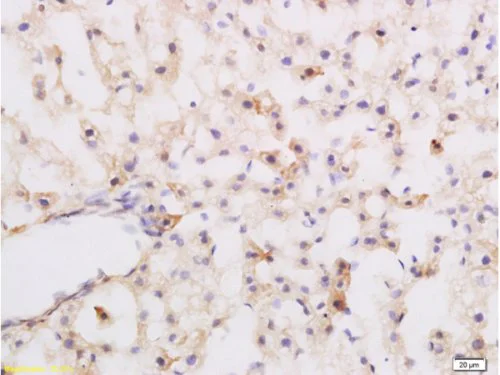
Immunohistochemistry (Formalin/PFA-fixed paraffin-embedded sections) - Anti-Substance P antibody (AB216414)

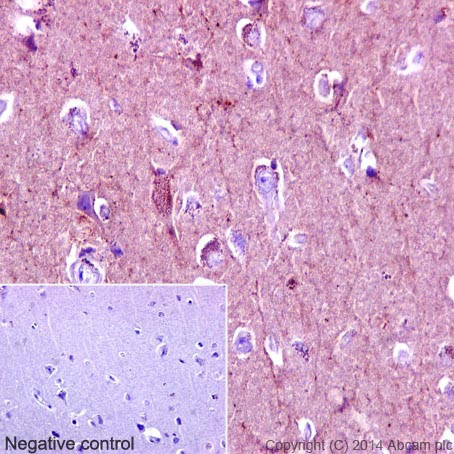
Immunohistochemical analysis of formalin-fixed, paraffin-embedded rat liver tissue labeling Substance P with ab216414 at 1/200 dilution, followed by conjugation to the secondary antibody and DAB staining.
Immunohistochemistry (Formalin/PFA-fixed paraffin-embedded sections) - Anti-Substance P antibody (AB216414)
  • IHC-P

Supplier Data

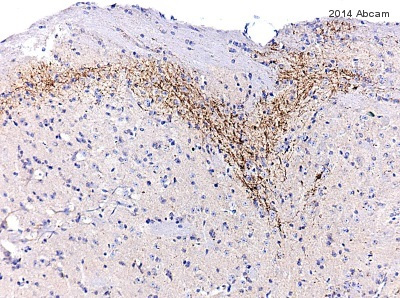
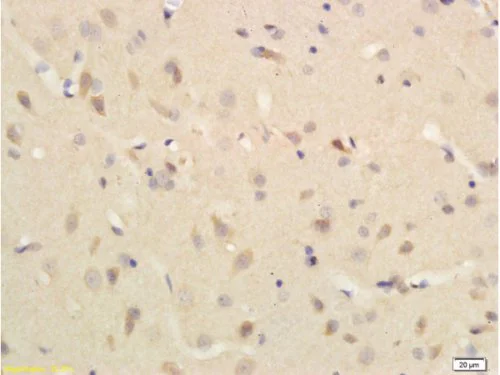
Immunohistochemistry (Formalin/PFA-fixed paraffin-embedded sections) - Anti-Substance P antibody (AB216414)

Immunohistochemical analysis of formalin-fixed, paraffin-embedded rat brain tissue, labeling Substance P with ab216414 at 1/200 dilution, followed by conjugation to the secondary antibody and DAB staining.
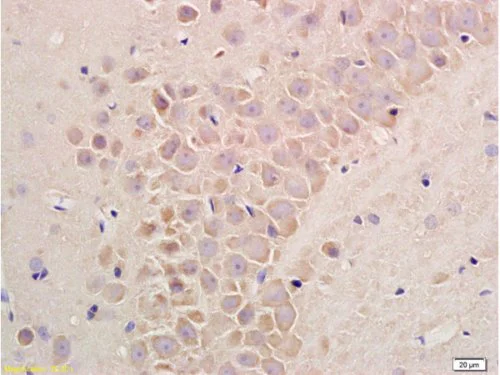
Immunohistochemistry (Formalin/PFA-fixed paraffin-embedded sections) - Anti-Substance P antibody (AB216414)
  • IHC-P

Supplier Data

Immunohistochemistry (Formalin/PFA-fixed paraffin-embedded sections) - Anti-Substance P antibody (AB216414)

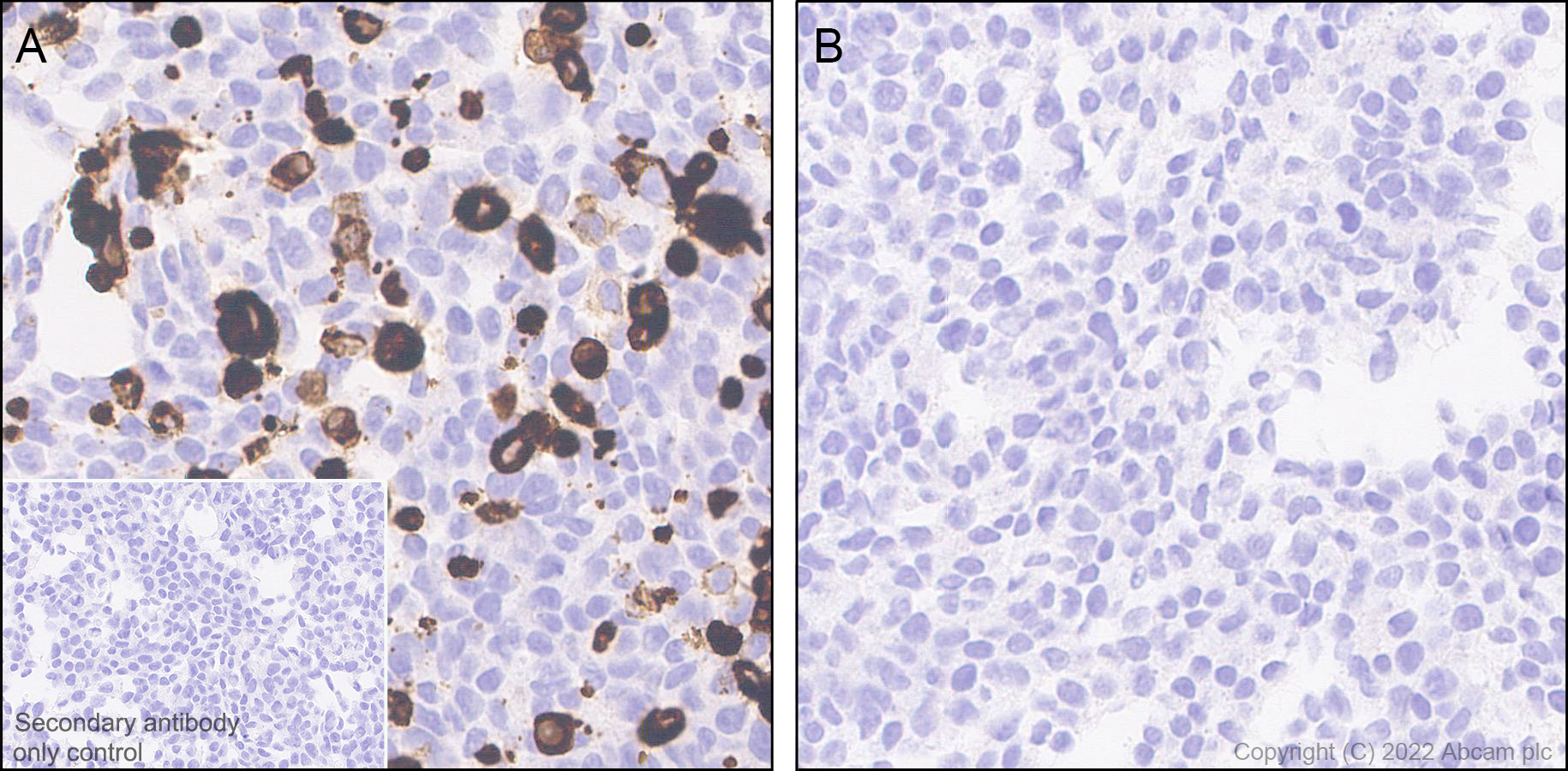
Immunohistochemical analysis of formalin-fixed, paraffin-embedded rat liver tissue, labeling Substance P with ab216414 at 1/200 dilution, followed by conjugation to the secondary antibody and DAB staining.

关键信息

宿主种属

Rabbit

克隆

Polyclonal

亚型

IgG

不含载体蛋白

No

反应种属

Rat

应用

IHC-P

applications

免疫原

Synthetic Peptide within Human TAC1 aa 50-100 conjugated to Keyhole Limpet Haemocyanin. The exact immunogen used to generate this antibody is proprietary information.

P20366

反应性数据

{ "title": "Reactivity Data", "filters": { "stats": ["", "Species", "Dilution Info", "Notes"], "tabs": { "all-applications": {"fullname" : "All Applications", "shortname": "All Applications"}, "IHCP" : {"fullname" : "Immunohistochemistry (Formalin/PFA-fixed paraffin-embedded sections)", "shortname":"IHC-P"} }, "product-promise": { "all": "all", "testedAndGuaranteed": "tested", "guaranteed": "expected", "predicted": "predicted", "notRecommended": "not-recommended" } }, "values": { "Human": { "IHCP-species-checked": "predicted", "IHCP-species-dilution-info": "", "IHCP-species-notes": "" }, "Mouse": { "IHCP-species-checked": "predicted", "IHCP-species-dilution-info": "", "IHCP-species-notes": "" }, "Rat": { "IHCP-species-checked": "testedAndGuaranteed", "IHCP-species-dilution-info": "1/100 - 1/500", "IHCP-species-notes": "<p></p>" }, "Chicken": { "IHCP-species-checked": "predicted", "IHCP-species-dilution-info": "", "IHCP-species-notes": "" }, "Cow": { "IHCP-species-checked": "predicted", "IHCP-species-dilution-info": "", "IHCP-species-notes": "" }, "Guinea pig": { "IHCP-species-checked": "predicted", "IHCP-species-dilution-info": "", "IHCP-species-notes": "" }, "Hamster": { "IHCP-species-checked": "predicted", "IHCP-species-dilution-info": "", "IHCP-species-notes": "" }, "Horse": { "IHCP-species-checked": "predicted", "IHCP-species-dilution-info": "", "IHCP-species-notes": "" }, "Rabbit": { "IHCP-species-checked": "predicted", "IHCP-species-dilution-info": "", "IHCP-species-notes": "" } } }

性能和储存信息

形式
Liquid
纯化工艺
Affinity purification Protein A
存储溶液
pH: 7.4 Preservative: 0.02% Proclin 300 Constituents: 50% Glycerol (glycerin, glycerine), 48.98% TBS, 1X, 1% BSA
运输条件
Blue Ice
推荐的短期储存时间
1-2 weeks
推荐的短期储存条件
+4°C
推荐的长期储存条件
-20°C
分装信息
Upon delivery aliquot
储存信息
Avoid freeze / thaw cycle

补充信息

This supplementary information is collated from multiple sources and compiled automatically.

Substance P also known as neurokinin 1 (NK1) receptor agonist is a neuropeptide with molecular mass approximately 1.3 kDa. Substance P exists mainly in the central nervous system and peripheral nervous system. This peptide performs mechanical roles by interacting with its receptor the NK1 receptor which is widespread in neurons and various tissues. It is important for processing pain signals and mood regulation. Substance P belongs to the family of tachykinins which are characterized by the common C-terminal sequence.
Biological function summary

This peptide acts as a neurotransmitter and neuromodulator in the body. Its functions are significant in the transmission of pain information into the central nervous system where it acts independently rather than being part of a larger protein complex. Additionally Substance P contributes to the regulation of inflammatory processes which impacts immune response. This peptide is not only important for pain perception but also participates in regulating emotional responses and stress.

Pathways

Substance P has a major role in the neurokinin signaling pathway. Within this pathway it interacts with other proteins such as calcitonin gene-related peptide (CGRP) enhancing its function in pain transmission and modulation. Additionally Substance P is part of the MAPK/ERK pathway where it influences cell proliferation and survival although its primary actions focus on signaling through the NK1 receptor.

Substance P is connected to conditions such as chronic pain and depression. By interacting with proteins like the NK1 receptor it is implicated in the sensation and perception of pain leading to an increased understanding of chronic pain mechanisms. Substance P also relates to inflammatory diseases with its involvement in pathways that influence inflammation and could serve as targets for therapeutic intervention in disorders like arthritis. Anti-substance therapeutics aim to modulate its effects to treat these conditions.

产品实验方案

For this product, it's our understanding that no specific protocols are required. You can visit:

靶点信息

Tachykinins are active peptides which excite neurons, evoke behavioral responses, are potent vasodilators and secretagogues, and contract (directly or indirectly) many smooth muscles.. Substance P. Is a ligand for TACR1, and triggers G protein-coupled receptor signaling via activation of phosphatidylinositol hydrolysis by phospholipase C. Substance P binding to TACR1 also triggers signaling via activation of adenylate cyclase activity which results in increased intracellular levels of cyclic AMP (cAMP) (By similarity). Is also a TACR3 agonist with low receptor affinity (PubMed : 37391393). Basic secretagogue neuropeptide released from the terminals of specific sensory nerves (PubMed : 30686732). Acts as a ligand for MRGPRX2 receptor in mast cells, initiating a signaling that mediates neurogenic inflammation and pain (PubMed : 30686732, PubMed : 34789875). Neurogenic inflammation includes mast cell activation, recruitment of immune cells and release of inflammatory mediators, such as cytokines and chemokines (By similarity). The inflammatory response can then activate or sensitize nociceptors, promoting pain (By similarity).. Neurokinin A. Is a ligand for TACR2, and triggers G protein-coupled receptor signaling via activation of G(q) and phosphatidylinositol hydrolysis by phospholipase C (PubMed : 35882833). Binding to TACR2 also triggers signaling via activation of adenylate cyclase activity which results in increased intracellular levels of cyclic AMP (cAMP).
See full target information TAC1

文献 (2)

Recent publications for all applications. Explore the full list and refine your search

Frontiers in pharmacology 16:1397543 PubMed40206065

2025

The efficacy of ophiopogonanone B in treating the cough in mice infected with .

Applications

Unspecified application

Species

Unspecified reactive species

Nan-Nan Liu,Bai-Hui Guo,Lei Wang,Xiao-Xi Wang,Xin Wang,Yan-Li Meng,Gui-Xin Tang,Wei-Ming Wang

Evidence-based complementary and alternative medic 2019:1505693 PubMed30719054

2019

Effects of Shugan Hewei Granule on Depressive Behavior and Protein Expression Related to Visceral Sensitivity in a Rat Model of Nonerosive Reflux Disease.

Applications

Unspecified application

Species

Unspecified reactive species

Yi Wang,Guanwu Li,Xiaosu Wang,Shengliang Zhu
View all publications

Abcam Product Promise

我们致力于为您的研究提供高质量的试剂,为您科研的每一步提供支持。若我们的产品未能达到预期性能,我们向您提供 Abcam Product Promise 保障。
详情请参阅我们的条款与条件。

Please note: All products are 'FOR RESEARCH USE ONLY. NOT FOR USE IN DIAGNOSTIC OR THERAPEUTIC PROCEDURES'.

For licensing inquiries, please contact partnerships@abcam.com