JavaScript is disabled in your browser. Please enable JavaScript to view this website.
AB166634

重组Anti-sPLA2-X抗体[EPR11202]

Anti-sPLA2-X antibody [EPR11202]

Be the first to review this product! Submit a review

|

(4 Publications)

Rabbit Recombinant Monoclonal sPLA2-X antibody. Suitable for IHC-P, WB, Flow Cyt (Intra) and reacts with Human samples. Cited in 4 publications.

查看别名

Group 10 secretory phospholipase A2, Group X secretory phospholipase A2, Phosphatidylcholine 2-acylhydrolase 10, GX sPLA2, sPLA2-X, PLA2G10
4 Images
Flow Cytometry (Intracellular) - Anti-sPLA2-X antibody [EPR11202] (AB166634)
  • Flow Cyt (Intra)

Unknown

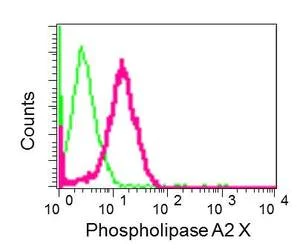
Flow Cytometry (Intracellular) - Anti-sPLA2-X antibody [EPR11202] (AB166634)

Intracellular flow cytometric analysis of permeabilized A549 cells using ab166634 at a 1/100 dilution (red) or a rabbit IgG (negative) (green).
Immunohistochemistry (Formalin/PFA-fixed paraffin-embedded sections) - Anti-sPLA2-X antibody [EPR11202] (AB166634)
  • IHC-P

Unknown

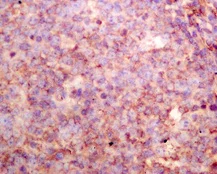
Immunohistochemistry (Formalin/PFA-fixed paraffin-embedded sections) - Anti-sPLA2-X antibody [EPR11202] (AB166634)

Immunohistochemical analysis of paraffin embedded Human tonsil tissue labeling sPLA2-X with ab166634 at a 1/100 dilution.

Perform heat mediated antigen retrieval with citrate buffer pH 6 before commencing with IHC staining protocol.
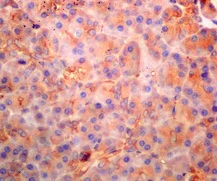
Immunohistochemistry (Formalin/PFA-fixed paraffin-embedded sections) - Anti-sPLA2-X antibody [EPR11202] (AB166634)
  • IHC-P

Unknown

Immunohistochemistry (Formalin/PFA-fixed paraffin-embedded sections) - Anti-sPLA2-X antibody [EPR11202] (AB166634)

Immunohistochemical analysis of paraffin embedded Human pancreas tissue labeling sPLA2-X with ab166634 at a 1/100 dilution.

Perform heat mediated antigen retrieval with citrate buffer pH 6 before commencing with IHC staining protocol.
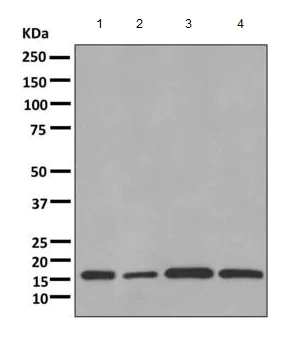
Western blot - Anti-sPLA2-X antibody [EPR11202] (AB166634)
  • WB

Unknown

Western blot - Anti-sPLA2-X antibody [EPR11202] (AB166634)

All lanes:

Western blot - Anti-sPLA2-X antibody [EPR11202] (ab166634) at 1/1000 dilution

Lane 1:

TT cell lysate at 10 µg

Lane 2:

A549 cell lysate at 10 µg

Lane 3:

MCF7 cell lysate at 10 µg

Lane 4:

Caco-2 cell lysate at 10 µg

Predicted band size: 18 kDa

false

不同偶联物与剂型 (1)

  • Carrier free

    Anti-sPLA2-X antibody [EPR11202] - BSA and Azide free

关键信息

宿主种属

Rabbit

克隆

Monoclonal

克隆号

EPR11202

亚型

IgG

不含载体蛋白

No

反应种属

Human

应用

Flow Cyt (Intra), IHC-P, WB

applications

免疫原

The exact immunogen used to generate this antibody is proprietary information.

反应性数据

{ "title": "Reactivity Data", "filters": { "stats": ["", "Species", "Dilution Info", "Notes"], "tabs": { "all-applications": {"fullname" : "All Applications", "shortname": "All Applications"}, "IHCP" : {"fullname" : "Immunohistochemistry (Formalin/PFA-fixed paraffin-embedded sections)", "shortname":"IHC-P"}, "IP" : {"fullname" : "Immunoprecipitation", "shortname":"IP"}, "WB" : {"fullname" : "Western blot", "shortname":"WB"}, "ICCIF" : {"fullname" : "Immunocytochemistry/ Immunofluorescence", "shortname":"ICC/IF"}, "FlowCytIntra" : {"fullname" : "Flow Cytometry (Intracellular)", "shortname":"Flow Cyt (Intra)"} }, "product-promise": { "all": "all", "testedAndGuaranteed": "tested", "guaranteed": "expected", "predicted": "predicted", "notRecommended": "not-recommended" } }, "values": { "Human": { "IHCP-species-checked": "testedAndGuaranteed", "IHCP-species-dilution-info": "1/100 - 1/250", "IHCP-species-notes": "<p></p>", "IP-species-checked": "notRecommended", "IP-species-dilution-info": "", "IP-species-notes": "<p></p>", "WB-species-checked": "testedAndGuaranteed", "WB-species-dilution-info": "1/1000 - 1/10000", "WB-species-notes": "<p></p>", "ICCIF-species-checked": "notRecommended", "ICCIF-species-dilution-info": "", "ICCIF-species-notes": "<p></p>", "FlowCytIntra-species-checked": "testedAndGuaranteed", "FlowCytIntra-species-dilution-info": "1/100 - 1/500", "FlowCytIntra-species-notes": "<p><a href='/products/primary-antibodies/rabbit-igg-monoclonal-epr25a-isotype-control-ab172730'>ab172730</a> - Rabbit monoclonal IgG, is suitable for use as an isotype control with this antibody.</p>" }, "Mouse": { "IHCP-species-checked": "predicted", "IHCP-species-dilution-info": "", "IHCP-species-notes": "", "IP-species-checked": "notRecommended", "IP-species-dilution-info": "", "IP-species-notes": "", "WB-species-checked": "predicted", "WB-species-dilution-info": "", "WB-species-notes": "", "ICCIF-species-checked": "notRecommended", "ICCIF-species-dilution-info": "", "ICCIF-species-notes": "", "FlowCytIntra-species-checked": "predicted", "FlowCytIntra-species-dilution-info": "", "FlowCytIntra-species-notes": "" }, "Rat": { "IHCP-species-checked": "predicted", "IHCP-species-dilution-info": "", "IHCP-species-notes": "", "IP-species-checked": "notRecommended", "IP-species-dilution-info": "", "IP-species-notes": "", "WB-species-checked": "predicted", "WB-species-dilution-info": "", "WB-species-notes": "", "ICCIF-species-checked": "notRecommended", "ICCIF-species-dilution-info": "", "ICCIF-species-notes": "", "FlowCytIntra-species-checked": "predicted", "FlowCytIntra-species-dilution-info": "", "FlowCytIntra-species-notes": "" } } }

产品详情

Patented technology
Our RabMAb® technology is a patented hybridoma-based technology for making rabbit monoclonal antibodies. For details on our patents, please refer to RabMAb® patents.

What are the advantages of a recombinant monoclonal antibody?
This product is a recombinant monoclonal antibody, which offers several advantages including:

  • - High batch-to-batch consistency and reproducibility
  • - Improved sensitivity and specificity
  • - Long-term security of supply
  • - Animal-free batch production

For more information, read more on recombinant antibodies.

性能和储存信息

形式
Liquid
纯化工艺
Affinity purification Protein A
存储溶液
pH: 7.2 - 7.4 Preservative: 0.01% Sodium azide Constituents: PBS, 40% Glycerol (glycerin, glycerine), 0.05% BSA
运输条件
Conditional Ambient
推荐的短期储存条件
+4°C
推荐的长期储存条件
-20°C
分装信息
Upon delivery aliquot
储存信息
Avoid freeze / thaw cycle

补充信息

This supplementary information is collated from multiple sources and compiled automatically.

SPLA2-X also known as Group X secreted phospholipase A2 is an enzyme with a molecular mass of approximately 18 kDa. This enzyme catalyzes the hydrolysis of phospholipids at the sn-2 position yielding free fatty acids and lysophospholipids. sPLA2-X expresses mainly in human tissues including the airway epithelium which suggests its role in inflammatory responses and other physiological processes. This enzyme shows high affinity for certain membrane phospholipids indicating its potential interaction with cell membranes and involvement in lipid signaling.
Biological function summary

SPLA2-X contributes to the generation of bioactive lipid mediators such as eicosanoids which play key roles in cellular signaling. The enzyme does not act alone; it can associate with other proteins to form functional complexes that amplify inflammatory and immune responses. This activity becomes critical in host defenses and maintaining homeostasis during infections and injuries. Moreover by producing lipid mediators sPLA2-X influences processes like cell differentiation proliferation and apoptosis.

Pathways

SPLA2-X participates significantly in the arachidonic acid metabolism pathway leading to the production of pro-inflammatory mediators such as prostaglandins and leukotrienes. This enzyme interacts with cytosolic phospholipase A2 (cPLA2) and cyclooxygenases enhancing the generation of these mediators. Furthermore sPLA2-X also relates to the phospholipid-remodeling pathway affecting membrane dynamics and signaling. These interactions underline its significant role in modulating inflammation and other cellular processes.

SPLA2-X has been associated with conditions like asthma and rheumatoid arthritis where inflammation plays a central role. In asthma the enzyme's overactivity contributes to airway inflammation and hyperresponsiveness potentially through interactions with lung-related proteins such as leukotriene receptors. In rheumatoid arthritis sPLA2-X may exacerbate joint inflammation by enhancing the production of inflammatory mediators involving cytokines like tumor necrosis factor-alpha (TNF-α). Understanding these connections aids in targeting sPLA2-X for therapeutic interventions in such inflammatory disorders.

产品实验方案

For this product, it's our understanding that no specific protocols are required. You can visit:

靶点信息

Secretory calcium-dependent phospholipase A2 that primarily targets extracellular phospholipids (PubMed : 12021277, PubMed : 9188469). Hydrolyzes the ester bond of the fatty acyl group attached at sn-2 position of phospholipids with preference for phosphatidylcholines and phosphatidylglycerols over phosphatidylethanolamines. Preferentially releases sn-2 omega-6 and omega-3 polyunsaturated fatty acyl (PUFA) chains over saturated fatty acyls (PubMed : 12021277, PubMed : 12359733). Contributes to phospholipid remodeling of very low-density lipoprotein (VLDL), low-density lipoprotein (LDL) and high-density lipoprotein (HDL) particles (PubMed : 12021277). Hydrolyzes LDL phospholipids releasing unsaturated fatty acids that regulate macrophage differentiation toward foam cells (PubMed : 12021277). Efficiently hydrolyzes and inactivates platelet activating factor (PAF), a potent lipid mediator present in oxidized LDL (PubMed : 16962371). May act in an autocrine and paracrine manner. Secreted by lung epithelium, targets membrane phospholipids of infiltrating eosinophils, releasing arachidonate and boosting eicosanoid and cysteinyl leukotriene synthesis involved in airway inflammatory response (By similarity). Secreted by gut epithelium, hydrolyzes dietary and biliary phosphatidylcholines in the gastrointestinal lumen (By similarity). Plays a stem cell regulator role in colon epithelium. Within intracellular compartment, mediates Paneth-like cell differentiation and its stem cell supporting functions by inhibiting the Wnt signaling pathway in intestinal stem cell (ISC). Secreted in the intestinal lumen upon inflammation, acts in an autocrine way and promotes prostaglandin E2 synthesis that stimulates Wnt signaling pathway in ISCs and tissue regeneration (By similarity). May participate in hair follicle morphogenesis by regulating phosphatidylethanolamines metabolism at the outermost epithelial layer and facilitating melanin synthesis (By similarity). By releasing lysophosphatidylcholines (LPCs) at sperm acrosome, controls sperm cell capacitation, acrosome reaction and overall fertility (By similarity). May promote neurite outgrowth in neuron fibers involved in nociception (By similarity). Contributes to lipid remodeling of cellular membranes and generation of lipid mediators involved in pathogen clearance. Cleaves sn-2 fatty acyl chains of phosphatidylglycerols and phosphatidylethanolamines, which are major components of membrane phospholipids in bacteria (PubMed : 12359733). Displays bactericidal activity against Gram-positive bacteria by directly hydrolyzing phospholipids of the bacterial membrane (PubMed : 11694541). In pulmonary epithelium, may contribute to host defense response against adenoviral infection. Prevents adenovirus entry into host cells by hydrolyzing host cell plasma membrane, releasing C16 : 0 LPCs that inhibit virus-mediated membrane fusion and viral infection. Likely prevents adenoviral entry into the endosomes of host cells (PubMed : 16146426). May play a role in maturation and activation of innate immune cells including macrophages, group 2 innate lymphoid cells and mast cells (By similarity).
See full target information PLA2G10

文献 (4)

Recent publications for all applications. Explore the full list and refine your search

Journal of nanobiotechnology 23:106 PubMed39939963

2025

Lipid metabolism of apoptotic vesicles accelerates cutaneous wound healing by modulating macrophage function.

Applications

Unspecified application

Species

Unspecified reactive species

Yuan Qin,Xin Chen,Lili Bao,Lili Ren,Geng Dou,Jianing Lian,Shujuan Xing,Zihan Li,Feng Ding,Wen Qin,Xulin Liu,Bin Zhu,Shiyu Liu,Zuolin Jin,Xiaoshan Yang

Biochemical and biophysical research communication 527:525-531 PubMed32423798

2020

PLA2G10 facilitates the cell-cycle progression of soft tissue leiomyosarcoma cells at least by elevating cyclin E1/CDK2 expression.

Applications

Unspecified application

Species

Unspecified reactive species

Gang Tan,Guang-Yan Zhang,Jing Xu,Cheng-Wei Kang,Zhao-Kui Yan,Mei Lei,Xiao-Bing Pu,Chang-Chao Dong

Toxicon : official journal of the International So 151:89-95 PubMed30003915

2018

The inhibitory effect of saPLIγ, a snake sourced PLA inhibitor on carrageenan-induced inflammation in mice.

Applications

Unspecified application

Species

Unspecified reactive species

Denghong Zhang,Jingjing Li,Shimin Sun,Chunhong Huang

JCI insight 2: PubMed29093264

2017

Secreted PLA2 group X orchestrates innate and adaptive immune responses to inhaled allergen.

Applications

WB

Species

Mouse

James D Nolin,Ying Lai,Herbert Luke Ogden,Anne M Manicone,Ryan C Murphy,Dowon An,Charles W Frevert,Farideh Ghomashchi,Gajendra S Naika,Michael H Gelb,Gail M Gauvreau,Adrian M Piliponsky,William A Altemeier,Teal S Hallstrand
View all publications

Abcam Product Promise

我们致力于为您的研究提供高质量的试剂,为您科研的每一步提供支持。若我们的产品未能达到预期性能,我们向您提供 Abcam Product Promise 保障。
详情请参阅我们的条款与条件。

Please note: All products are 'FOR RESEARCH USE ONLY. NOT FOR USE IN DIAGNOSTIC OR THERAPEUTIC PROCEDURES'.

For licensing inquiries, please contact partnerships@abcam.com