JavaScript is disabled in your browser. Please enable JavaScript to view this website.
AB273562

重组Anti-SORL1抗体[EPR23262-73] - BSA and Azide free (Capture)

Anti-SORL1 antibody [EPR23262-73] - BSA and Azide free (Capture)

Be the first to review this product! Submit a review

|

(0 Publication)

Rabbit Recombinant Monoclonal SorLA/SORL1 antibody. Carrier free. Suitable for sELISA and reacts with Human samples.

查看别名

C11orf32, SORL1, Sortilin-related receptor, Low-density lipoprotein receptor relative with 11 ligand-binding repeats, SorLA-1, Sorting protein-related receptor containing LDLR class A repeats, LDLR relative with 11 ligand-binding repeats, LR11, SorLA
1 Images
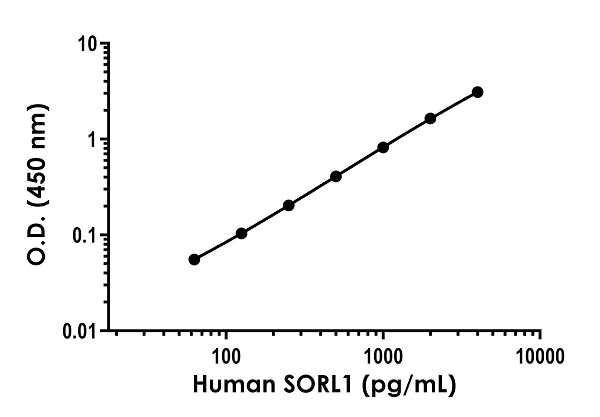
Sandwich ELISA - Anti-SORL1 antibody [EPR23262-73] - BSA and Azide free (Capture) (AB273562)
  • sELISA

Supplier Data

Sandwich ELISA - Anti-SORL1 antibody [EPR23262-73] - BSA and Azide free (Capture) (AB273562)

Example of Human SORL1 standard curve. Background-subtracted data values (mean +/- SD) are graphed.

关键信息

宿主种属

Rabbit

克隆

Monoclonal

克隆号

EPR23262-73

亚型

IgG

不含载体蛋白

Yes

反应种属

Human

应用

sELISA

applications

免疫原

The exact immunogen used to generate this antibody is proprietary information.

反应性数据

{ "title": "Reactivity Data", "filters": { "stats": ["", "Species", "Dilution Info", "Notes"], "tabs": { "all-applications": {"fullname" : "All Applications", "shortname": "All Applications"}, "sELISA" : {"fullname" : "Sandwich ELISA", "shortname":"sELISA"} }, "product-promise": { "all": "all", "testedAndGuaranteed": "tested", "guaranteed": "expected", "predicted": "predicted", "notRecommended": "not-recommended" } }, "values": { "Human": { "sELISA-species-checked": "guaranteed", "sELISA-species-dilution-info": "", "sELISA-species-notes": "<p></p>" } } }

产品详情

ab273562 is a BSA and Azide Free antibody supplied in an unconjugated format and it is suitable for sandwich ELISAs to quantify Human SORL1. The recommended pair for sandwich ELISA is:
Capture: ab273562, Human SORL1 Capture Antibody (unconjugated)
Detector: ab273560, Human SORL1 Detector Antibody (unconjugated)
The reference range value is 0.078 - 10 ng/ml.

Patented technology
Our RabMAb® technology is a patented hybridoma-based technology for making rabbit monoclonal antibodies. For details on our patents, please refer to RabMAb® patents.

What are the advantages of a recombinant monoclonal antibody?
This product is a recombinant monoclonal antibody, which offers several advantages including:

  • - High batch-to-batch consistency and reproducibility
  • - Improved sensitivity and specificity
  • - Long-term security of supply
  • - Animal-free batch production

For more information, read more on recombinant antibodies.

Conjugation ready
Our carrier-free antibodies are typically supplied in a PBS-only formulation, purified and free of BSA, sodium azide and glycerol. This conjugation-ready format is designed for use with fluorochromes, metal isotopes, oligonucleotides, and enzymes, which makes them ideal for antibody labelling, functional and cell-based assays, flow-based assays (e.g. mass cytometry) and Multiplex Imaging applications.

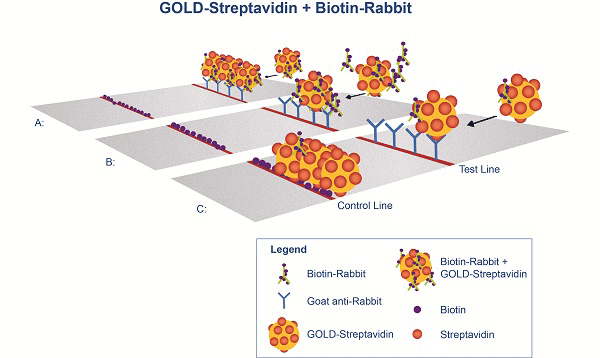
Use our conjugation kits for antibody conjugates that are ready-to-use in as little as 20 minutes with 1 minute hands-on-time and 100% antibody recovery: available for fluorescent dyes, HRP, biotin and gold.

Sandwich ELISA
The recommended antibody orientation is based on internal optimization for ELISA-based assays. Antibody orientation is assay dependent and needs to be optimized for each assay type. Please note that the range provided for this antibody is only an estimation based on the performance of the product using the recommended antibody pair. Performance of the antibody pair will depend on the specific characteristics of your assay. We guarantee the product works in sandwich ELISA, but we do not guarantee the sensitivity or dynamic range of the antibody in your assay.

性能和储存信息

形式
Liquid
纯化工艺
Affinity purification Protein A
存储溶液
Constituents: PBS
运输条件
Blue Ice
推荐的短期储存条件
+4°C
推荐的长期储存条件
+4°C

产品实验方案

For this product, it's our understanding that no specific protocols are required. You can visit:

靶点信息

Sorting receptor that directs several proteins to their correct location within the cell (Probable). Along with AP-1 complex, involved Golgi apparatus - endosome sorting (PubMed : 17646382). Sorting receptor for APP, regulating its intracellular trafficking and processing into amyloidogenic-beta peptides. Retains APP in the trans-Golgi network, hence preventing its transit through late endosomes where amyloid beta peptides Abeta40 and Abeta42 are generated (PubMed : 16174740, PubMed : 16407538, PubMed : 17855360, PubMed : 24523320). May also sort newly produced amyloid-beta peptides to lysosomes for catabolism (PubMed : 24523320). Does not affect APP trafficking from the endoplasmic reticulum to Golgi compartments (PubMed : 17855360). Sorting receptor for the BDNF receptor NTRK2/TRKB that facilitates NTRK2 trafficking between synaptic plasma membranes, postsynaptic densities and cell soma, hence positively regulates BDNF signaling by controlling the intracellular location of its receptor (PubMed : 23977241). Sorting receptor for GDNF that promotes GDNF regulated, but not constitutive secretion (PubMed : 21994944). Sorting receptor for the GDNF-GFRA1 complex, directing it from the cell surface to endosomes. GDNF is then targeted to lysosomes and degraded, while its receptor GFRA1 recycles back to the cell membrane, resulting in a GDNF clearance pathway. The SORL1-GFRA1 complex further targets RET for endocytosis, but not for degradation, affecting GDNF-induced neurotrophic activities (PubMed : 23333276). Sorting receptor for ERBB2/HER2. Regulates ERBB2 subcellular distribution by promoting its recycling after internalization from endosomes back to the plasma membrane, hence stimulating phosphoinositide 3-kinase (PI3K)-dependent ERBB2 signaling. In ERBB2-dependent cancer cells, promotes cell proliferation (PubMed : 31138794). Sorting receptor for lipoprotein lipase LPL. Promotes LPL localization to endosomes and later to the lysosomes, leading to degradation of newly synthesized LPL (PubMed : 21385844). Potential sorting receptor for APOA5, inducing APOA5 internalization to early endosomes, then to late endosomes, wherefrom a portion is sent to lysosomes and degradation, another portion is sorted to the trans-Golgi network (PubMed : 18603531). Sorting receptor for the insulin receptor INSR. Promotes recycling of internalized INSR via the Golgi apparatus back to the cell surface, thereby preventing lysosomal INSR catabolism, increasing INSR cell surface expression and strengthening insulin signal reception in adipose tissue. Does not affect INSR internalization (PubMed : 27322061). Plays a role in renal ion homeostasis, controlling the phospho-regulation of SLC12A1/NKCC2 by STK39/SPAK kinase and PPP3CB/calcineurin A beta phosphatase, possibly through intracellular sorting of STK39 and PPP3CB (By similarity). Stimulates, via the N-terminal ectodomain, the proliferation and migration of smooth muscle cells, possibly by increasing cell surface expression of the urokinase receptor uPAR/PLAUR. This may promote extracellular matrix proteolysis and hence facilitate cell migration (PubMed : 14764453). By acting on the migration of intimal smooth muscle cells, may accelerate intimal thickening following vascular injury (PubMed : 14764453). Promotes adhesion of monocytes (PubMed : 23486467). Stimulates proliferation and migration of monocytes/macrophages (By similarity). Through its action on intimal smooth muscle cells and macrophages, may accelerate intimal thickening and macrophage foam cell formation in the process of atherosclerosis (By similarity). Regulates hypoxia-enhanced adhesion of hematopoietic stem and progenitor cells to the bone marrow stromal cells via a PLAUR-mediated pathway. This function is mediated by the N-terminal ectodomain (PubMed : 23486467). Metabolic regulator, which functions to maintain the adequate balance between lipid storage and oxidation in response to changing environmental conditions, such as temperature and diet. The N-terminal ectodomain negatively regulates adipose tissue energy expenditure, acting through the inhibition the BMP/Smad pathway (By similarity). May regulate signaling by the heterodimeric neurotrophic cytokine CLCF1-CRLF1 bound to the CNTFR receptor by promoting the endocytosis of the tripartite complex CLCF1-CRLF1-CNTFR and lysosomal degradation (PubMed : 26858303). May regulate IL6 signaling, decreasing cis signaling, possibly by interfering with IL6-binding to membrane-bound IL6R, while up-regulating trans signaling via soluble IL6R (PubMed : 28265003).
See full target information SORL1

Abcam Product Promise

我们致力于为您的研究提供高质量的试剂,为您科研的每一步提供支持。若我们的产品未能达到预期性能,我们向您提供 Abcam Product Promise 保障。
详情请参阅我们的条款与条件。

Please note: All products are 'FOR RESEARCH USE ONLY. NOT FOR USE IN DIAGNOSTIC OR THERAPEUTIC PROCEDURES'.

For licensing inquiries, please contact partnerships@abcam.com