Anti-MID1抗体
Anti-MID1 antibody
Be the first to review this product! Submit a review
|
(9 Publications)
Rabbit Polyclonal MID1 antibody. Suitable for ELISA, WB, IHC-P, ICC/IF and reacts with Mouse, Human samples. Cited in 9 publications. Immunogen corresponding to Synthetic Peptide within Human MID1.
查看别名
FXY, RNF59, TRIM18, XPRF, MID1, E3 ubiquitin-protein ligase Midline-1, Midin, Putative transcription factor XPRF, RING finger protein 59, RING finger protein Midline-1, RING-type E3 ubiquitin transferase Midline-1, Tripartite motif-containing protein 18
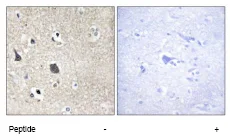
- IHC-P
Unknown
Immunohistochemistry (Formalin/PFA-fixed paraffin-embedded sections) - Anti-MID1 antibody (AB70770)
ab70770 at 1/50 dilution staining MID1 in human brain by Immunohistochemistry, Paraffin-embedded tissue, in the absence or presence of the immunising peptide.
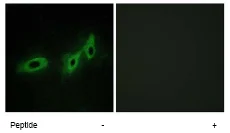
- ICC/IF
Unknown
Immunocytochemistry/ Immunofluorescence - Anti-MID1 antibody (AB70770)
ab70770 at 1/500 dilution staining MID1 in HeLa cells by Immunofluorescence, in the absence or presence of the immunising peptide.
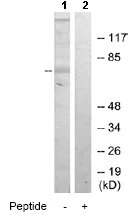
- WB
Unknown
Western blot - Anti-MID1 antibody (AB70770)
All lanes:
Western blot - Anti-MID1 antibody (ab70770) at 1/500 dilution
Lane 1:
293 extract at 30 µg
Lane 2:
293 extract at 30 µg with immunising peptide
Predicted band size: 75 kDa
Observed band size: 75 kDa
false
搭配使用产品
Primary Antibodies
AB183734
RabMAb|Recombinant|Lab Essentials|20ul selling size
- 5
- 24
Primary Antibodies
AB181602
Anti-GAPDH antibody [EPR16891] - Loading Control
RabMAb|Recombinant|Lab Essentials|20ul selling size

- 5
- 23
Primary Antibodies
AB278054
Anti-GFAP antibody [RM1003] - Astrocyte Marker
BOND RX™ Validated|20ul selling size|RabMAb|Recombinant
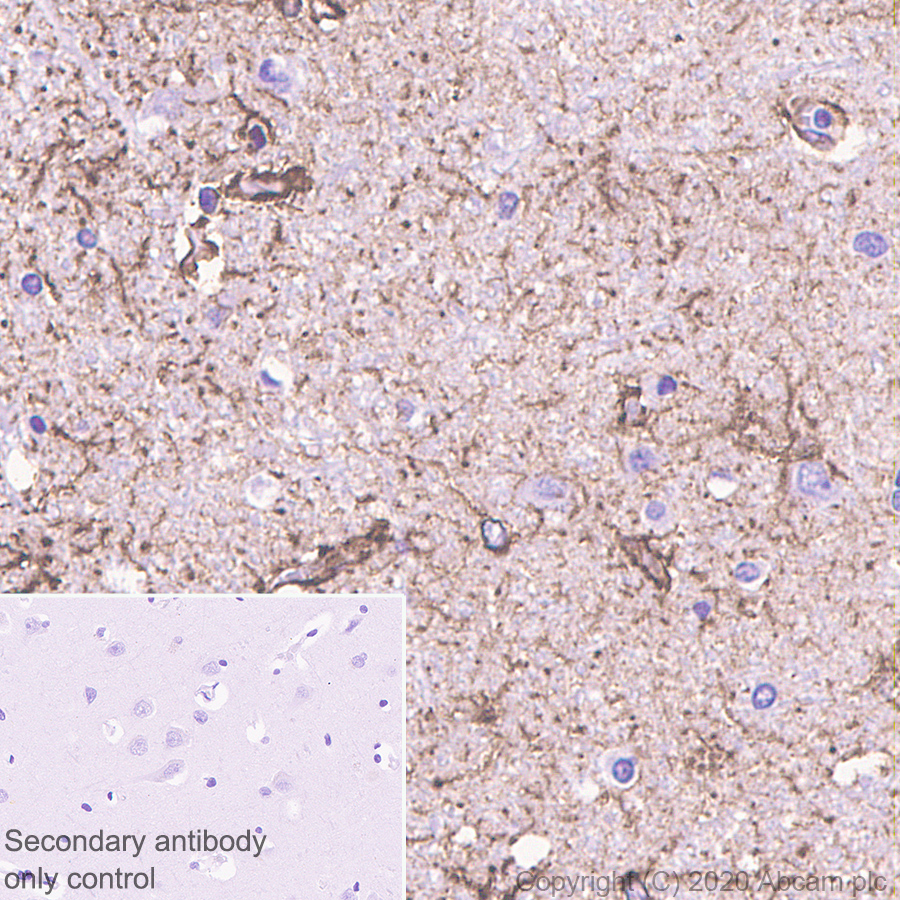
- 0
- 0
Primary Antibodies
AB281586
BOND RX™ Validated|20ul selling size|RabMAb|Recombinant
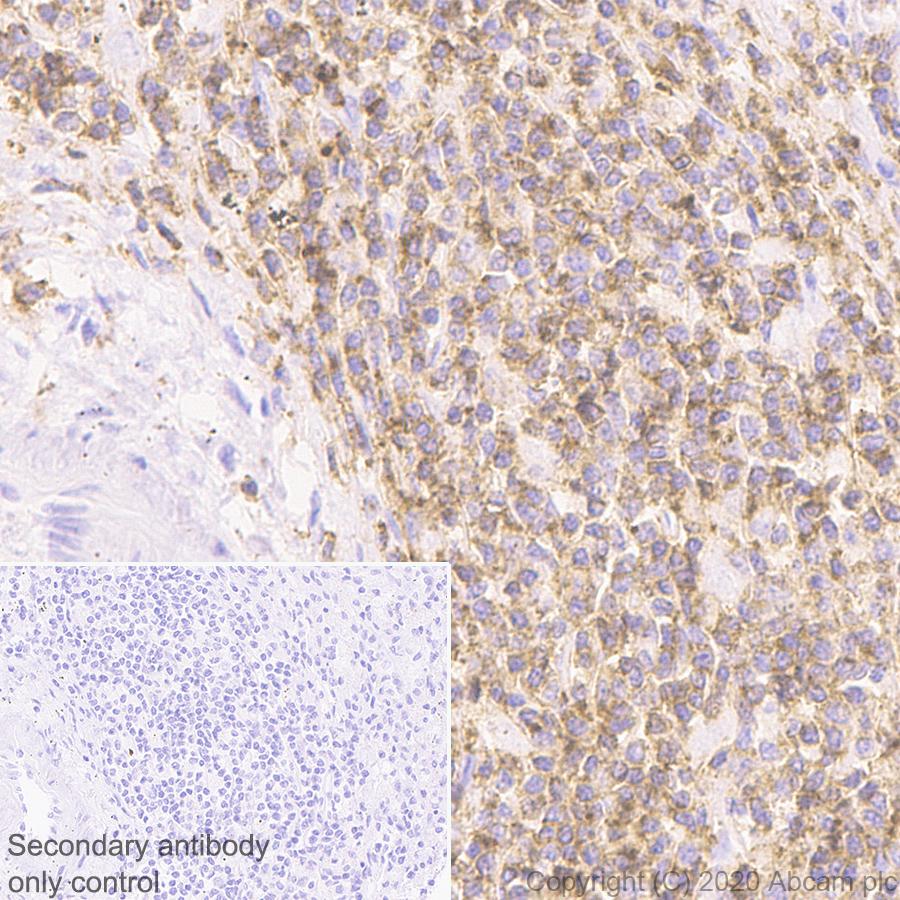
- 5
- 3
反应性数据
性能和储存信息
形式
纯化工艺
纯化说明
存储溶液
运输条件
推荐的短期储存条件
推荐的长期储存条件
分装信息
储存信息
补充信息
This supplementary information is collated from multiple sources and compiled automatically.
Biological function summary
The MID1 protein serves as an E3 ubiquitin ligase contributing to protein degradation processes. As part of the multiprotein complex MID1 controls the stability of microtubules and interacts with other cytoplasmic proteins. It regulates the turnover of the protein PP2An important for maintaining cellular balance by tagging it for degradation. This function ensures proper cellular morphology and signaling.
Pathways
MID1 influences significant cellular pathways involving the regulation of microtubule dynamics and the degradation of PP2A. It engages in pathways that include the ubiquitin-proteasome system and interacts with proteins linked to these pathways such as alpha4. The interaction with alpha4 suggests a regulatory role in cellular growth and signaling therefore affecting processes like cell cycle control.
产品实验方案
- Visit the General protocols
- Visit the Troubleshooting
靶点信息
文献 (9)
Recent publications for all applications. Explore the full list and refine your search
BMC genomics 24:68 PubMed36759768
2023
Applications
Unspecified application
Species
Unspecified reactive species
Cell death & disease 13:601 PubMed35821212
2022
Applications
Unspecified application
Species
Unspecified reactive species
Frontiers in physiology 12:709506 PubMed34434118
2021
Applications
Unspecified application
Species
Unspecified reactive species
Immunology 163:278-292 PubMed33513265
2021
Applications
Unspecified application
Species
Unspecified reactive species
Annals of translational medicine 8:1021 PubMed32953821
2020
Applications
Unspecified application
Species
Unspecified reactive species
Scientific reports 7:13753 PubMed29062069
2017
Applications
Unspecified application
Species
Unspecified reactive species
American journal of physiology. Lung cellular and 311:L653-63 PubMed27496895
2016
Applications
Unspecified application
Species
Unspecified reactive species
Frontiers in molecular neuroscience 5:58 PubMed22563308
2012
Applications
WB
Species
Mouse
International journal of biological sciences 7:740-52 PubMed21698000
2011
Applications
WB
Species
Human
Abcam Product Promise
Please note: All products are 'FOR RESEARCH USE ONLY. NOT FOR USE IN DIAGNOSTIC OR THERAPEUTIC PROCEDURES'.
For licensing inquiries, please contact partnerships@abcam.com