重组Anti-LMO4抗体[EPR6731(2)]
Anti-LMO4 antibody [EPR6731(2)]
- RabMAb
- Recombinant
- 了解详情
Be the first to review this product! Submit a review
|
(6 Publications)
Rabbit Recombinant Monoclonal LMO4 antibody. Suitable for IP, WB and reacts with Human, Mouse samples. Cited in 6 publications.
查看别名
LIM domain transcription factor LMO4, Breast tumor autoantigen, LIM domain only protein 4, LMO-4, LMO4
- IP
Lab
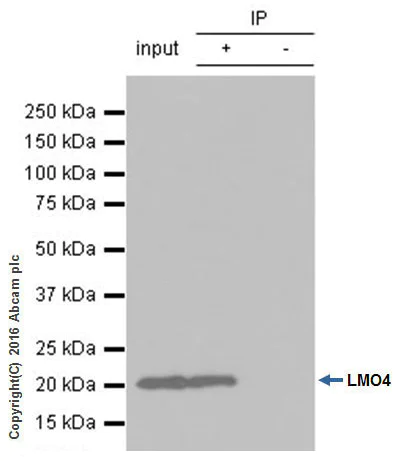
Immunoprecipitation - Anti-LMO4 antibody [EPR6731(2)] (AB131030)
Purified ab131030 at 1/20 immunoprecipitating LMO4 in Jurkat whole cell lysate observed at 18 KDa (lanes 1 and 2).
Lane 1 (input) : Jurkat whole cell lysate 10ug
Lane 2 (+) : ab131030 + Jurkat whole cell lysate.
Lane 3 (-) : Rabbit monoclonal IgG (ab172730) instead of ab131030 in Jurkat whole cell lysate
VeriBlot for IP Detection Reagent (HRP) (ab131366), was used for detection at 1/1000 dilution.
Blocking/Diluting buffer 5% NFDM/TBST.
All lanes:
Immunoprecipitation - Anti-LMO4 antibody [EPR6731(2)] (ab131030)
Predicted band size: 17 kDa
false
- WB
Unknown
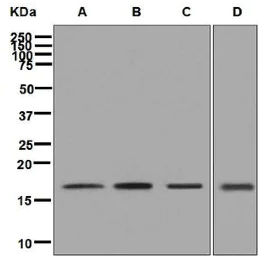
Western blot - Anti-LMO4 antibody [EPR6731(2)] (AB131030)
Actual band size : 17 kDa
All lanes:
Western blot - Anti-LMO4 antibody [EPR6731(2)] (ab131030) at 1/1000 dilution
Lane 1:
293T cell lysate at 10 µg
Lane 2:
Jurkat cell lysate at 10 µg
Lane 3:
SH-SY5Y cell lysate at 10 µg
Lane 4:
NIH3T3 cell lysate at 10 µg
Secondary
All lanes:
HRP labelled Goat anti-Rabbit at 1/2000 dilution
Predicted band size: 17 kDa
false
- WB
Unknown
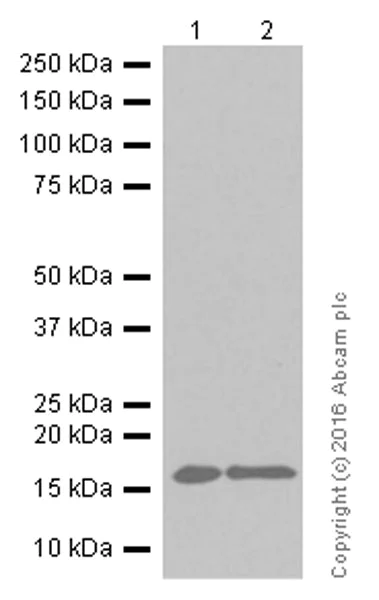
Western blot - Anti-LMO4 antibody [EPR6731(2)] (AB131030)
Blocking/Diluting buffer 5% NFDM/TBST
All lanes:
Western blot - Anti-LMO4 antibody [EPR6731(2)] (ab131030) at 1/1000 dilution
Lane 1:
293T (human embryonic kidney) whole cell lysate at 20 µg
Lane 2:
Jurkat (human acute T cell leukemia) whole cell lysate at 20 µg
Secondary
All lanes:
Anti-Rabbit IgG (HRP), specific to the non-reduced form of IgG at 1/2000 dilution
Predicted band size: 17 kDa
Observed band size: 17 kDa
false
- WB
Unknown
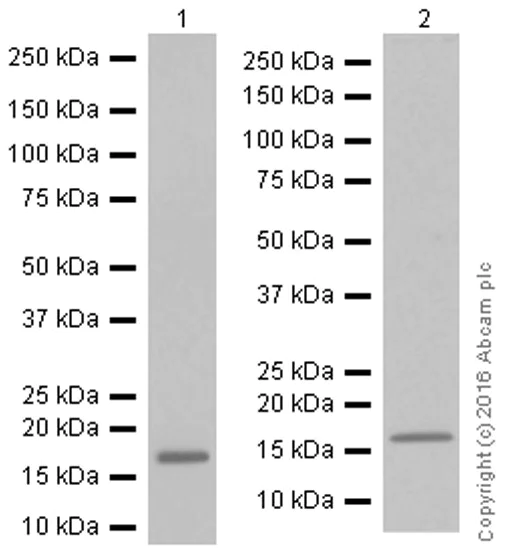
Western blot - Anti-LMO4 antibody [EPR6731(2)] (AB131030)
Blocking/Diluting buffer 5% NFDM/TBST
All lanes:
Western blot - Anti-LMO4 antibody [EPR6731(2)] (ab131030) at 1/1000 dilution
Lane 1:
NIH/3T3 (Mouse embryonic fibroblast cell line) whole cell lysate at 15 µg
Lane 2:
Mouse cerebral cortex tissue lysate at 15 µg
Secondary
All lanes:
Western blot - Goat Anti-Rabbit IgG H&L (HRP) (<a href='/products/secondary-antibodies/goat-rabbit-igg-h-l-hrp-ab97051'>ab97051</a>) at 1/20000 dilution
Predicted band size: 17 kDa
Observed band size: 17 kDa
false
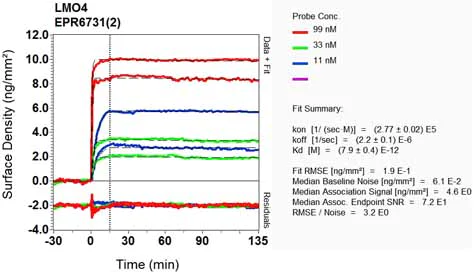
- OI-RD Scanning
Unknown
OI-RD Scanning - Anti-LMO4 antibody [EPR6731(2)] (AB131030)
We have systematically measured KD (the equilibrium dissociation constant between the antibody and its antigen), of more than 840 recombinant antibodies to assess not only their individual KD values but also to see the average affinity of antibody. Based on the comparison with published literature values for mouse monoclonal antibodies, Recombinant antibodies appear to be on average 1-2 order of magnitude higher affinity.
不同偶联物与剂型 (1)
-
Anti-LMO4 antibody [EPR6731(2)] - BSA and Azide free
替代产品
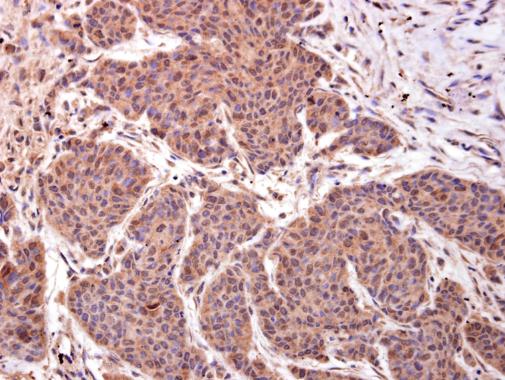
搭配使用产品
Primary Antibodies
AB240636
Anti-Ctip2 antibody [EPR23120-25]
BOND RX™ Validated|RabMAb|Recombinant|20ul selling size
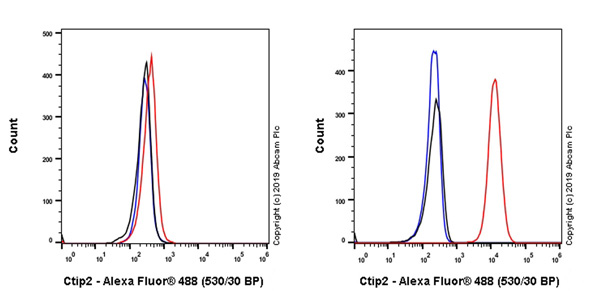
- 5
- 1
Primary Antibodies
AB109122
BOND RX™ Validated|RabMAb|Recombinant|KO Validated|20ul selling size
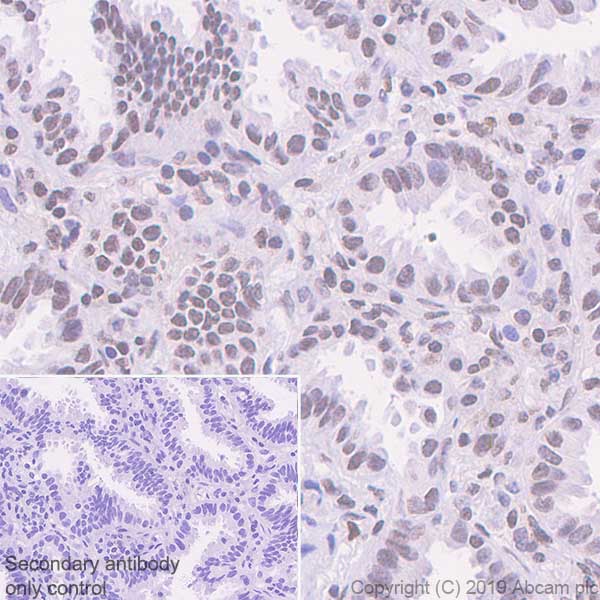
- 5
- 2
Sample Prep & Detection Kits
AB201795
Biotinylation Kit / Biotin Conjugation Kit (Fast, Type A) - Lightning-Link®

- 0
- 0
反应性数据
产品详情
Patented technology
Our RabMAb® technology is a patented hybridoma-based technology for making rabbit monoclonal antibodies. For details on our patents, please refer to RabMAb® patents.
What are the advantages of a recombinant monoclonal antibody?
This product is a recombinant monoclonal antibody, which offers several advantages including:
- - High batch-to-batch consistency and reproducibility
- - Improved sensitivity and specificity
- - Long-term security of supply
- - Animal-free batch production
For more information, read more on recombinant antibodies.
Species reactivity
Rat: We have preliminary internal testing data to indicate this antibody may not react with this species.
Please contact us for more information.
性能和储存信息
形式
纯化工艺
存储溶液
运输条件
推荐的短期储存时间
推荐的短期储存条件
推荐的长期储存条件
分装信息
储存信息
补充信息
This supplementary information is collated from multiple sources and compiled automatically.
Biological function summary
LMO4 participates in various developmental processes and acts as a cofactor within transcriptional complexes. It interacts with other proteins to regulate the transcription of genes critical for neural development and differentiation. LMO4 does not function in isolation but as part of larger multiprotein complexes influencing various signaling pathways linked to cell growth and differentiation.
Pathways
The LMO4 protein has strong connections to key signaling pathways including the Notch and Wnt pathways. These pathways are essential in neurogenesis and cellular differentiation processes. LMO4 interacts with proteins such as GATA3 and neurogenin acting as an intermediary that influences the transcriptional activity required for cellular development.
产品实验方案
- Visit the General protocols
- Visit the Troubleshooting
靶点信息
文献 (6)
Recent publications for all applications. Explore the full list and refine your search
Molecular neurobiology 62:10652-10669 PubMed40229456
2025
Applications
Unspecified application
Species
Unspecified reactive species
Disease markers 2021:3977189 PubMed34925640
2021
Applications
Unspecified application
Species
Unspecified reactive species
Mediators of inflammation 2021:1629783 PubMed34725544
2021
Applications
Unspecified application
Species
Unspecified reactive species
Frontiers in oncology 11:658712 PubMed34447693
2021
Applications
Unspecified application
Species
Unspecified reactive species
Oncology reports 43:1503-1515 PubMed32323846
2020
Applications
Unspecified application
Species
Unspecified reactive species
Experimental cell research 381:105-111 PubMed31078568
2019
Applications
Unspecified application
Species
Unspecified reactive species
Abcam Product Promise
Please note: All products are 'FOR RESEARCH USE ONLY. NOT FOR USE IN DIAGNOSTIC OR THERAPEUTIC PROCEDURES'.
For licensing inquiries, please contact partnerships@abcam.com