JavaScript is disabled in your browser. Please enable JavaScript to view this website.
AB238668

Anti-GC1q R抗体[60.11] - BSA and Azide free

Anti-GC1q R antibody [60.11] - BSA and Azide free

Be the first to review this product! Submit a review

|

(1 Publication)

Mouse Monoclonal GC1q R antibody. Carrier free. Suitable for IHC-P, Flow Cyt (Intra), WB, ICC/IF and reacts with Human samples. Cited in 1 publication.

查看别名

GC1QBP, HABP1, SF2P32, C1QBP, ASF/SF2-associated protein p32, Glycoprotein gC1qBP, Hyaluronan-binding protein 1, Mitochondrial matrix protein p32, gC1q-R protein, p33, C1qBP, SF2AP32
4 Images
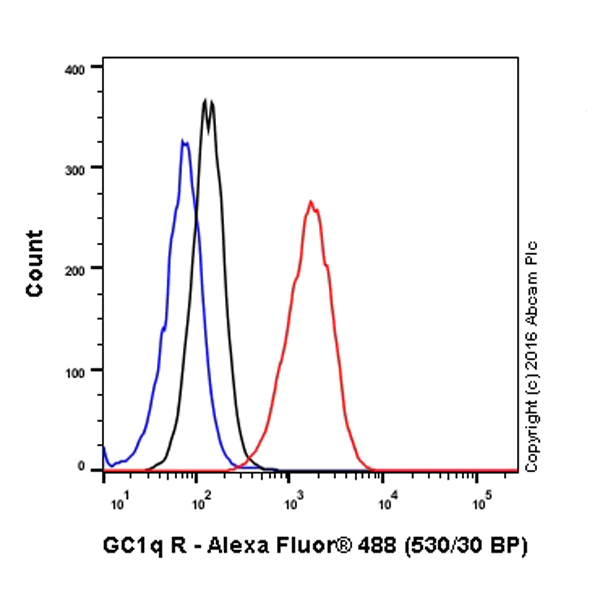
Flow Cytometry (Intracellular) - Anti-GC1q R antibody [60.11] - BSA and Azide free (AB238668)
  • Flow Cyt (Intra)

Lab

Flow Cytometry (Intracellular) - Anti-GC1q R antibody [60.11] - BSA and Azide free (AB238668)

Overlay histogram showing HeLa cells stained with ab24733 (red line). The cells were fixed with 80% methanol (5 min) and then permeabilized with 0.1% PBS-Triton X-100 for 15 min. The cells were then incubated in 1x PBS / 10% normal goat serum to block non-specific protein-protein interactions followed by the antibody (ab24733, 0.5μg/1x106 cells) for 30 min at 22°C. The secondary antibody used was Alexa Fluor® 488 goat anti-mouse IgG (H&L) (ab150117) at 1/4000 dilution for 30 min at 22°C.

Isotype control antibody (black line) was mouse IgG1 [15-6E10A7] (ab170190, 0.5μg/1x106 cells) used under the same conditions. Unlabelled sample (blue line) was also used as a control.

Acquisition of >5,000 events were collected using a 50 mW Blue laser (488nm) and 530/30 bandpass filter.

This antibody gave a positive signal in HeLa cells fixed with 4% paraformaldehyde (10 min)/permeabilized with 0.1% PBS-Triton X-100 for 15 min used under the same conditions.

This data was developed using the same antibody clone in a different formulation containg PBS, Azide and arginine (ab24733).
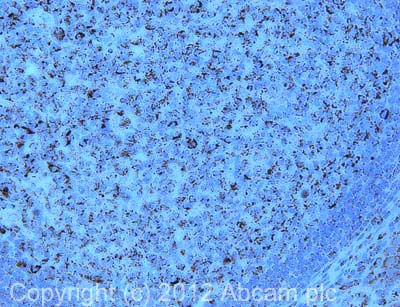
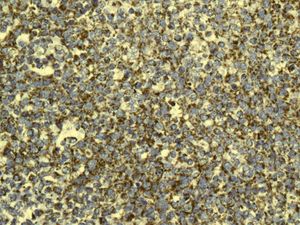
Immunohistochemistry (Formalin/PFA-fixed paraffin-embedded sections) - Anti-GC1q R antibody [60.11] - BSA and Azide free (AB238668)
  • IHC-P

Lab

Immunohistochemistry (Formalin/PFA-fixed paraffin-embedded sections) - Anti-GC1q R antibody [60.11] - BSA and Azide free (AB238668)

IHC image of ab24733 staining in human tonsil formalin fixed paraffin embedded tissue section, performed on a Leica BondTM system using the standard protocol F. The section was pre-treated using heat mediated antigen retrieval with sodium citrate buffer (pH6, epitope retrieval solution 1) for 20 mins. The section was then incubated with ab24733, 10μg/ml, for 15 mins at room temperature and detected using an HRP conjugated compact polymer system. DAB was used as the chromogen. The section was then counterstained with haematoxylin and mounted with DPX.

For other IHC staining systems (automated and non-automated) customers should optimize variable parameters such as antigen retrieval conditions, primary antibody concentration and antibody incubation times.

This data was developed using the same antibody clone in a different formulation containg PBS, Azide and arginine (ab24733).
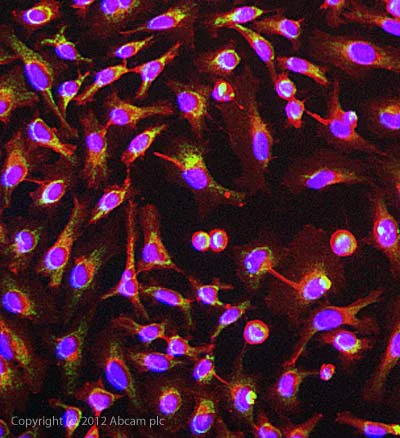
Immunocytochemistry/ Immunofluorescence - Anti-GC1q R antibody [60.11] - BSA and Azide free (AB238668)
  • ICC/IF

Lab

Immunocytochemistry/ Immunofluorescence - Anti-GC1q R antibody [60.11] - BSA and Azide free (AB238668)

ICC/IF image of ab24733 stained HeLa cells. The cells were 100% methanol fixed (5 min) and then incubated in 1%BSA / 10% normal goat serum / 0.3M glycine in 0.1% PBS-Tween for 1h to permeabilise the cells and block non-specific protein-protein interactions. The cells were then incubated with the antibody ab24733 at 5μg/ml overnight at +4°C. The secondary antibody (green) was DyLight® 488 goat anti- mouse (ab96879) IgG (H+L) used at a 1/1000 dilution for 1h. Alexa Fluor® 594 WGA was used to label plasma membranes (red) at a 1/200 dilution for 1h. DAPI was used to stain the cell nuclei (blue) at a concentration of 1.43μM.

This data was developed using the same antibody clone in a different formulation containg PBS, Azide and arginine (ab24733).
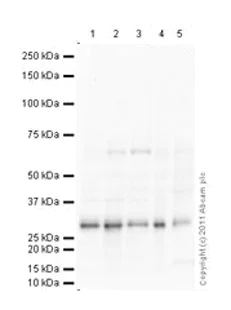
Western blot - Anti-GC1q R antibody [60.11] - BSA and Azide free (AB238668)
  • WB

Lab

Western blot - Anti-GC1q R antibody [60.11] - BSA and Azide free (AB238668)

This data was developed using the same antibody clone in a different formulation containg PBS, Azide and arginine (ab24733).

All lanes:

Western blot - Anti-GC1q R antibody [60.11] (<a href='/products/primary-antibodies/gc1q-r-antibody-6011-ab24733'>ab24733</a>) at 5 µg/mL

Lane 1:

HEK293 (Human embryonic kidney cell line) Whole Cell Lysate at 20 µg

Lane 2:

HeLa (Human epithelial carcinoma cell line) Whole Cell Lysate at 20 µg

Lane 3:

HepG2 (Human hepatocellular liver carcinoma cell line) Whole Cell Lysate at 20 µg

Lane 4:

Raji (Human Burkitt's lymphoma cell line) Whole Cell Lysate at 20 µg

Lane 5:

Human liver tissue lysate - total protein (<a href='/products/unavailable/human-liver-tissue-lysate-total-protein-ab29889'>ab29889</a>) at 20 µg

Secondary

Lanes 1 - 5:

Western blot - Goat Anti-Rabbit IgG H&L (HRP) (<a href='/products/secondary-antibodies/goat-rabbit-igg-h-l-hrp-ab97051'>ab97051</a>) at 1/5000 dilution

Lanes 1 - 5:

Western blot - Goat Anti-Mouse IgG H&L (HRP) preadsorbed (<a href='/products/secondary-antibodies/goat-mouse-igg-h-l-hrp-preadsorbed-ab97040'>ab97040</a>) at 1/5000 dilution

Predicted band size: 31 kDa

Observed band size: 30 kDa,68 kDa

true

Exposure time: 3min

不同偶联物与剂型 (1)

关键信息

宿主种属

Mouse

克隆

Monoclonal

克隆号

60.11

亚型

IgG1

不含载体蛋白

Yes

反应种属

Human

应用

WB, ICC/IF, IHC-P, Flow Cyt (Intra)

applications

免疫原

The exact immunogen used to generate this antibody is proprietary information.

反应性数据

{ "title": "Reactivity Data", "filters": { "stats": ["", "Species", "Dilution Info", "Notes"], "tabs": { "all-applications": {"fullname" : "All Applications", "shortname": "All Applications"}, "IHCP" : {"fullname" : "Immunohistochemistry (Formalin/PFA-fixed paraffin-embedded sections)", "shortname":"IHC-P"}, "FlowCytIntra" : {"fullname" : "Flow Cytometry (Intracellular)", "shortname":"Flow Cyt (Intra)"}, "WB" : {"fullname" : "Western blot", "shortname":"WB"}, "ICCIF" : {"fullname" : "Immunocytochemistry/ Immunofluorescence", "shortname":"ICC/IF"} }, "product-promise": { "all": "all", "testedAndGuaranteed": "tested", "guaranteed": "expected", "predicted": "predicted", "notRecommended": "not-recommended" } }, "values": { "Human": { "IHCP-species-checked": "testedAndGuaranteed", "IHCP-species-dilution-info": "", "IHCP-species-notes": "<p></p>", "FlowCytIntra-species-checked": "testedAndGuaranteed", "FlowCytIntra-species-dilution-info": "", "FlowCytIntra-species-notes": "<p><a href='/products/primary-antibodies/mouse-igg1-kappa-monoclonal-15-6e10a7-isotype-control-ab170190'>ab170190</a> - Mouse monoclonal IgG1, is suitable for use as an isotype control with this antibody.</p>", "WB-species-checked": "testedAndGuaranteed", "WB-species-dilution-info": "", "WB-species-notes": "<p></p>", "ICCIF-species-checked": "testedAndGuaranteed", "ICCIF-species-dilution-info": "", "ICCIF-species-notes": "<p></p>" }, "Mouse": { "IHCP-species-checked": "predicted", "IHCP-species-dilution-info": "", "IHCP-species-notes": "", "FlowCytIntra-species-checked": "predicted", "FlowCytIntra-species-dilution-info": "", "FlowCytIntra-species-notes": "", "WB-species-checked": "predicted", "WB-species-dilution-info": "", "WB-species-notes": "", "ICCIF-species-checked": "predicted", "ICCIF-species-dilution-info": "", "ICCIF-species-notes": "" }, "Rat": { "IHCP-species-checked": "predicted", "IHCP-species-dilution-info": "", "IHCP-species-notes": "", "FlowCytIntra-species-checked": "predicted", "FlowCytIntra-species-dilution-info": "", "FlowCytIntra-species-notes": "", "WB-species-checked": "predicted", "WB-species-dilution-info": "", "WB-species-notes": "", "ICCIF-species-checked": "predicted", "ICCIF-species-dilution-info": "", "ICCIF-species-notes": "" } } }

产品详情

ab238668 is the carrier-free version of ab24733.

Want a custom formulation?
This antibody clone is manufactured by Abcam. If you require a custom buffer formulation or conjugation for your experiments, please contact orders@abcam.com

Conjugation ready
Our carrier-free antibodies are typically supplied in a PBS-only formulation, purified and free of BSA, sodium azide and glycerol. This conjugation-ready format is designed for use with fluorochromes, metal isotopes, oligonucleotides, and enzymes, which makes them ideal for antibody labelling, functional and cell-based assays, flow-based assays (e.g. mass cytometry) and Multiplex Imaging applications.

Use our conjugation kits for antibody conjugates that are ready-to-use in as little as 20 minutes with 1 minute hands-on-time and 100% antibody recovery: available for fluorescent dyes, HRP, biotin and gold.

Compatibility
This product is compatible with the Maxpar® Antibody Labeling Kit from Fluidigm, without the need for antibody preparation. Maxpar® is a trademark of Fluidigm Canada Inc.

性能和储存信息

形式
Liquid
纯化工艺
Affinity purification
存储溶液
Constituents: PBS
运输条件
Blue Ice
推荐的短期储存条件
+4°C
推荐的长期储存条件
+4°C
储存信息
Do Not Freeze

补充信息

This supplementary information is collated from multiple sources and compiled automatically.

The gC1qR also known as gC1q-binding protein or C1qbp is a multifunctional protein involved in various cellular processes. It has an approximate mass of 33 kDa and is widely expressed on the cell surface mitochondria and in the cytoplasm of different cell types. gC1qR interacts with several ligands including C1q involved in the classical complement pathway. Its versatility in binding interactions allows it to influence several cellular environments and functions.
Biological function summary

GC1qR takes part in complement activation and immune surveillance by interacting with the complement C1 complex and various plasma proteins. As a component of high-molecular-weight complexes it modulates important cellular processes like inflammation apoptosis and infection regulation. Its presence on the mitochondrial membrane suggests a role in maintaining mitochondrial dynamics and function under stress conditions. By engaging in these arenas gC1qR serves as an intermediary in cellular signaling and immune response.

Pathways

GC1qR is significant in the classical complement pathway and apoptotic signaling pathways. It interacts with proteins like C1q and thrombomodulin influencing complement activation and coagulation pathways. It contributes to the propagation of immune responses by enhancing the interface between innate and adaptive immunity. Its interactions within these pathways highlight its role in maintaining cellular homeostasis and responding to environmental challenges.

GC1qR associates closely with systemic lupus erythematosus and cancer. Dysregulation in its expression or function can lead to aberrant immune responses and contribute to autoimmune diseases. In the context of cancer gC1qR may interact with proteins such as HMGB1 and annexin A2 affecting tumor progression and metastasis. Understanding its role in these disorders aids in exploring potential therapeutic strategies targeting gC1qR interactions.

产品实验方案

For this product, it's our understanding that no specific protocols are required. You can visit:

靶点信息

Multifunctional and multicompartmental protein involved in inflammation and infection processes, ribosome biogenesis, protein synthesis in mitochondria, regulation of apoptosis, transcriptional regulation and pre-mRNA splicing (PubMed : 10022843, PubMed : 10479529, PubMed : 10722602, PubMed : 11086025, PubMed : 11859136, PubMed : 15243141, PubMed : 16140380, PubMed : 16177118, PubMed : 17881511, PubMed : 18676636, PubMed : 19004836, PubMed : 19164550, PubMed : 20810993, PubMed : 21536856, PubMed : 21544310, PubMed : 22700724, PubMed : 28942965, PubMed : 8662673, PubMed : 8710908, PubMed : 9461517). At the cell surface is thought to act as an endothelial receptor for plasma proteins of the complement and kallikrein-kinin cascades (PubMed : 10479529, PubMed : 11859136, PubMed : 8662673, PubMed : 8710908). Putative receptor for C1q; specifically binds to the globular 'heads' of C1q thus inhibiting C1; may perform the receptor function through a complex with C1qR/CD93 (PubMed : 20810993, PubMed : 8195709). In complex with cytokeratin-1/KRT1 is a high affinity receptor for kininogen-1/HMWK (PubMed : 21544310). Can also bind other plasma proteins, such as coagulation factor XII leading to its autoactivation. May function to bind initially fluid kininogen-1 to the cell membrane. The secreted form may enhance both extrinsic and intrinsic coagulation pathways. It is postulated that the cell surface form requires docking with transmembrane proteins for downstream signaling which might be specific for a cell-type or response. By acting as C1q receptor is involved in chemotaxis of immature dendritic cells and neutrophils and is proposed to signal through CD209/DC-SIGN on immature dendritic cells, through integrin alpha-4/beta-1 during trophoblast invasion of the decidua, and through integrin beta-1 during endothelial cell adhesion and spreading (PubMed : 16140380, PubMed : 22700724, PubMed : 9461517). Signaling involved in inhibition of innate immune response is implicating the PI3K-AKT/PKB pathway (PubMed : 16177118). Required for protein synthesis in mitochondria (PubMed : 28942965). In mitochondrial translation may be involved in formation of functional 55S mitoribosomes; the function seems to involve its RNA-binding activity (By similarity). Acts as a RNA modification reader, which specifically recognizes and binds mitochondrial RNAs modified by C5-methylcytosine (m5C) in response to stress, and promotes recruitment of the mitochondrial degradosome complex, leading to their degradation (PubMed : 39019044). May be involved in the nucleolar ribosome maturation process; the function may involve the exchange of FBL for RRP1 in the association with pre-ribosome particles (By similarity). Involved in regulation of RNA splicing by inhibiting the RNA-binding capacity of SRSF1 and its phosphorylation (PubMed : 10022843, PubMed : 21536856). Is required for the nuclear translocation of splicing factor U2AF1L4 (By similarity). Involved in regulation of CDKN2A- and HRK-mediated apoptosis. Stabilizes mitochondrial CDKN2A isoform smARF (PubMed : 17486078). May be involved in regulation of FOXC1 transcriptional activity and NFY/CCAAT-binding factor complex-mediated transcription (PubMed : 15243141, PubMed : 18676636). May play a role in antibacterial defense as it can bind to cell surface hyaluronan and inhibit Streptococcus pneumoniae hyaluronate lyase (PubMed : 19004836). May be involved in modulation of the immune response; ligation by HCV core protein is resulting in suppression of interleukin-12 production in monocyte-derived dendritic cells (PubMed : 11086025, PubMed : 17881511). Involved in regulation of antiviral response by inhibiting RIGI- and IFIH1-mediated signaling pathways probably involving its association with MAVS after viral infection (PubMed : 19164550). Acts as a regulator of DNA repair via homologous recombination by inhibiting the activity of MRE11 : interacts with unphosphorylated MRE11 and RAD50 in absence of DNA damage, preventing formation and activity of the MRN complex. Following DNA damage, dissociates from phosphorylated MRE11, allowing formation of the MRN complex (PubMed : 31353207).. (Microbial infection) Involved in HIV-1 replication, presumably by contributing to splicing of viral RNA.. (Microbial infection) In infection processes acts as an attachment site for microbial proteins, including Listeria monocytogenes internalin B (InlB) and Staphylococcus aureus protein A.. (Microbial infection) Involved in replication of Rubella virus.
See full target information C1QBP

文献 (1)

Recent publications for all applications. Explore the full list and refine your search

Toxins 14: PubMed35050979

2021

Molecular Characterization and Functional Analysis of the Nattectin-like Toxin from the Venomous Fish .

Applications

Unspecified application

Species

Unspecified reactive species

Monica Lopes-Ferreira,Ines Sosa-Rosales,Pedro Ismael Silva Junior,Katia Conceicao,Adolfo Luis Almeida Maleski,Leticia Balan-Lima,Geonildo Rodrigo Disner,Carla Lima
View all publications

Abcam Product Promise

我们致力于为您的研究提供高质量的试剂,为您科研的每一步提供支持。若我们的产品未能达到预期性能,我们向您提供 Abcam Product Promise 保障。
详情请参阅我们的条款与条件。

Please note: All products are 'FOR RESEARCH USE ONLY. NOT FOR USE IN DIAGNOSTIC OR THERAPEUTIC PROCEDURES'.

For licensing inquiries, please contact partnerships@abcam.com