FITC荧光Anti-MHC Class II (I-A/I-E)抗体[M5/114.15.2]
FITC Anti-MHC Class II (I-A/I-E) antibody [M5/114.15.2]
Be the first to review this product! Submit a review
|
(11 Publications)
Anti-H2-Ea antibody [M5/114.15.2] conjugated to FITC - suitable for flow cytometry, and reacts with mouse samples. Clone [M5/114.15.2] is a rat monoclonal antibody and one of the most commonly used clones for flow cytometry.
Design your panel with our interactive flow cytometry panel builder. Click here.
查看别名
H2-IE-alpha, H2-Ea
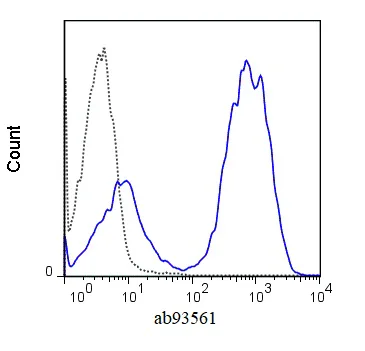
- Flow Cyt
Supplier Data
Flow Cytometry - FITC Anti-MHC Class II (I-A/I-E) antibody [M5/114.15.2] (AB93561)
Flow cytometric analysis of mouse C57BI/6 splenocytes labeling H2-Ea using ab93561 (0.25 μg) (Solid line) as compared to a FITC Rat IgG2b isotype control (0.25 μg) (Dashed line).
不同偶联物与剂型 (4)
-
660 APC
APC Anti-MHC Class II (I-A/I-E) antibody [M5/114.15.2]
-
578 PE
PE Anti-MHC Class II (I-A/I-E) antibody [M5/114.15.2]
-
450 violetFluor™ 450
violetFluor™ 450 Anti-MHC Class II (I-A/I-E) antibody [M5/114.15.2]
-
violetFluor™ 500 Anti-MHC Class II (I-A/I-E) antibody [M5/114.15.2]
搭配使用产品
Primary Antibodies
AB275741
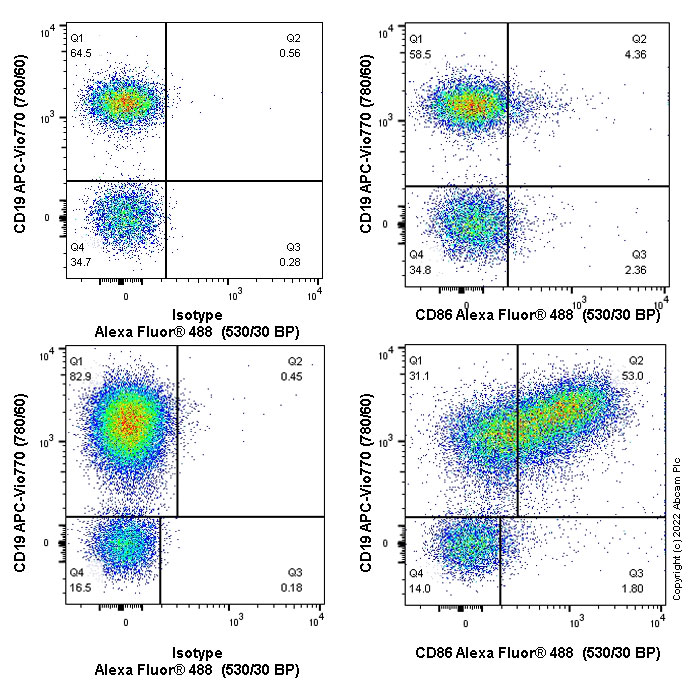
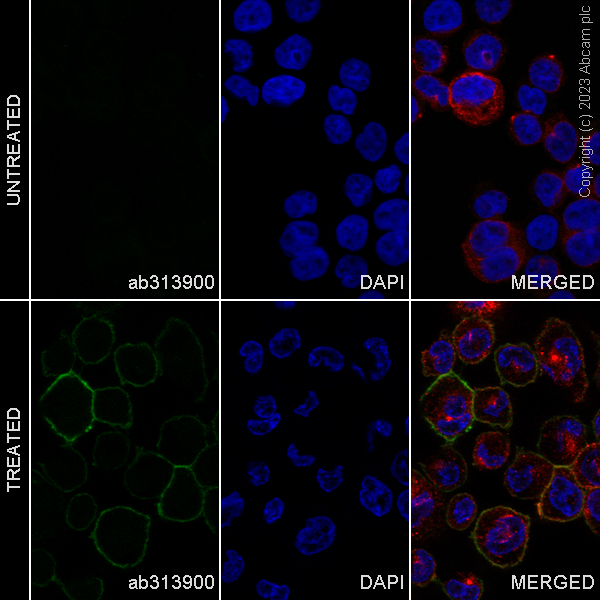
Alexa Fluor® 488 Anti-CD86 antibody [EPR22958-106]
RabMAb|Recombinant
- 0
- 0
Primary Antibodies
AB315845
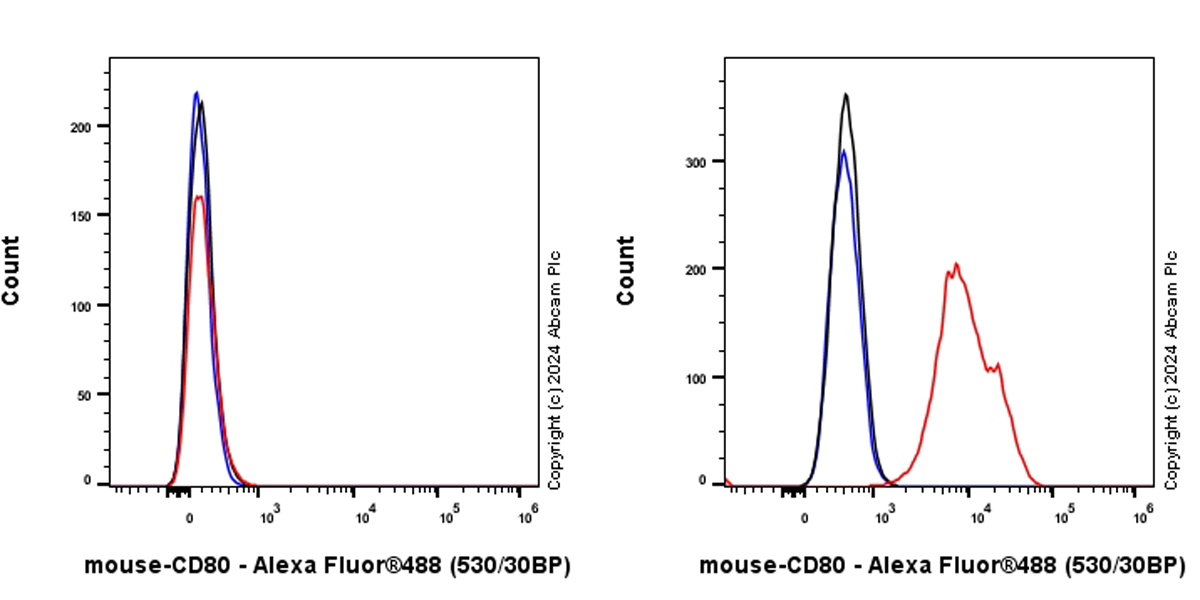
Alexa Fluor® 488 Anti-CD80 antibody [EPR22127-251]
RabMAb|Recombinant
- 0
- 0

反应性数据
产品详情
性能和储存信息
形式
纯化工艺
存储溶液
运输条件
推荐的短期储存条件
推荐的长期储存条件
补充信息
This supplementary information is collated from multiple sources and compiled automatically.
Biological function summary
H2-Ea functions as a component of the MHC class II heterodimer complex participating in antigen processing and presentation. Upon forming a complex with other MHC class II molecules it binds peptides derived from extracellular proteins. This complex formation initiates immune recognition which is essential for the activation of CD4+ T cells. These cells then enable the immune system to tackle pathogens and coordinate the adaptive immune response efficiently.
Pathways
The immune recognition facilitated by H2-Ea is a pivotal step in the adaptive immune pathway. This protein interacts with other MHC molecules and proteins such as CD3 and CD4 during the antigen presentation process. In the pathway H2-Ea plays an important role in ensuring the adaptive immune system correctly activates and regulates responses against foreign antigens and potential threats to the body.
产品实验方案
- Visit the General protocols
- Visit the Troubleshooting
文献 (11)
Recent publications for all applications. Explore the full list and refine your search
Pharmaceuticals (Basel, Switzerland) 17: PubMed38931345
2024
Applications
Unspecified application
Species
Unspecified reactive species
Cell host & microbe 32:1089-1102.e10 PubMed38889725
2024
Applications
Unspecified application
Species
Unspecified reactive species
Molecular medicine reports 19:5377-5385 PubMed31059096
2019
Applications
Unspecified application
Species
Unspecified reactive species
International journal of molecular medicine 39:1101-1110 PubMed28339016
2017
Applications
Unspecified application
Species
Unspecified reactive species
Molecular medicine reports 12:2511-20 PubMed25936350
2015
Applications
Unspecified application
Species
Unspecified reactive species
Proceedings of the National Academy of Sciences of the United States of America 104:234-9 PubMed17190803
2006
Applications
Unspecified application
Species
Unspecified reactive species
Infection and immunity 71:4137-43 PubMed12819105
2003
Applications
Unspecified application
Species
Unspecified reactive species
International immunology 14:1179-91 PubMed12356683
2002
Applications
IP
Species
Unspecified reactive species
The American journal of pathology 160:141-9 PubMed11786408
2002
Applications
Unspecified application
Species
Unspecified reactive species
Immunology 89:238-44 PubMed8943720
1996
Applications
Unspecified application
Species
Unspecified reactive species
Abcam Product Promise
Please note: All products are 'FOR RESEARCH USE ONLY. NOT FOR USE IN DIAGNOSTIC OR THERAPEUTIC PROCEDURES'.
For licensing inquiries, please contact partnerships@abcam.com