JavaScript is disabled in your browser. Please enable JavaScript to view this website.
AB205039

Anti-DPYS抗体

Anti-DPYS antibody

Be the first to review this product! Submit a review

|

(2 Publications)

Rabbit Polyclonal DPYS antibody. Suitable for WB, IHC-P and reacts with Human samples. Cited in 2 publications. Immunogen corresponding to Recombinant Fragment Protein within Human DPYS aa 100-300.

查看别名

Dihydropyrimidinase, DHP, DHPase, Dihydropyrimidine amidohydrolase, Hydantoinase, DPYS
2 Images
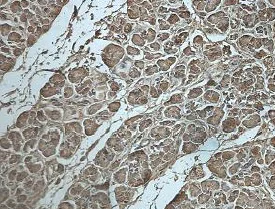
Immunohistochemistry (Formalin/PFA-fixed paraffin-embedded sections) - Anti-DPYS antibody (AB205039)
  • IHC-P

Supplier Data

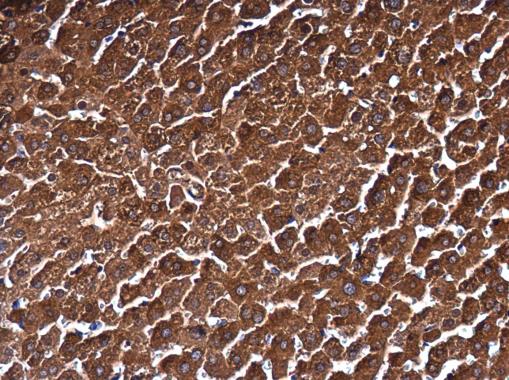
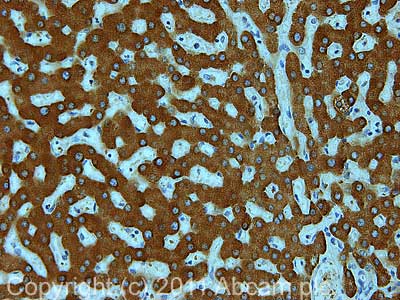
Immunohistochemistry (Formalin/PFA-fixed paraffin-embedded sections) - Anti-DPYS antibody (AB205039)

Immunohistochemical analysis of formalin/PFA-fixed paraffin-embedded human fetal pancreas tissue sections labeling DPYS with ab205039 at a 1/100 dilution.
Western blot - Anti-DPYS antibody (AB205039)
  • WB

Supplier Data

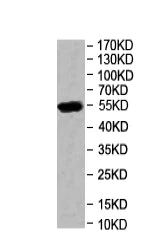
Western blot - Anti-DPYS antibody (AB205039)

All lanes:

Western blot - Anti-DPYS antibody (ab205039) at 1/500 dilution

All lanes:

human fetal liver lysate

Predicted band size: 57 kDa

false

关键信息

宿主种属

Rabbit

克隆

Polyclonal

亚型

IgG

不含载体蛋白

No

反应种属

Human

应用

IHC-P, WB

applications

免疫原

Recombinant Fragment Protein within Human DPYS aa 100-300. The exact immunogen used to generate this antibody is proprietary information.

Q14117

反应性数据

{ "title": "Reactivity Data", "filters": { "stats": ["", "Species", "Dilution Info", "Notes"], "tabs": { "all-applications": {"fullname" : "All Applications", "shortname": "All Applications"}, "WB" : {"fullname" : "Western blot", "shortname":"WB"}, "IHCP" : {"fullname" : "Immunohistochemistry (Formalin/PFA-fixed paraffin-embedded sections)", "shortname":"IHC-P"} }, "product-promise": { "all": "all", "testedAndGuaranteed": "tested", "guaranteed": "expected", "predicted": "predicted", "notRecommended": "not-recommended" } }, "values": { "Human": { "WB-species-checked": "testedAndGuaranteed", "WB-species-dilution-info": "1/200 - 1/1000", "WB-species-notes": "<p></p>", "IHCP-species-checked": "testedAndGuaranteed", "IHCP-species-dilution-info": "1/100 - 1/500", "IHCP-species-notes": "<p></p>" }, "Mouse": { "WB-species-checked": "predicted", "WB-species-dilution-info": "", "WB-species-notes": "", "IHCP-species-checked": "predicted", "IHCP-species-dilution-info": "", "IHCP-species-notes": "" }, "Rat": { "WB-species-checked": "predicted", "WB-species-dilution-info": "", "WB-species-notes": "", "IHCP-species-checked": "predicted", "IHCP-species-dilution-info": "", "IHCP-species-notes": "" } } }

性能和储存信息

形式
Lyophilized
复溶
reconstitute with water at 200µL
纯化工艺
Affinity purification Immunogen
存储溶液
pH: 7.2 Preservative: 0.02% Sodium azide Constituents: PBS, 1% BSA
运输条件
Blue Ice
推荐的短期储存时间
1-2 weeks
推荐的短期储存条件
+4°C
推荐的长期储存条件
-20°C
分装信息
Upon delivery aliquot
储存信息
Avoid freeze / thaw cycle

补充信息

This supplementary information is collated from multiple sources and compiled automatically.

DPYS also known as dihydropyrimidinase is an enzyme involved in the breakdown of pyrimidines specifically converting dihydropyrimidines to N-carbamyl-B-alanine. The mass of DPYS is approximately 56 kDa. This enzyme is present in various tissues most notably in the liver and kidney. DPYS plays a role in the catabolic pathway of nucleic acids facilitating the reuse and recycling of building blocks required for nucleic acid synthesis.
Biological function summary

DPYS functions as part of the larger pyrimidine degradation pathway. It does not act in isolation but may associate with other enzymes responsible for subsequent steps in this pathway. Pyrimidine metabolism is essential for maintaining the nucleotide pool balance in cells aiding cellular replication and repair processes. DPYS ensures efficient conversion of potentially harmful intermediates into products that cells can either reuse or excrete safely.

Pathways

The activity of DPYS is integrated into the pyrimidine catabolic pathway which intersects with the urea cycle. This enzyme works alongside others such as dihydropyrimidine dehydrogenase (DPYD) to facilitate pyrimidine degradation. The interactions between DPYS and DPYD are critical as they control the levels of pyrimidine metabolites in the cell preventing accumulation that could cause cellular stress or damage.

Mutations in the DPYS gene correlate with the rare metabolic disorder called dihydropyrimidinuria. This condition manifests due to the inefficient breakdown of pyrimidines leading to excessive urinary excretion of dihydropyrimidines. Furthermore impaired DPYS activity may have implications in drug metabolism particularly fluoropyrimidine-based cancer therapies as reduced activity can lead to toxicity. DPYD also connects to these conditions through its role in pyrimidine degradation highlighting the interdependence of these enzymes in both regular metabolic function and disease states.

产品实验方案

For this product, it's our understanding that no specific protocols are required. You can visit:

靶点信息

Catalyzes the second step of the reductive pyrimidine degradation, the reversible hydrolytic ring opening of dihydropyrimidines. Can catalyze the ring opening of 5,6-dihydrouracil to N-carbamyl-alanine and of 5,6-dihydrothymine to N-carbamyl-amino isobutyrate.
See full target information DPYS

文献 (2)

Recent publications for all applications. Explore the full list and refine your search

Drug metabolism and disposition: the biological fate of chemicals 51:165-173 PubMed36414408

2022

Functional Characterization of 12 Dihydropyrimidinase Allelic Variants in Japanese Individuals for the Prediction of 5-Fluorouracil Treatment-Related Toxicity.

Applications

Unspecified application

Species

Unspecified reactive species

Eiji Hishinuma,Yoko Narita,Evelyn Marie Gutiérrez Rico,Akiko Ueda,Kai Obuchi,Yoshikazu Tanaka,Sakae Saito,Shu Tadaka,Kengo Kinoshita,Masamitsu Maekawa,Nariyasu Mano,Tomoki Nakayoshi,Akifumi Oda,Noriyasu Hirasawa,Masahiro Hiratsuka

American journal of cancer research 9:1722-1733 PubMed31497353

2019

USP44 suppresses pancreatic cancer progression and overcomes gemcitabine resistance by deubiquitinating FBP1.

Applications

Unspecified application

Species

Unspecified reactive species

Chong Yang,Shikai Zhu,Hongji Yang,Sisi Deng,Ping Fan,Mi Li,Xin Jin
View all publications

Abcam Product Promise

我们致力于为您的研究提供高质量的试剂,为您科研的每一步提供支持。若我们的产品未能达到预期性能,我们向您提供 Abcam Product Promise 保障。
详情请参阅我们的条款与条件。

Please note: All products are 'FOR RESEARCH USE ONLY. NOT FOR USE IN DIAGNOSTIC OR THERAPEUTIC PROCEDURES'.

For licensing inquiries, please contact partnerships@abcam.com