重组Anti-CTNNA1抗体[EP1793Y]
Anti-CTNNA1 antibody [EP1793Y]
- BOND RX™ Validated
- RabMAb
- Recombinant
- KO Validated
- 了解详情
5
(8 Reviews)
|
(43 Publications)
Rabbit Recombinant Monoclonal CTNNA1 antibody. Suitable for IHC-P, IP, WB and reacts with Mouse, Rat, Human samples. Cited in 43 publications.
查看别名
Catenin alpha-1, Alpha E-catenin, Cadherin-associated protein, Renal carcinoma antigen NY-REN-13, CTNNA1
- IHC-P
Unknown
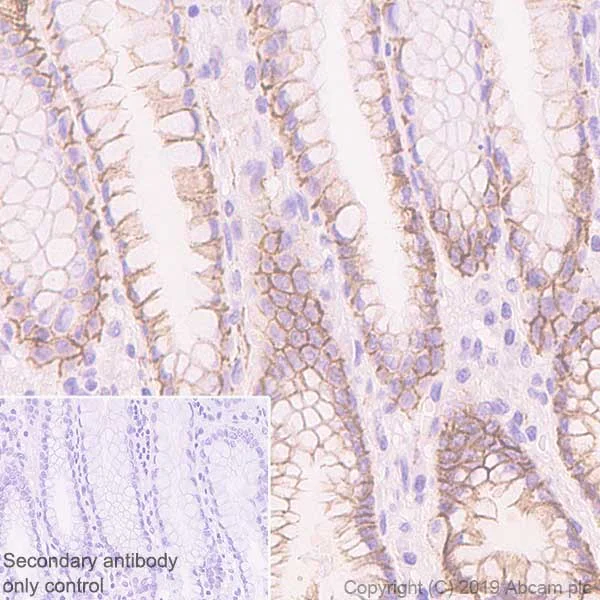
Immunohistochemistry (Formalin/PFA-fixed paraffin-embedded sections) - Anti-CTNNA1 antibody [EP1793Y] (AB51032)
Paraffin-embedded human stomach tissue stained for CTNNA1 with ab51032 at a 1/100 dilution in immunohistochemical analysis. Rabbit specific IHC polymer detection kit HRP/DAB (ab209101) was used as a secondary antibody and Hematoxylin used as a counterstain. Heat mediated antigen retrieval with Tris-EDTA buffer (pH 9.0, epitope retrieval solution 2) was performed for 20 minutes.
Positive staining was seen on human stomach.
The section was incubated with ab51032 for 30 minutes at room temperature.
The immunostaining staining was performed on a Leica Biosystems BOND® RX instrument.
- IP
Unknown
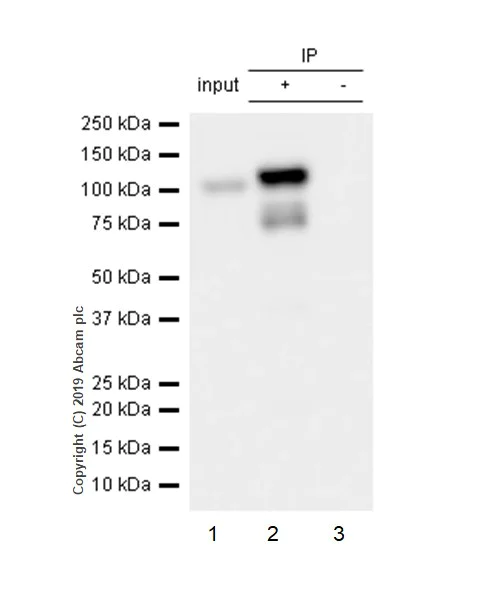
Immunoprecipitation - Anti-CTNNA1 antibody [EP1793Y] (AB51032)
ab190685 at 1/100 dilution immunoprecipitating CTNNA1 in Jurkat HeLa (human cervix adenocarcinoma epithelial cell) whole cell lysates
Lane 1 (input) : HeLa (human cervix adenocarcinoma epithelial cell) whole cell lysate 10μg
Lane 2 (+) : HeLa whole cell lysate
Lane 3 (-) : Rabbit monoclonal IgG (ab172730) instead of ab51032 in HeLa whole cell lysate
For western blotting, ab51032 at 1/500 dilution and VeriBlot for IP Detection Reagent (HRP)(ab131366) at 1/1000 dilution were used.
Blocking and diluting buffer : 5% NFDM /TBST.
All lanes:
Immunoprecipitation - Anti-CTNNA1 antibody [EP1793Y] (ab51032)
Predicted band size: 100 kDa
false
- IHC-P
Unknown
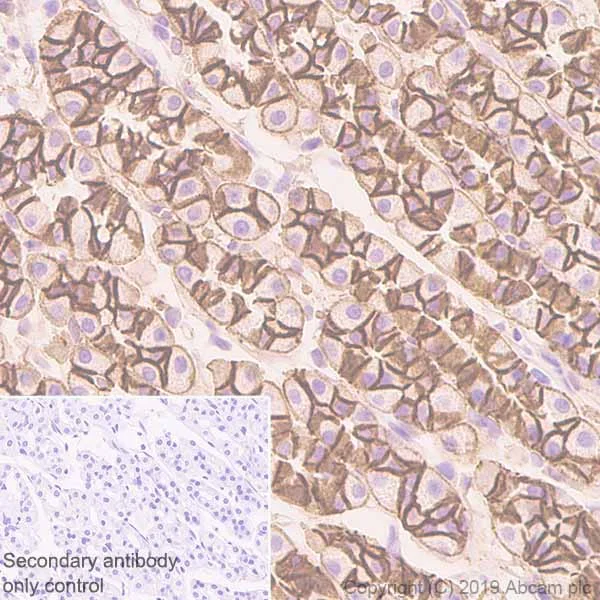
Immunohistochemistry (Formalin/PFA-fixed paraffin-embedded sections) - Anti-CTNNA1 antibody [EP1793Y] (AB51032)
Paraffin-embedded rat stomach tissue stained for CTNNA1 with ab51032 at a 1/100 dilution in immunohistochemical analysis. Rabbit specific IHC polymer detection kit HRP/DAB (ab209101) was used as a secondary antibody and Hematoxylin used as a counterstain. Heat mediated antigen retrieval with Tris-EDTA buffer (pH 9.0, epitope retrieval solution 2) was performed for 20 minutes.
Positive staining was seen on rat stomach.
The section was incubated with ab51032 for 30 minutes at room temperature.
The immunostaining staining was performed on a Leica Biosystems BOND® RX instrument.
- IHC-P
Unknown
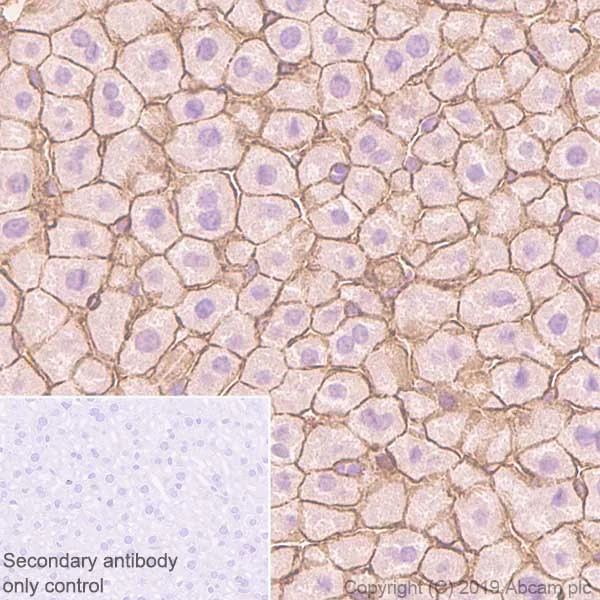
Immunohistochemistry (Formalin/PFA-fixed paraffin-embedded sections) - Anti-CTNNA1 antibody [EP1793Y] (AB51032)
Paraffin-embedded mouse liver tissue stained for CTNNA1 with ab51032 at a 1/100 dilution in immunohistochemical analysis. Rabbit specific IHC polymer detection kit HRP/DAB (ab209101) was used as a secondary antibody and Hematoxylin used as a counterstain. Heat mediated antigen retrieval with Tris-EDTA buffer (pH 9.0, epitope retrieval solution 2) was performed for 20 minutes.
Positive staining was seen on mouse liver.
The section was incubated with ab51032 for 30 minutes at room temperature.
The immunostaining staining was performed on a Leica Biosystems BOND® RX instrument.
- WB
Unknown
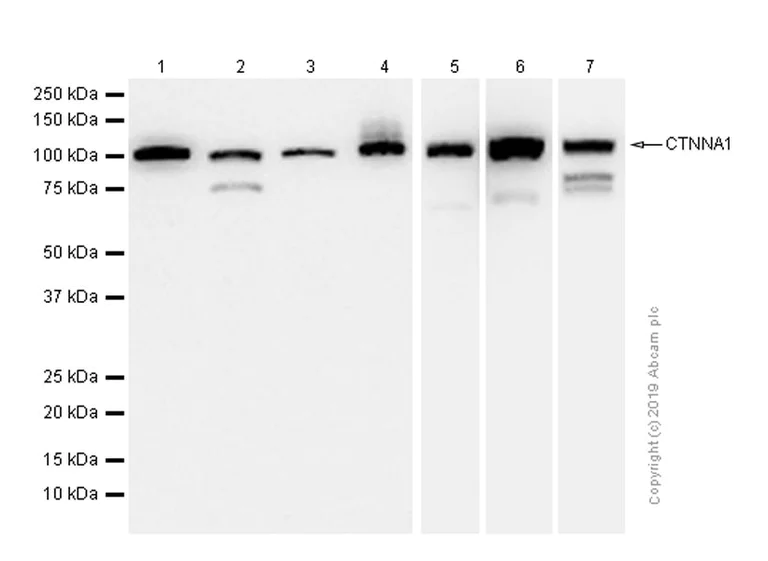
Western blot - Anti-CTNNA1 antibody [EP1793Y] (AB51032)
Expsure time
Lane 1-4 : 180 seconds
Lane 5,7 : 40 seconds
Lane 6 : 5 seconds
Blocking/diluting buffer and concentration : 5% NFDM/TBST
All lanes:
Western blot - Anti-CTNNA1 antibody [EP1793Y] (ab51032) at 1/10000 dilution
Lane 1:
Mouse heart lysate at 20 µg
Lane 2:
Mouse kidney lysate at 20 µg
Lane 3:
Rat brain lysate at 20 µg
Lane 4:
Rat kidney lysate at 20 µg
Lane 5:
HeLa (Human cervix adenocarcinoma epithelial cell) whole cell lysate at 20 µg
Lane 6:
A431 (Human epidermoid carcinoma epithelial cell) whole cell lysate at 20 µg
Lane 7:
HUVEC (Human umbilical vein endothelial cell) whole cell lysate at 20 µg
Secondary
All lanes:
Western blot - Goat Anti-Rabbit IgG H&L (HRP) (<a href='/products/secondary-antibodies/goat-rabbit-igg-h-l-hrp-ab97051'>ab97051</a>) at 1/20000 dilution
Predicted band size: 100 kDa
Observed band size: 100 kDa
false
- WB
Unknown
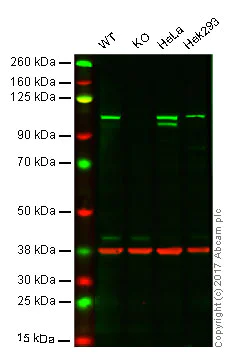
Western blot - Anti-CTNNA1 antibody [EP1793Y] (AB51032)
Lane 1 : Wild-type HAP1 whole cell lysate (20 μg)
Lane 2 : CTNNA1 HAP1 whole cell lysate (20 μg)
Lane 3 : HeLa whole cell lysate (20 μg)
Lane 4 : HEK293 whole cell lysate (20 μg)
Lanes 1 - 4 : Merged signal (red and green). Green - ab51032 observed at 100 kDa. Red - loading control, ab9484, observed at 37 kDa.
ab51032 was shown to recognize CTNNA1 in wild-type cells as signal was lost at the expected MW in CTNNA1 knockout cells. Additional cross-reactive bands were observed in the wild-type and knockout cells. Wild-type and CTNNA1 knockout samples were subjected to SDS-PAGE. ab51032 and ab9484 (Mouse anti-GAPDH loading control) were incubated overnight at 4°C at 1/50000 dilution and 1/20000 dilution respectively. Blots were developed with Goat anti-Rabbit IgG H&L (IRDye® 800CW) preabsorbed ab216773 and Goat anti-Mouse IgG H&L (IRDye® 680RD) preabsorbed ab216776 secondary antibodies at 1/20000 dilution for 1 hour at room temperature before imaging.
All lanes:
Western blot - Anti-CTNNA1 antibody [EP1793Y] (ab51032)
Predicted band size: 100 kDa
false
- WB
Unknown
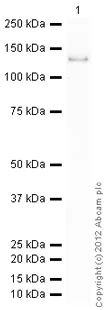
Western blot - Anti-CTNNA1 antibody [EP1793Y] (AB51032)
All lanes:
Western blot - Anti-CTNNA1 antibody [EP1793Y] (ab51032) at 1/50000 dilution
All lanes:
Western blot - Recombinant Human CTNNA1 protein (GST tag N-Terminus) (<a href='/products/proteins-peptides/recombinant-human-ctnna1-protein-tagged-ab51443'>ab51443</a>) at 0.01 µg
Secondary
All lanes:
Western blot - Goat Anti-Rabbit IgG H&L (HRP) preadsorbed (<a href='/products/secondary-antibodies/goat-rabbit-igg-h-l-hrp-preadsorbed-ab97080'>ab97080</a>) at 1/5000 dilution
Predicted band size: 100 kDa
true
Exposure time: 1min
不同偶联物与剂型 (1)
-
Anti-CTNNA1 antibody [EP1793Y] - Low endotoxin, Azide free
替代产品
搭配使用产品
Primary Antibodies
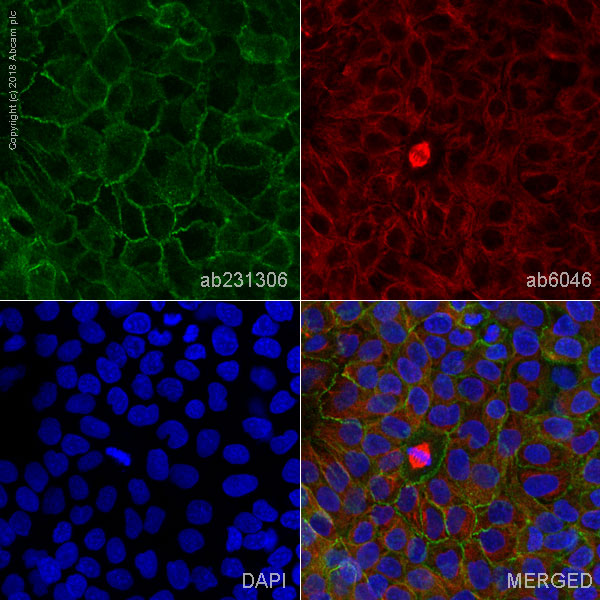
AB183734
RabMAb|Recombinant|Lab Essentials|20ul selling size
- 5
- 24
Primary Antibodies
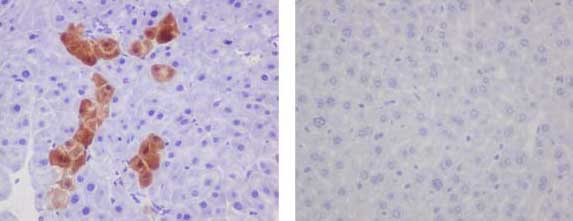
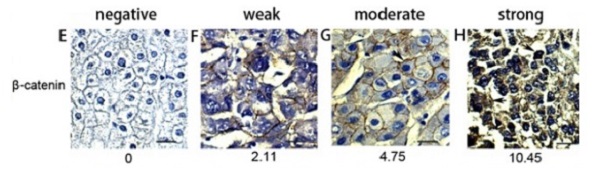
AB32572
Anti-beta Catenin antibody [E247] - ChIP Grade
BOND RX™ Validated|Advanced Validation|RabMAb|Recombinant|KO Validated|Lab Essentials|20ul selling size
- 5
- 75
Primary Antibodies
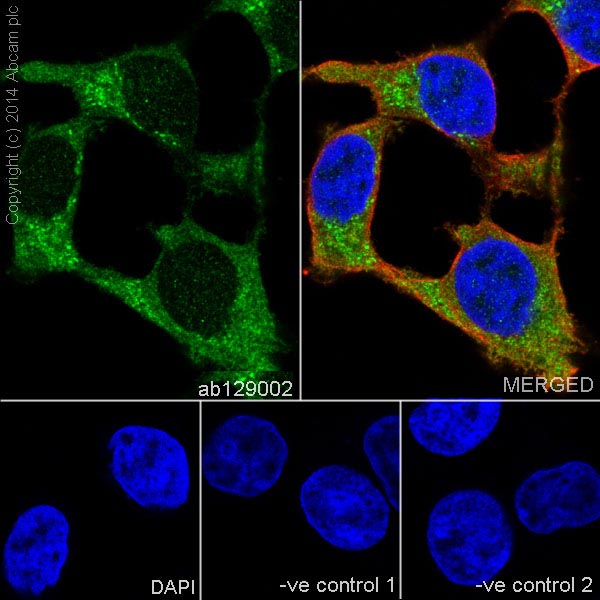
AB129002
Anti-Vinculin antibody [EPR8185] - Loading Control
20ul selling size|RabMAb|Recombinant|KO Validated
- 5
- 21
Primary Antibodies
AB40772
Anti-E Cadherin antibody [EP700Y] - Intercellular Junction Marker
BOND RX™ Validated|KO Validated|RabMAb|Recombinant|Lab Essentials|20ul selling size|Advanced Validation

- 4
- 23
反应性数据
产品详情
Our RabMAb® technology is a patented hybridoma-based technology for making rabbit monoclonal antibodies. For details on our patents, please refer to RabMAb® patents.
性能和储存信息
形式
纯化工艺
存储溶液
运输条件
推荐的短期储存条件
推荐的长期储存条件
分装信息
储存信息
补充信息
This supplementary information is collated from multiple sources and compiled automatically.
Biological function summary
CTNNA1 is important for maintaining cellular integrity and function. It is a part of the adherens junction complex which is critical for the creation of stable cell-cell junctions in tissues. Through the adherens junction it directly associates with E-cadherin and indirectly interacts with the actin cytoskeleton. This structural configuration allows epithelial cells to remain tightly connected facilitating signal transmission between cells for coordinated tissue functioning.
Pathways
CTNNA1 plays a significant role in the Wnt signaling pathway and the regulation of actin dynamics. In the Wnt pathway CTNNA1 is associated with cell fate determination and is known to interact with beta-catenin an important component of this signaling cascade. Additionally by influencing actin cytoskeleton organization CTNNA1 affects cell movement and signal transduction essential for processes like embryogenesis and wound healing.
产品实验方案
- Visit the General protocols
- Visit the Troubleshooting
靶点信息
文献 (43)
Recent publications for all applications. Explore the full list and refine your search
Biomolecules 15: PubMed40867529
2025
Applications
Unspecified application
Species
Unspecified reactive species
Nature materials 24:966-976 PubMed40087537
2025
Applications
Unspecified application
Species
Unspecified reactive species
Nature communications 16:1801 PubMed39979305
2025
Applications
Unspecified application
Species
Unspecified reactive species
Communications biology 8:1 PubMed39747445
2025
Applications
Unspecified application
Species
Unspecified reactive species
Nature communications 15:5608 PubMed38969637
2024
Applications
Unspecified application
Species
Unspecified reactive species
Scientific reports 13:10956 PubMed37414830
2023
Applications
Unspecified application
Species
Unspecified reactive species
Translational oncology 32:101655 PubMed36963204
2023
Applications
Unspecified application
Species
Unspecified reactive species
eLife 12: PubMed36892272
2023
Applications
Unspecified application
Species
Unspecified reactive species
The Journal of cell biology 222: PubMed36716168
2023
Applications
Unspecified application
Species
Unspecified reactive species
European journal of cell biology 101:151274 PubMed36152392
2022
Applications
Unspecified application
Species
Unspecified reactive species
Abcam Product Promise
Please note: All products are 'FOR RESEARCH USE ONLY. NOT FOR USE IN DIAGNOSTIC OR THERAPEUTIC PROCEDURES'.
For licensing inquiries, please contact partnerships@abcam.com