JavaScript is disabled in your browser. Please enable JavaScript to view this website.
AB286173

Anti-CD81抗体[A1504]

Anti-CD81 antibody [A1504]

Be the first to review this product! Submit a review

|

(2 Publications)

Mouse Monoclonal CD81 antibody. Suitable for Flow Cyt, ELISA, WB and reacts with Human samples. Cited in 2 publications.

查看别名

CD81, TAPA1, TSPAN28, CD81 antigen, 26 kDa cell surface protein TAPA-1, Target of the antiproliferative antibody 1, Tetraspanin-28, Tspan-28
3 Images
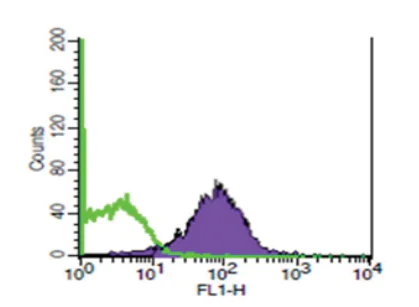
Flow Cytometry - Anti-CD81 antibody [A1504] (AB286173)
  • Flow Cyt

Supplier Data

Flow Cytometry - Anti-CD81 antibody [A1504] (AB286173)

CD81 staining of COLO1 cell purified exosomes.
ELISA - Anti-CD81 antibody [A1504] (AB286173)
  • ELISA

Supplier Data

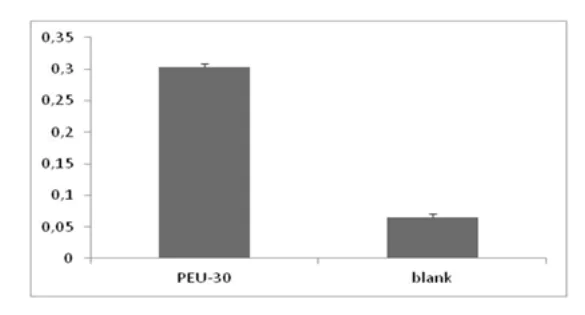
ELISA - Anti-CD81 antibody [A1504] (AB286173)

CD81 detection on purified exosomes from urine (PEU), 30 μg.
Western blot - Anti-CD81 antibody [A1504] (AB286173)
  • WB

Supplier Data

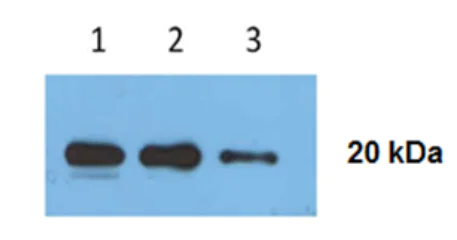
Western blot - Anti-CD81 antibody [A1504] (AB286173)

All lanes:

Western blot - Anti-CD81 antibody [A1504] (ab286173)

Lane 1:

MM1 (melanoma cell) lysate at 20 µg

Lane 2:

MM1 cells purified exosomes at 20 µg

Lane 3:

Plasma healthy donors purified exosomes at 20 µg

Predicted band size: 25 kDa

false

关键信息

宿主种属

Mouse

克隆

Monoclonal

克隆号

UNKNOWN -15

亚型

IgG1

不含载体蛋白

No

反应种属

Human

应用

ELISA, Flow Cyt, WB

applications

反应性数据

{ "title": "Reactivity Data", "filters": { "stats": ["", "Species", "Dilution Info", "Notes"], "tabs": { "all-applications": {"fullname" : "All Applications", "shortname": "All Applications"}, "FlowCyt" : {"fullname" : "Flow Cytometry", "shortname":"Flow Cyt"}, "ELISA" : {"fullname" : "ELISA", "shortname":"ELISA"}, "WB" : {"fullname" : "Western blot", "shortname":"WB"} }, "product-promise": { "all": "all", "testedAndGuaranteed": "tested", "guaranteed": "expected", "predicted": "predicted", "notRecommended": "not-recommended" } }, "values": { "Human": { "FlowCyt-species-checked": "testedAndGuaranteed", "FlowCyt-species-dilution-info": "", "FlowCyt-species-notes": "<p></p>", "ELISA-species-checked": "testedAndGuaranteed", "ELISA-species-dilution-info": "1/500", "ELISA-species-notes": "<p></p>", "WB-species-checked": "testedAndGuaranteed", "WB-species-dilution-info": "1/500", "WB-species-notes": "<p></p>" } } }

产品详情

This product is manufactured by BioVision, an Abcam company and was previously called A1504 Anti-human CD81 antibody. A1504-100 is the same size as the 100 μg size of ab286173.

性能和储存信息

形式
Liquid
纯化工艺
Affinity purification Protein A
纯化说明
Purified from hybridoma supernatant by Protein A affinity chromatography.
存储溶液
pH: 7.4 Preservative: 0.1% Sodium azide Constituents: PBS
运输条件
Blue Ice
推荐的短期储存条件
+4°C
推荐的长期储存条件
+4°C
储存信息
Do Not Freeze

补充信息

This supplementary information is collated from multiple sources and compiled automatically.

CD81 also known as TAPA-1 or 26 kDa protein is a member of the tetraspanin family featuring four transmembrane domains. The molecular weight of CD81 is approximately 26-28 kDa. This protein exhibits expression in numerous cell types such as leukocytes endothelial cells and epithelial tissues. CD81 plays a mechanical role by facilitating membrane protein interactions and contributing to cellular processes like adhesion and morphogenesis. Researchers have identified specific isoforms like M38 and labels like 1D6 CHAN in studies involving this target often analyzing CD81 through techniques like Western blot to determine expression levels and molecular weight.
Biological function summary

CD81 interacts with other tetraspanins and forms complexes within the membrane to regulate cellular signaling trafficking and adhesion. It participates in the assembly of larger tetraspanin-enriched microdomains which are important for efficient signaling and functional variety. These complexes modulate cell morphology proliferation and development influencing immune responses and pathogen entry to cells. The presence of CD81 in diverse tissues implies its involvement in a wide range of cellular processes forming essential complexes with proteins like integrins that further engage in tissue repair and immunological defense.

Pathways

CD81 plays significant roles in the immune system and viral entry pathways. It interacts with other proteins like CD9 and CD19 within the immune response pathways regulating lymphocyte activation and differentiation. CD81 is notably a coreceptor in the hepatitis C virus (HCV) entry pathway facilitating viral attachment and fusion into host cells. These interactions illustrate CD81's involvement in modulation of immune cell responses and influence on pathogen infection processes integrating into the complex cellular pathways important for maintaining homeostasis and response to external stimuli.

CD81 has connections to hepatitis C virus (HCV) infections and immunological disorders such as systemic lupus erythematosus (SLE). During HCV infection CD81 serves as an important entry point for the virus interacting with proteins like claudin-1 and scavenger receptor class B type I (SR-BI) enabling viral entry and replication within liver cells. In SLE alterations in CD81 expression can impact autoantibody production and lymphocyte behavior contributing to the disease's pathology. Understanding CD81's role in these diseases provides insight into therapeutic targets and potential interventions for managing infections and autoimmune responses.

产品实验方案

For this product, it's our understanding that no specific protocols are required. You can visit:

靶点信息

Structural component of specialized membrane microdomains known as tetraspanin-enriched microdomains (TERMs), which act as platforms for receptor clustering and signaling. Essential for trafficking and compartmentalization of CD19 receptor on the surface of activated B cells (PubMed : 16449649, PubMed : 20237408, PubMed : 27881302). Upon initial encounter with microbial pathogens, enables the assembly of CD19-CR2/CD21 and B cell receptor (BCR) complexes at signaling TERMs, lowering the threshold dose of antigen required to trigger B cell clonal expansion and antibody production (PubMed : 15161911, PubMed : 20237408). In T cells, facilitates the localization of CD247/CD3 zeta at antigen-induced synapses with B cells, providing for costimulation and polarization toward T helper type 2 phenotype (PubMed : 22307619, PubMed : 23858057, PubMed : 8766544). Present in MHC class II compartments, may also play a role in antigen presentation (PubMed : 8409388, PubMed : 8766544). Can act both as positive and negative regulator of homotypic or heterotypic cell-cell fusion processes. Positively regulates sperm-egg fusion and may be involved in acrosome reaction (By similarity). In myoblasts, associates with CD9 and PTGFRN and inhibits myotube fusion during muscle regeneration (By similarity). In macrophages, associates with CD9 and beta-1 and beta-2 integrins, and prevents macrophage fusion into multinucleated giant cells specialized in ingesting complement-opsonized large particles (PubMed : 12796480). Also prevents the fusion of mononuclear cell progenitors into osteoclasts in charge of bone resorption (By similarity). May regulate the compartmentalization of enzymatic activities. In T cells, defines the subcellular localization of dNTPase SAMHD1 and permits its degradation by the proteasome, thereby controlling intracellular dNTP levels (PubMed : 28871089). Also involved in cell adhesion and motility. Positively regulates integrin-mediated adhesion of macrophages, particularly relevant for the inflammatory response in the lung (By similarity).. (Microbial infection) Acts as a receptor for hepatitis C virus (HCV) in hepatocytes. Association with CLDN1 and the CLDN1-CD81 receptor complex is essential for HCV entry into host cell.. (Microbial infection) Involved in SAMHD1-dependent restriction of HIV-1 replication. May support early replication of both R5- and X4-tropic HIV-1 viruses in T cells, likely via proteasome-dependent degradation of SAMHD1.. (Microbial infection) Specifically required for Plasmodium falciparum infectivity of hepatocytes, controlling sporozoite entry into hepatocytes via the parasitophorous vacuole and subsequent parasite differentiation to exoerythrocytic forms.
See full target information CD81

文献 (2)

Recent publications for all applications. Explore the full list and refine your search

Journal of nanobiotechnology 21:119 PubMed37020301

2023

Hydrogel armed with Bmp2 mRNA-enriched exosomes enhances bone regeneration.

Applications

Unspecified application

Species

Unspecified reactive species

Zhujun Yang,Xuejian Li,Xueqi Gan,Mengying Wei,Chunbao Wang,Guodong Yang,Yimin Zhao,Zhuoli Zhu,Zhongshan Wang

Stem cells international 2023:4980871 PubMed36970598

2023

Extracellular Vesicles Secreted by TGF-1-Treated Mesenchymal Stem Cells Promote Fracture Healing by SCD1-Regulated Transference of LRP5.

Applications

Unspecified application

Species

Unspecified reactive species

Zihui Zhou,Chenyang Guo,Xulong Sun,Zhengwei Ren,Jie Tao
View all publications

Abcam Product Promise

我们致力于为您的研究提供高质量的试剂,为您科研的每一步提供支持。若我们的产品未能达到预期性能,我们向您提供 Abcam Product Promise 保障。
详情请参阅我们的条款与条件。

Please note: All products are 'FOR RESEARCH USE ONLY. NOT FOR USE IN DIAGNOSTIC OR THERAPEUTIC PROCEDURES'.

For licensing inquiries, please contact partnerships@abcam.com