人TARC ELISA试剂盒(CCL17)
Human TARC ELISA Kit (CCL17)
- SimpleStep
- 了解详情
Be the first to review this product! Submit a review
|
(2 Publications)
Human TARC ELISA Kit (CCL17) is a single-wash 90-min Simplestep used to quantify Human TARC (CCL17) with a sensitivity of 78.5 pg/ml. The assay uses a simple mix-wash-read protocol with just one incubation and one wash step.
- Colorimetric Sandwich ELISA - 450 nm readout : works on any standard plate reader
查看别名
SCYA17, TARC, CCL17, C-C motif chemokine 17, CC chemokine TARC, Small-inducible cytokine A17, Thymus and activation-regulated chemokine
- sELISA
Supplier Data
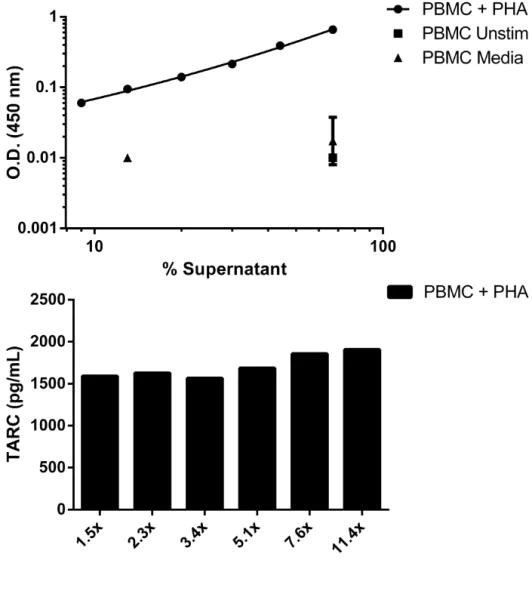
Sandwich ELISA - Human TARC ELISA Kit (CCL17) (AB183366)
Titration of PBMC Cell Culture Supernatants diluted within the working range of the assay.
Background subtracted data from duplicate measurements are plotted. Bar graph denotes quantification of TARC interpolated from standard curve and multiplied by dilution factor.
- sELISA
Supplier Data
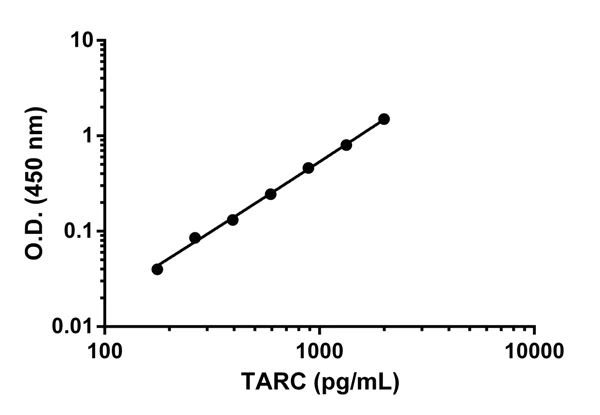
Sandwich ELISA - Human TARC ELISA Kit (CCL17) (AB183366)
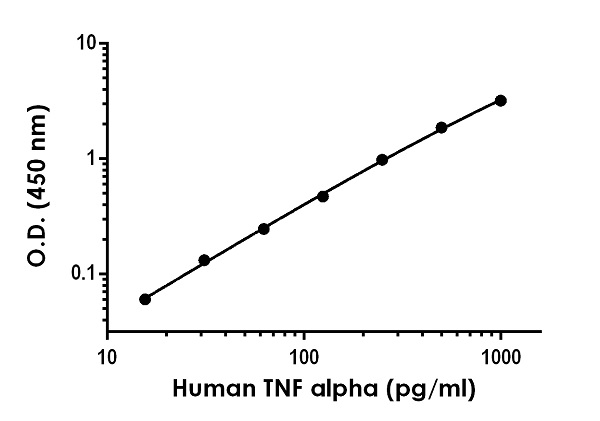
Example of TARC standard curve.
The TARC standard curve was prepared using Sample Diluent. Background-subtracted data values (mean +/- SD) are graphed.
- sELISA
Supplier Data
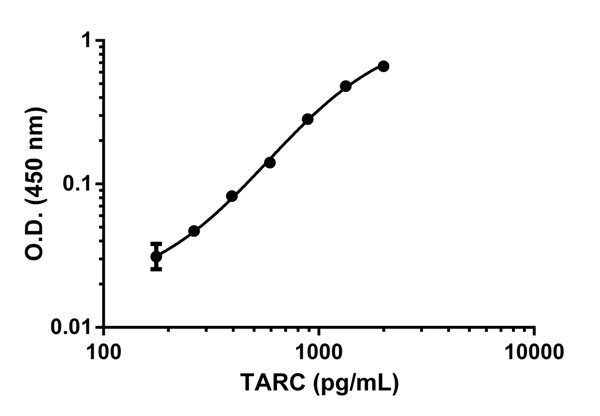
Sandwich ELISA - Human TARC ELISA Kit (CCL17) (AB183366)
Example of TARC standard curve.
The TARC standard curve was prepared using Sample Diluent. Background-subtracted data values (mean +/- SD) are graphed.
搭配使用产品
Reagents, Controls & Accessories
AB203359
Pre-coated 384 well Microplate SimpleStep ELISA®
SimpleStep
- 5
- 1
反应性数据
产品详情
Human TARC ELISA Kit (CCL17) (ab183366) is a single-wash 90 min sandwich ELISA designed for the quantitative measurement of TARC protein in human cell culture supernatants, serum and plasma samples. It uses our proprietary SimpleStep ELISA® technology. Quantitate human TARC with 78.5 pg/mL sensitivity.
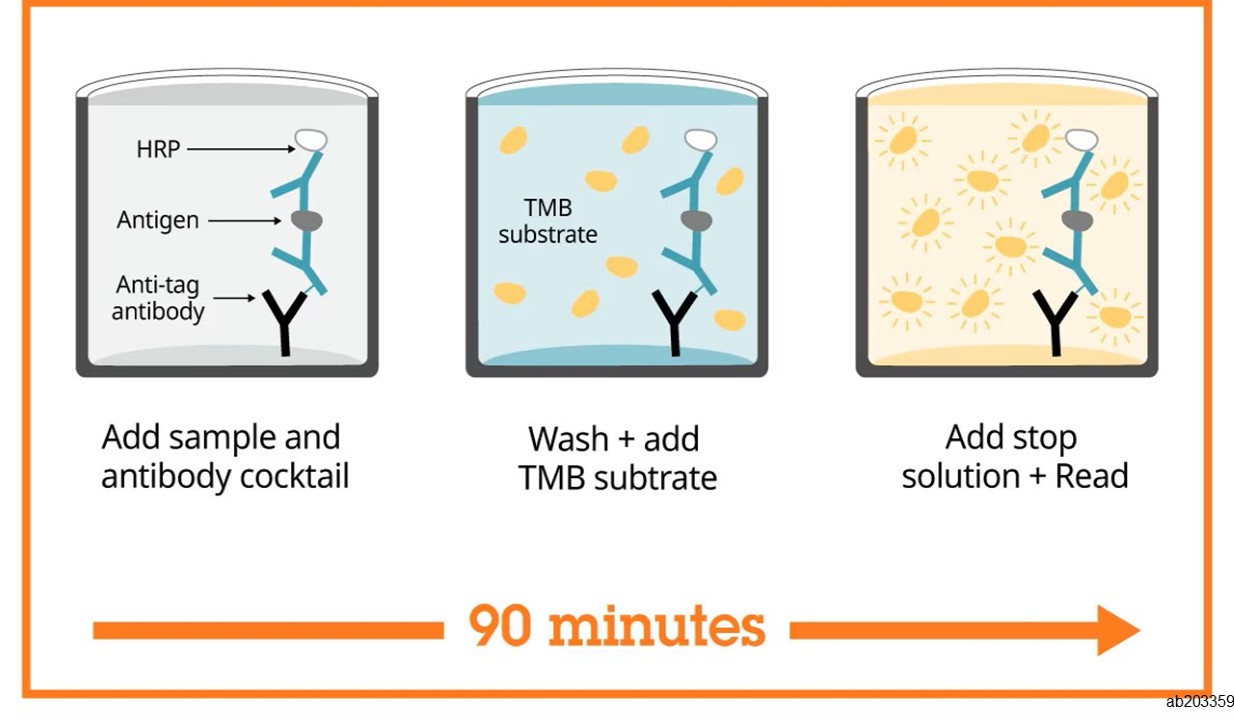
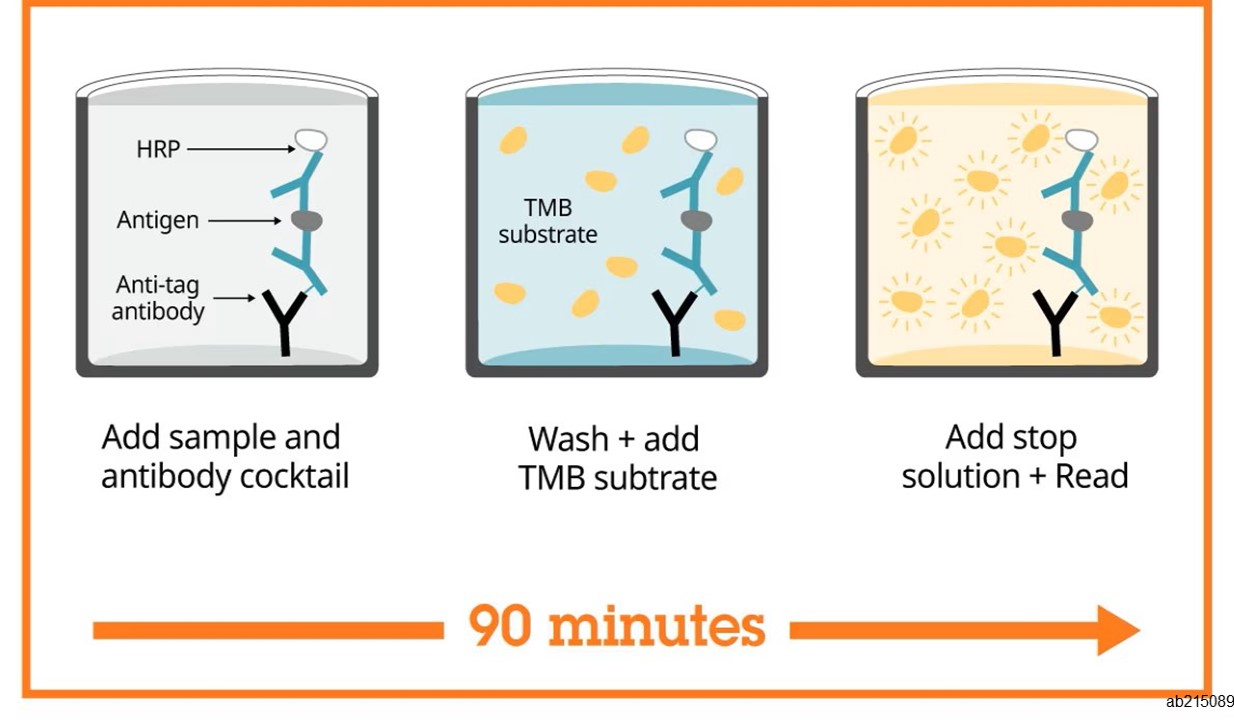
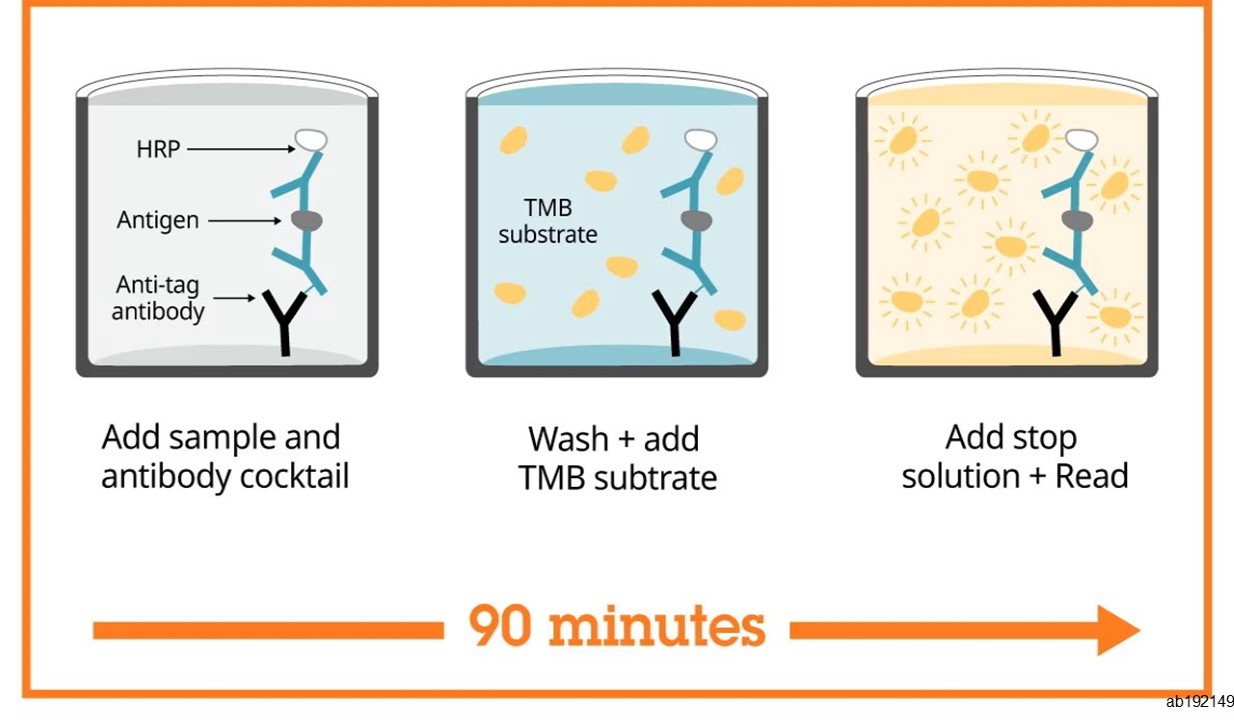
SimpleStep ELISA® technology employs capture antibodies conjugated to an affinity tag that is recognized by the monoclonal antibody used to coat our SimpleStep ELISA® plates. This approach to sandwich ELISA allows the formation of the antibody-analyte sandwich complex in a single step, significantly reducing assay time. See the SimpleStep ELISA® protocol summary in the image section for further details. Our SimpleStep ELISA® technology provides several benefits:
-Single-wash protocol reduces assay time to 90 minutes or less
-High sensitivity, specificity and reproducibility from superior antibodies
-Fully validated in biological samples
-96-wells plate breakable into 12 x 8 wells strips
A 384-well SimpleStep ELISA® microplate (ab203359) is available to use as an alternative to the 96-well microplate provided with SimpeStep ELISA® kits.
TARC is a member of the CC chemokine group that is constitutively expressed in the thymus and is transiently produced by a variety of cell types: dendritic cells (DC), endothelial cells, keratinocytes (KC), bronchial epithelial cells and fibroblasts. TARC is a ligand for chemokine receptor CCR4, expressed on Th2 lymphocytes, basophils and natural killer cells. CCL17 binds to CCR4 to induce chemotaxis in T cells.
TARC production appears to be upregulated by TNF-α and IFN-γ synergistically through NFkB and p38 signaling pathways in Human kertinocytes. Cytokines IL-4 and TGF-β1 act to downregulate TNF-α and IFN-γ induced TARC production in Human keratinocytes. TARC (CCL17) and its receptor CCR4 are believed to play important roles in the pathogenesis of the skin diseases Atopic Dermatitis (AD), Bullous pemphigoid (BP) and Mycosis fungoides (MF).
精确度
回收率
规格
性能和储存信息
运输条件
推荐的短期储存条件
推荐的长期储存条件
储存信息
补充信息
This supplementary information is collated from multiple sources and compiled automatically.
Biological function summary
CCL17 acts as a chemotactic agent attracting specific immune cells especially T lymphocytes to inflammatory regions. This protein does not operate as part of a larger protein complex but engages directly by binding to receptors on the target immune cells. Localized expression of CCL17 increases in conditions where enhanced Th2 cell response is needed such as allergic or autoimmune responses.
Pathways
CCL17 plays a significant role in the cell signaling pathway called the chemokine signaling pathway. Through this pathway CCL17 interacts with the CCR4 receptor which helps mediate immune cell migration and adhesion. This interaction is critical for establishing the adaptive immune response. CCL17 and CCR4 support the trafficking of Th2 cells during immune reactions and pathogen defense.
靶点信息
文献 (2)
Recent publications for all applications. Explore the full list and refine your search
Experimental and therapeutic medicine 26:359 PubMed37324510
2023
Applications
Unspecified application
Species
Unspecified reactive species
Cancer management and research 11:7439-7453 PubMed31496803
2019
Applications
Unspecified application
Species
Unspecified reactive species
Abcam Product Promise
Please note: All products are 'FOR RESEARCH USE ONLY. NOT FOR USE IN DIAGNOSTIC OR THERAPEUTIC PROCEDURES'.
For licensing inquiries, please contact partnerships@abcam.com