(+)-Nutlin-3,p53-MDM2 binding抑制剂
(+)-Nutlin-3, p53-MDM2 binding inhibitor
Be the first to review this product! Submit a review
|
(0 Publication)
MW 581.5 Da, Purity >98%. p53-MDM2 binding inhibitor (IC50 = 13 μM). Less potent enantiomer of (-)-Nutlin-3 (Asc-4428). Shows antiproliferative effects (IC50 values are 2.2 and 1.3 μM for human skin and murine fibroblasts respectively). Shows antitumor effects in vivo. Orally active.
查看别名
ACTFS, Double minute 2 protein, E3 ubiquitin-protein ligase Mdm2, HDMX, Hdm 2, MDM2 oncogene E3 ubiquitin protein ligase, MDM2BP, MDM2_HUMAN, Mdm2 p53 E3 ubiquitin protein ligase homolog, Mdm2 transformed 3T3 cell double minute 2 p53 binding protein (mouse) binding protein 104kDa, Mouse Double Minute 2, Murine Double Minute Chromosome 2, Oncoprotein Mdm2, Ubiquitin protein ligase E3 Mdm2, p53-binding protein Mdm2
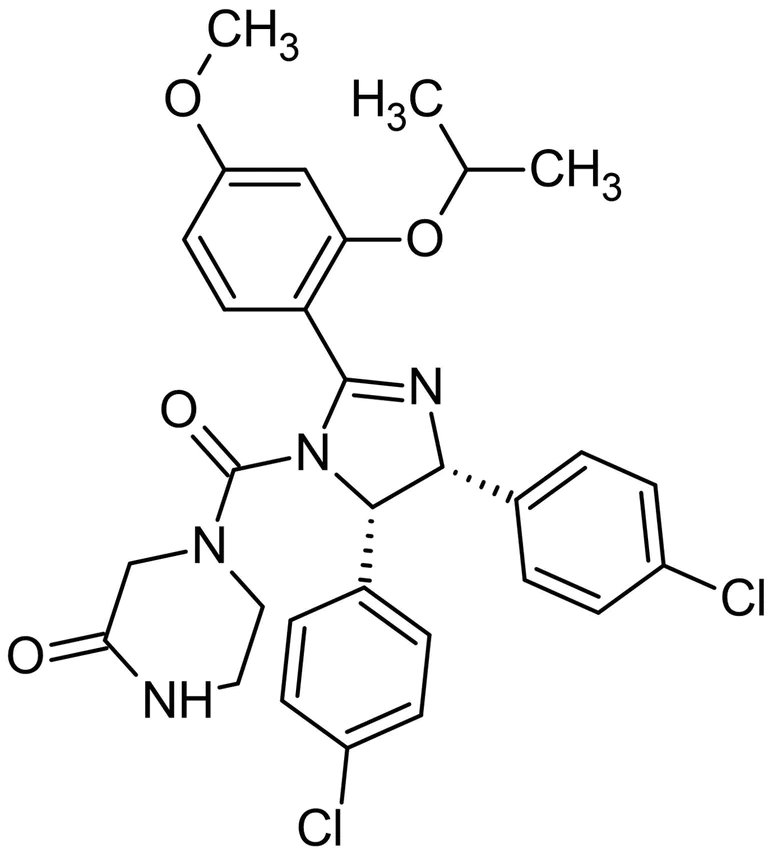
- Chemical Structure
Lab
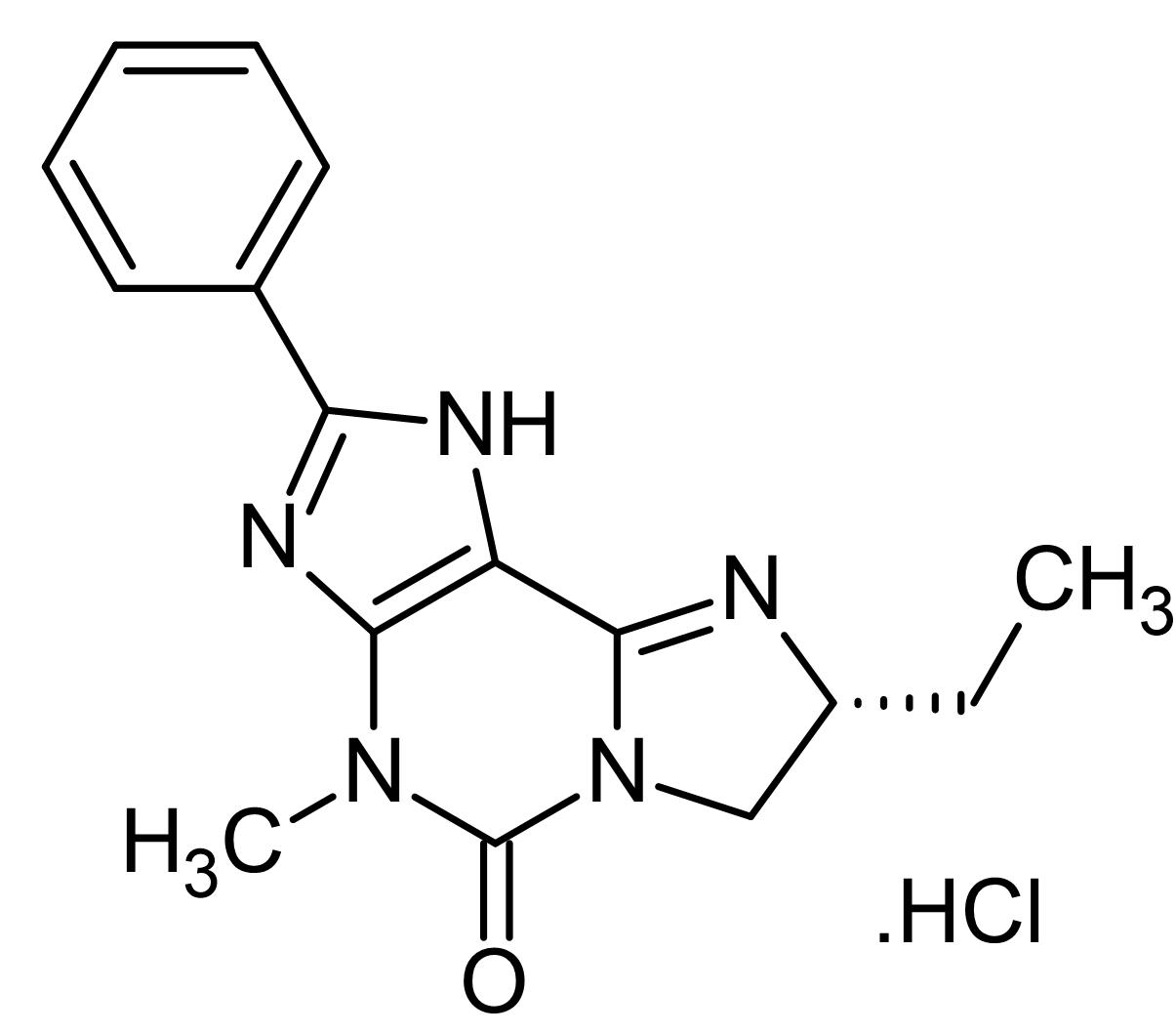
Chemical Structure - (+)-Nutlin-3, p53-MDM2 binding inhibitor (AB144426)
2D chemical structure image of ab144426, (+)-Nutlin-3, p53-MDM2 binding inhibitor
搭配使用产品
Primary Antibodies
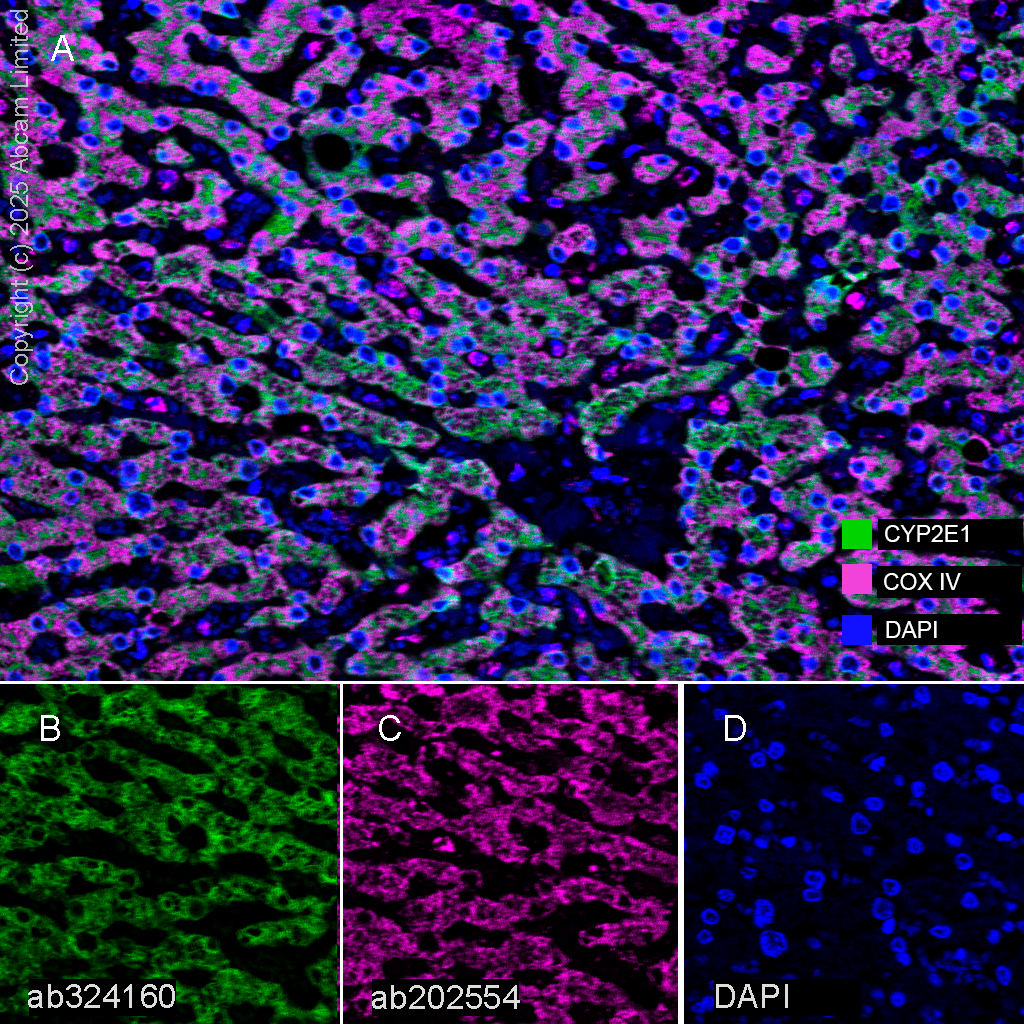
AB202554
Anti-COX IV antibody [EPR9442(ABC)] - Mitochondrial Loading Control
RabMAb|Recombinant|Lab Essentials|Advanced Validation|20ul selling size
- 5
- 2
性能和储存信息
运输条件
推荐的短期储存条件
推荐的长期储存条件
储存信息
Need more advice on solubility, usage and handling? Please visit our our product support page for more details.
|
Wherever possible, you should prepare and use solutions on the same day. However, if you need to make up stock solutions in advance, we recommend that you store the solution as aliquots in tightly sealed vials at -20°C. Generally, these will be useable for up to one month. Before use, and prior to opening the vial we recommend that you allow your product to equilibrate to room temperature for at least 1 hour.
补充信息
This supplementary information is collated from multiple sources and compiled automatically.
Biological function summary
The MDM2 protein plays a central role in cell cycle control and apoptosis regulation. It forms a complex with p53 which modulates p53's stability and activity. By binding to p53 MDM2 prevents p53 from inducing cell cycle arrest or apoptosis in response to DNA damage or oncogenic signals. Its interaction allows cells to proliferate even in the presence of potential growth-arrest signals maintaining homeostasis under normal physiological conditions.
Pathways
MDM2 and p53 form a critical axis within the DNA damage response and tumorigenesis pathways. The p53-MDM2 feedback loop is a well-studied mechanism that balances cell survival and death. When DNA damage occurs p53 gets activated and in turn upregulates MDM2 expression creating a feedback loop. Other proteins like ARF also interact with MDM2 inhibiting its activity towards p53 and thereby enhancing p53 function during cellular stress.
Abcam Product Promise
Please note: All products are 'FOR RESEARCH USE ONLY. NOT FOR USE IN DIAGNOSTIC OR THERAPEUTIC PROCEDURES'.
For licensing inquiries, please contact partnerships@abcam.com