Green CMFDA (5-Chloromethylfluorescein diacetate), Green fluorescent dye
Green CMFDA (5-Chloromethylfluorescein diacetate), Green fluorescent dye
Be the first to review this product! Submit a review
|
(4 Publications)
MW 464.8 Da, Purity >95%. Cell-permeable green fluorescent dye. Does not affect cell viability or proliferation. Transforms intracellularly into a cell-impermeant, fluorescent product. Displays fluorescence for at least 72 hours. Brightly fluorescent, non-toxic and stable at physiological pH. Allows for multigenerational tracking of cellular movements.
查看别名
DFN7, Deafness, Deafness X-linked 7, FAEES3, Fatty Acid Ethyl Ester Synthase III, GST class-pi, GST3, GSTP, GSTP1-1, GSTP1_HUMAN, Glutathione S Transferase 3, Glutathione S Transferase Pi, Glutathione S-transferase P, Glutathione S-transferase pi 1, X linked 7
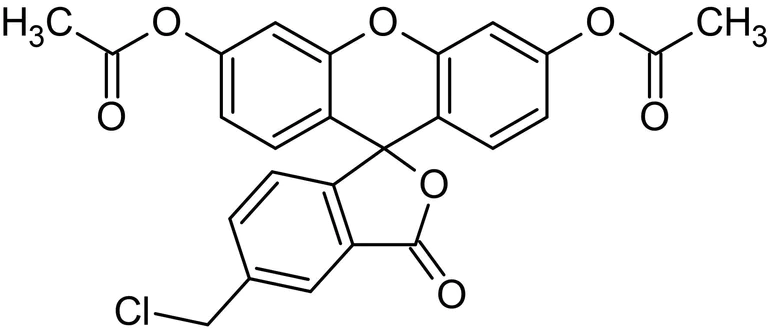
- Chemical Structure
Lab
Chemical Structure - Green CMFDA (5-Chloromethylfluorescein diacetate), Green fluorescent dye (AB145459)
2D chemical structure image of ab145459, Green CMFDA (5-Chloromethylfluorescein diacetate), Green fluorescent dye
搭配使用产品
Primary Antibodies
AB16667
BOND RX™ Validated|KO Validated|RabMAb|Advanced Validation|Recombinant|20ul selling size

- 5
- 133
Primary Antibodies
AB177487
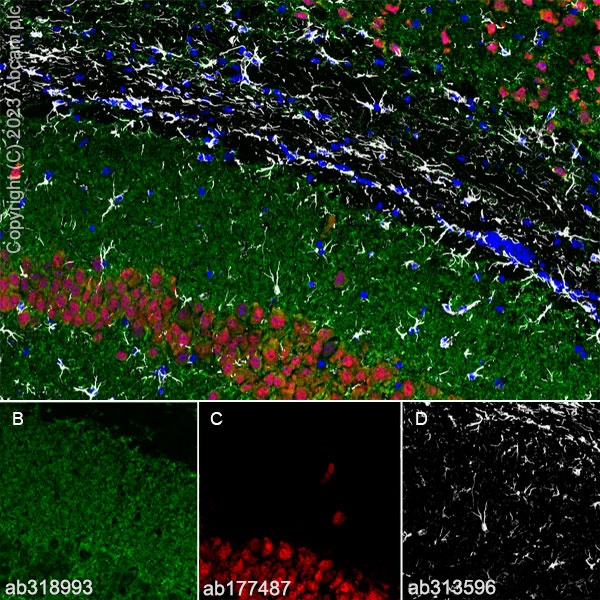
Anti-NeuN antibody [EPR12763] - Neuronal Marker
BOND RX™ Validated|RabMAb|Recombinant|Lab Essentials|20ul selling size|Advanced Validation
- 5
- 75
Primary Antibodies
AB172630
BOND RX™ Validated|RabMAb|Recombinant|KO Validated|20ul selling size
- 0
- 0
Primary Antibodies
AB8227
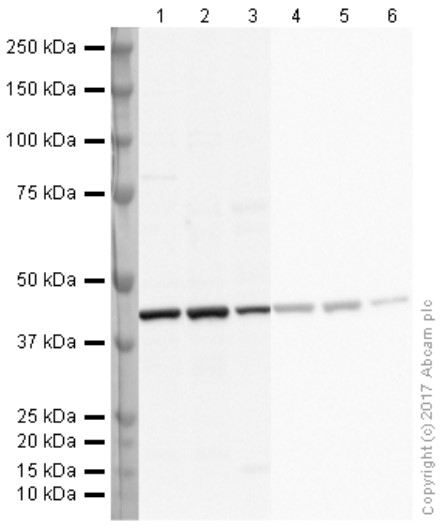
Anti-beta Actin antibody - Loading Control
BOND RX™ Validated|Lab Essentials
- 5
- 104
性能和储存信息
运输条件
推荐的短期储存条件
推荐的长期储存条件
储存信息
Need more advice on solubility, usage and handling? Please visit our our product support page for more details.
|
Wherever possible, you should prepare and use solutions on the same day. However, if you need to make up stock solutions in advance, we recommend that you store the solution as aliquots in tightly sealed vials at -20°C. Generally, these will be useable for up to one month. Before use, and prior to opening the vial we recommend that you allow your product to equilibrate to room temperature for at least 1 hour.
补充信息
This supplementary information is collated from multiple sources and compiled automatically.
Biological function summary
GST3 contributes to the detoxification of xenobiotics and electrophilic compounds playing a protective role against cellular damage. It can exist as homo-dimers or form hetero-dimers with other GST family members participating in larger enzyme complexes. Through conjugation reactions GSTP helps in the detoxification processes thereby aiding cellular defenses and maintaining cellular redox balance.
Pathways
GST3 is an integral part of the phase II detoxification pathway and oxidative stress response. It interacts closely with other proteins such as Nrf2 (Nuclear factor erythroid 2-related factor 2) and helps regulate the transcription of antioxidant proteins that protect against oxidative damage. This enzyme plays a role in modulating the MAPK signaling pathway which influences cell proliferation and apoptosis.
文献 (4)
Recent publications for all applications. Explore the full list and refine your search
Scientific reports 14:18553 PubMed39122790
2024
Applications
Unspecified application
Species
Unspecified reactive species
Osteoarthritis and cartilage open 6:100499 PubMed39076683
2024
Applications
Unspecified application
Species
Unspecified reactive species
International journal of molecular sciences 23: PubMed36499060
2022
Applications
Unspecified application
Species
Unspecified reactive species
International journal of molecular sciences 22: PubMed34829984
2021
Applications
Unspecified application
Species
Unspecified reactive species
Abcam Product Promise
Please note: All products are 'FOR RESEARCH USE ONLY. NOT FOR USE IN DIAGNOSTIC OR THERAPEUTIC PROCEDURES'.
For licensing inquiries, please contact partnerships@abcam.com